
Manual listing updates can cost merchants hours each week. Marketplace integration platforms automate syncing product listings and inventory via APIs to improve operational efficiency, cutting listing update times by up to 90%. This transformative technology helps African merchants and international brands expand across multiple marketplaces while managing compliance challenges unique to cross-border African trade. Understanding how integration works and choosing the right platform can accelerate your growth in 2026.
Table of Contents
- Foundation Of Marketplace Integration
- Cross-Border Compliance In Marketplace Integration
- Platform Solutions For African Marketplaces
- Benefits Of Inventory Synchronization
- Advanced Features In Marketplace Integration
- Common Misconceptions About Marketplace Integration
- Challenges And Tradeoffs In Integration
- Real-World Case Studies
- Discover Seamless Marketplace Integration With Moreshores
- Frequently Asked Questions
Key takeaways
| Point | Details |
|---|---|
| Automation drives efficiency | Marketplace integration automates syncing of listings, pricing, and inventory across marketplaces. |
| Compliance reduces delays | Integrated compliance workflows reduce customs delays by up to 30% in African trade. |
| Specialized platforms matter | Platforms like MoreShores specialize in multi-marketplace integration tailored for African merchants. |
| Real-time sync prevents issues | Real-time inventory sync prevents stockouts and overselling, improving customer satisfaction. |
| Advanced features boost growth | Automated repricing and analytics drive competitive advantages and operational insights. |
Foundation of marketplace integration
Marketplace integration connects your central inventory and product management system with multiple online marketplaces simultaneously. This system uses application programming interfaces (APIs) to automatically push updates across all channels when you change pricing, add products, or adjust stock levels. Instead of manually logging into each marketplace dashboard, integration software handles synchronization in real time.
APIs serve as digital bridges that enable your system to communicate with marketplace platforms like Jumia, Takealot, Kilimall, and Amazon SA. When you update a product description in your central system, the API instantly transmits that change to all connected marketplaces. This real-time communication eliminates the lag time inherent in manual updates.
Data normalization ensures consistent product information across different marketplace formats and requirements. Each marketplace has unique field requirements and character limits for titles, descriptions, and specifications. Integration platforms automatically format your product data to meet each marketplace’s technical standards while preserving accuracy.
Operational benefits extend beyond time savings to include reduced human errors and faster product launches. Manual data entry creates opportunities for typos, pricing mistakes, and inventory discrepancies. Automated systems minimize these errors while allowing you to launch new products across all channels simultaneously rather than sequentially.
Pro Tip: Start with a simplified product catalog when first implementing integration to test workflows and troubleshoot issues before expanding to your full inventory. This phased approach reduces risk and builds team confidence with the new system.
You can explore detailed marketplace integration details to understand specific technical capabilities and supported platforms for your business needs.
Cross-border compliance in marketplace integration
African and international trade involves navigating complex regulatory landscapes with varying VAT rates, import duties, and customs documentation requirements across different countries. Each African market maintains distinct compliance rules that can delay shipments and increase costs if not properly managed. Kenya’s import requirements differ significantly from South Africa’s or Nigeria’s regulations.
Integration software automates tax calculations and generates required shipping documentation based on destination country rules. The system references updated regulatory databases to apply correct VAT rates, calculate import duties, and produce commercial invoices and customs declarations. This automation eliminates manual research and reduces compliance errors that trigger customs holds.
Local compliance workflows reduce customs clearance time by up to 30% by ensuring all documentation meets regulatory standards before shipment. Pre-validated paperwork moves through customs checkpoints faster because officials don’t need to request corrections or additional information. This efficiency directly improves delivery times and customer satisfaction.
Tailoring integration workflows to local African regulatory regimes requires understanding each country’s specific requirements for product categories, restricted items, and documentation formats. Platforms specialized in African trade maintain updated compliance rule sets that automatically adjust as regulations change. Generic international platforms may lack this regional specificity.
Integrated compliance automation reduces customs delays by 30%, accelerating delivery and improving customer trust in cross-border African e-commerce.
You can learn more about comprehensive cross-border enablement services that combine compliance automation with logistics management for seamless international expansion.
Platform solutions for African marketplaces
African merchants need integration platforms that support regional marketplaces where their customers shop. MoreShores supports integration with 4+ major African marketplaces and Shopify/WooCommerce storefronts, including Jumia, Takealot, Kilimall, and Amazon SA. This regional focus ensures compatibility with platforms that dominate African e-commerce rather than only supporting Western marketplaces.
Popular storefront platforms like Shopify and WooCommerce integrate seamlessly with marketplace management systems to create unified inventory and order processing. Your online store and marketplace listings draw from the same inventory pool, preventing overselling while maintaining consistent branding and product information across all channels.
Comparing major platforms reveals different strengths for African merchants:
| Platform | African Marketplace Support | Compliance Automation | Logistics Integration | Best For |
|---|---|---|---|---|
| MoreShores | Jumia, Takealot, Kilimall, Amazon SA | Built-in VAT/customs | Warehousing + fulfillment | African merchants expanding internationally |
| ChannelAdvisor | Limited African coverage | Basic | Third-party only | Large enterprises with global focus |
| Shopify Plus | Via apps | App-dependent | Third-party | Merchants prioritizing storefront over marketplaces |
Combining logistics, compliance, and listing management in one platform eliminates the need to coordinate multiple vendors. This unified approach reduces technical complexity and provides a single support contact for troubleshooting integration issues.
Selecting the right platform requires evaluating several factors:
- Compatibility with your target marketplaces and existing systems
- Built-in compliance features for your destination countries
- Scalability to accommodate inventory growth and new channels
- Support quality and response times for technical issues
- Pricing structure that aligns with your sales volume
You can begin the MoreShores onboarding process to understand specific setup requirements and timelines for your business, or explore the full MoreShores platform capabilities for comprehensive integration solutions.
Benefits of inventory synchronization
Real-time inventory synchronization maintains accurate stock counts across all connected marketplaces and storefronts. When a customer purchases an item on Jumia, the system instantly reduces available inventory on Takealot, your Shopify store, and all other channels. This immediate update prevents multiple customers from buying the last unit simultaneously.

Preventing overselling directly decreases order cancellations that damage seller ratings and customer trust. Marketplace algorithms favor sellers with low cancellation rates by boosting their product visibility in search results. Accurate inventory data protects your marketplace standing while improving customer experience.
Customers receive reliable product availability information that builds confidence in your brand. Nothing frustrates shoppers more than completing a purchase only to receive a cancellation notice days later. Real-time accuracy ensures displayed availability matches actual stock, setting proper expectations.
Dynamic stock reallocation allows you to shift inventory between warehouses or reserve stock for high-performing channels based on demand patterns. Analytics reveal which marketplaces generate the most sales for specific products, enabling strategic inventory positioning. You can prioritize stock allocation to channels with the highest conversion rates.
Pro Tip: Configure low stock threshold alerts at the integration platform level to receive notifications when inventory falls below reorder points, allowing proactive restocking before stockouts occur.
Explore inventory synchronization benefits to understand how unified inventory management improves operational efficiency and customer satisfaction across all sales channels.
Advanced features in marketplace integration
Automated repricing responds to currency fluctuations and competitive price changes without manual intervention. Automated repricing improves sales velocity by up to 15% in volatile international markets by maintaining competitive positioning as exchange rates shift. The system monitors competitor pricing and adjusts your listings based on predefined rules.
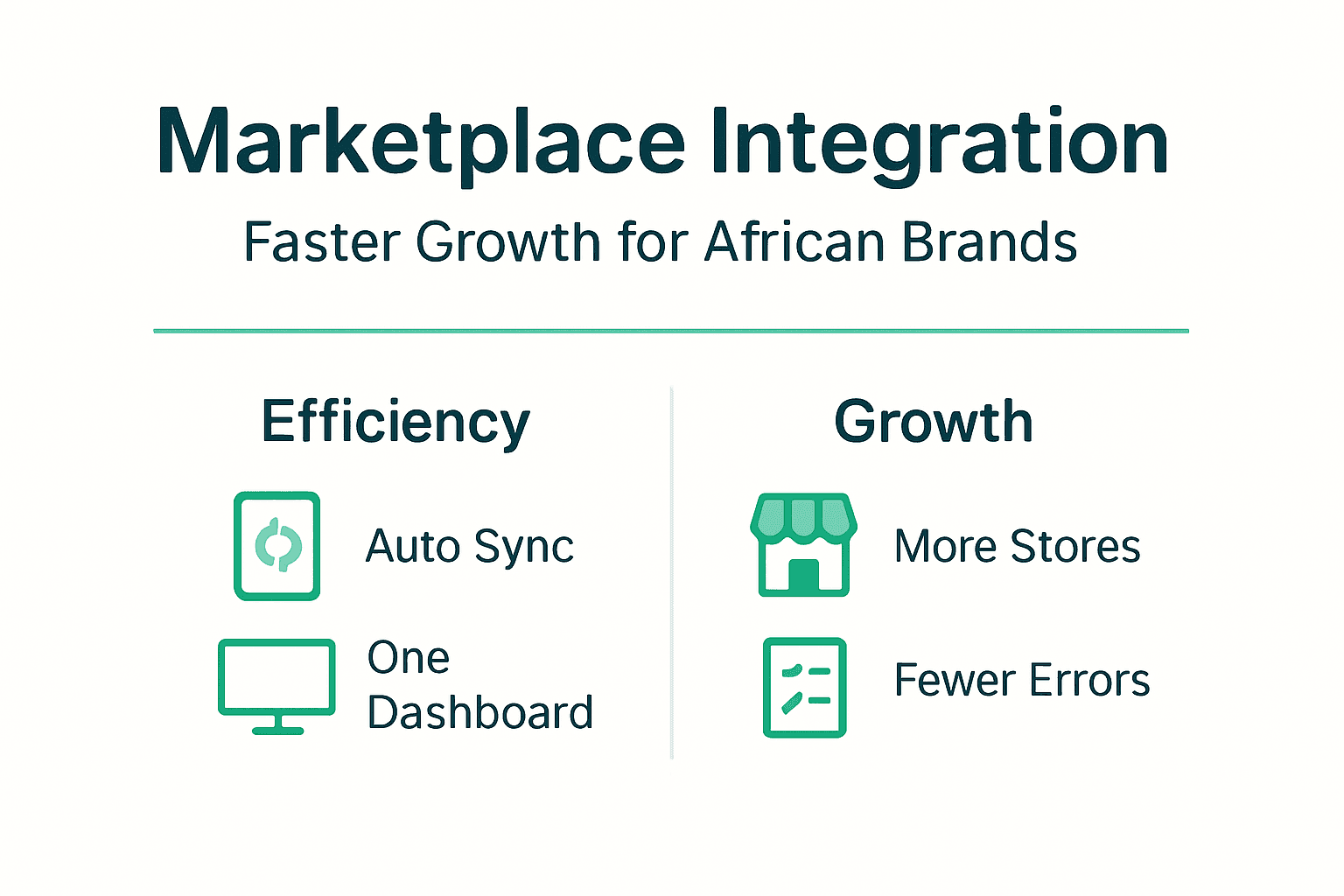
Performance analytics integration consolidates sales data, conversion rates, and operational metrics from all channels into unified dashboards. Instead of logging into multiple marketplace reporting tools, you access comprehensive insights from a single interface. This centralized visibility reveals which products perform best on specific marketplaces and which channels drive the most profitable sales.
Using analytics data for strategic decisions improves product mix optimization and marketing resource allocation. Data might reveal that electronics sell better on Takealot while fashion items convert higher on Jumia, informing inventory purchasing and promotional strategies. These insights help you double down on what works and phase out underperforming combinations.
Competitive positioning improves through rapid market response enabled by automation and real-time data. When competitors lower prices or launch promotions, your system detects the change and adjusts accordingly within minutes rather than days. This responsiveness prevents lost sales to more agile competitors.
Key advanced feature benefits include:
- Currency conversion automation that maintains profit margins across different market currencies
- Promotional calendar integration that coordinates sales events across multiple channels
- Customer review aggregation that collects feedback from all marketplaces for comprehensive reputation monitoring
- Predictive analytics that forecast demand patterns to optimize inventory levels
- Bulk editing tools that update multiple listings simultaneously across all channels
You can discover additional marketplace advanced features that enhance competitive positioning and operational intelligence, or explore automated repricing benefits through external research on international pricing strategies.
Common misconceptions about marketplace integration
Data security concerns often deter merchants from adopting integration platforms despite robust protections. Reputable platforms maintain GDPR and PCI DSS certifications that enforce strict data handling protocols and encryption standards. Your product and customer information receives the same protection as banking transactions.
Integration guarantees growth is a myth that sets unrealistic expectations. While integration improves operational efficiency and expands market reach, actual sales depend on product quality, pricing strategy, marketing effectiveness, and customer service. Integration provides the infrastructure for growth but doesn’t replace sound business fundamentals.
Technical complexity barriers prevent some small merchants from exploring integration options. Many modern platforms offer managed services where technical teams handle setup, configuration, and ongoing maintenance. You don’t need in-house IT expertise to benefit from integration if you select a platform with comprehensive support.
Top misconceptions addressed:
- Security risks are minimal with certified platforms using bank-level encryption and compliance standards
- Growth depends on multiple business factors, not just integration, though efficiency gains create growth opportunities
- Technical barriers are manageable through managed services and vendor support, making integration accessible to small businesses
Understanding these realities helps you evaluate integration objectively and make informed decisions about implementation timing and platform selection. Review common misconceptions to gain additional clarity on integration capabilities and limitations.
Challenges and tradeoffs in integration
Initial financial investment includes platform subscription fees, potential development costs for custom integrations, and staff training expenses. Small merchants may find upfront costs significant relative to current revenue, requiring careful ROI analysis. However, these costs typically decrease as a percentage of revenue as your business scales.
IT resource requirements vary based on platform complexity and your existing technical infrastructure. Cloud-based solutions with pre-built marketplace connectors minimize technical demands compared to custom-built integrations. Evaluate whether your team can manage the chosen platform or if you need external technical support.
Integration timelines range from two weeks for simple setups with pre-built connectors to three months for complex implementations involving custom workflows and legacy system integration. Rushing implementation increases error risk and may require costly corrections. Plan adequate time for testing before going live.
Tradeoffs between upfront costs and long-term efficiencies require strategic thinking. Spending more initially on a comprehensive platform may deliver better long-term value than choosing the cheapest option that requires frequent workarounds. Calculate potential time savings and error reduction when evaluating cost.
Common challenges and mitigation strategies:
- Budget constraints can be managed by starting with core features and adding advanced capabilities as revenue grows
- Technical skills gaps are addressed through managed services or hiring experienced consultants for implementation
- Change management resistance requires clear communication about efficiency benefits and staff training on new workflows
- Data migration complexity is reduced by cleaning and organizing data before migration rather than transferring messy legacy information
- Ongoing maintenance needs are minimized by selecting platforms with automatic updates and dedicated support teams
Learn about integration challenges and trade-offs through comprehensive fulfillment and logistics services that address common implementation obstacles with proven solutions.
Real-world case studies
African brand expanded to 3 new marketplaces 50% faster and cut compliance/logistics costs by 20% using MoreShores, demonstrating measurable benefits of integrated marketplace management. The brand previously managed each marketplace manually through separate logins and spreadsheets, limiting expansion capacity.
Key benefits achieved through integration:
- Time to market decreased from 12 weeks to 6 weeks for new marketplace launches by eliminating manual listing creation
- Compliance costs dropped 20% through automated VAT calculations and customs documentation generation
- Inventory accuracy improved from 87% to 99%, reducing cancellations and improving marketplace seller ratings
- Customer satisfaction scores increased 15% due to faster delivery enabled by optimized logistics routing
- Operational staff time allocated to marketplace management decreased 60%, allowing redeployment to customer service
“Integration with MoreShores allowed us to expand to three international marketplaces in half the time while significantly reducing our compliance and logistics expenses. The automated workflows eliminated hours of manual data entry each week.”
Lessons learned emphasize the importance of thorough data preparation before migration and phased rollout to manage change effectively. The brand started with their top 100 products on one new marketplace, validated the workflow, then rapidly expanded to full catalog integration across all channels. This measured approach built confidence and identified optimization opportunities early.
This success story illustrates how marketplace integration delivers transformational results beyond simple time savings to encompass cost reduction, improved accuracy, and enhanced customer experience. You can review additional MoreShores case studies to see diverse examples of merchant success across different product categories and target markets.
Discover seamless marketplace integration with MoreShores
Scaling your e-commerce business across multiple African and international marketplaces requires robust infrastructure that combines listing management, compliance automation, and logistics coordination. MoreShores offers end-to-end marketplace integration solutions specifically designed for African merchants expanding internationally and global brands entering African markets.
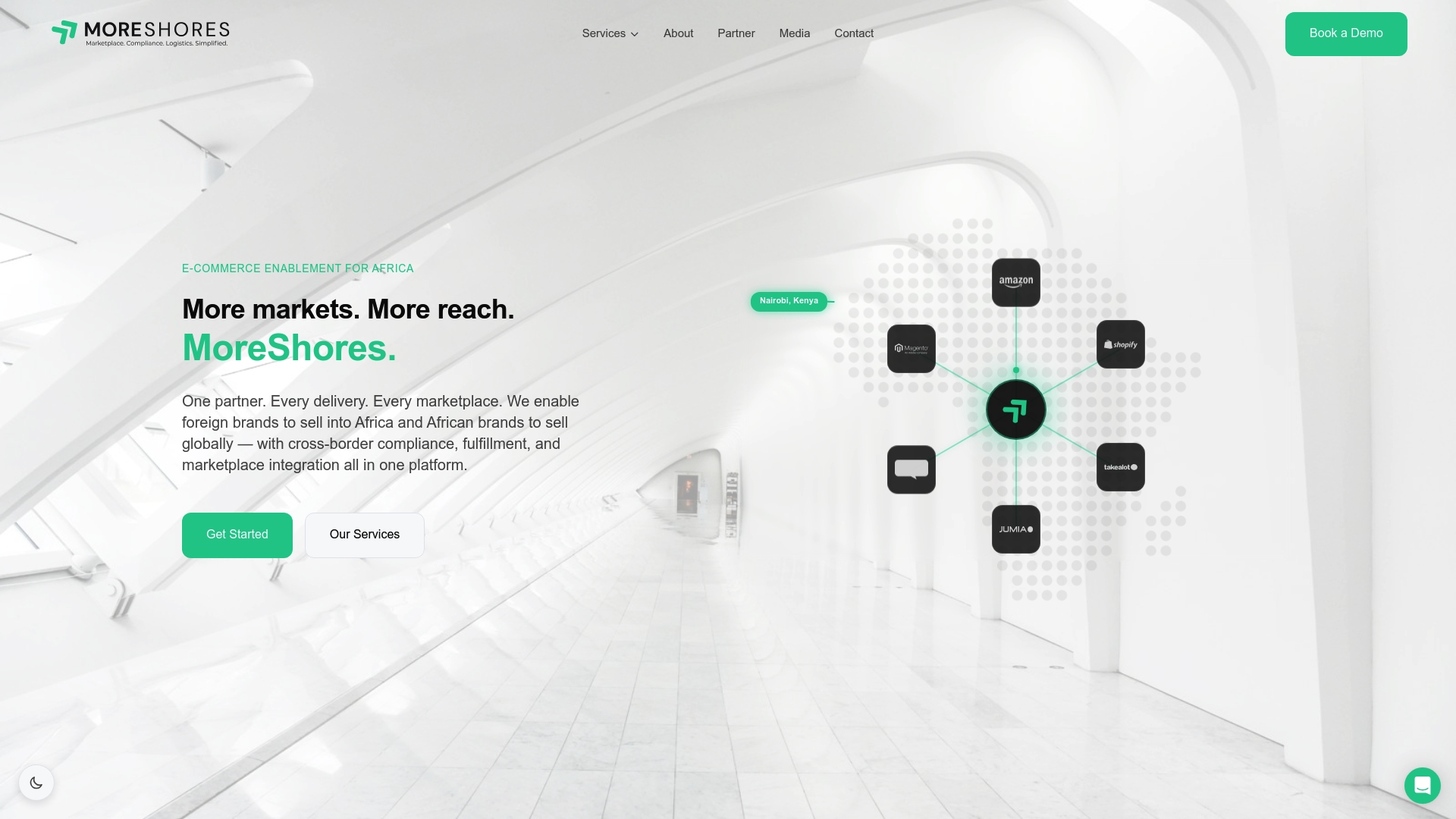
Connect your product listings across Jumia, Takealot, Kilimall, Amazon SA, and major storefronts like Shopify and WooCommerce through a single unified platform. Synchronize inventory in real time, automate cross-border compliance workflows, and access expert support tailored to African trade regulations and marketplace requirements.
Our comprehensive marketplace integration services handle technical complexity while you focus on growing sales. Combine integration with our cross-border enablement capabilities for complete import, warehousing, and fulfillment support. Ready to accelerate your marketplace expansion? Partner with MoreShores to access scalable integration infrastructure designed for African e-commerce success.
Frequently asked questions
What is marketplace integration?
Marketplace integration is a system that automatically synchronizes product listings, inventory levels, pricing, and orders between your central management system and multiple online marketplaces. It uses APIs to push updates across all connected channels in real time, eliminating manual data entry and reducing errors.
How long does marketplace integration implementation take?
Implementation timelines vary from two weeks for simple setups using pre-built marketplace connectors to three months for complex custom integrations. Timeline depends on the number of marketplaces, product catalog size, existing system complexity, and whether you use managed services or self-implementation.
Does marketplace integration guarantee increased sales?
Integration improves operational efficiency and expands market reach but doesn’t guarantee sales growth. Actual sales depend on product quality, competitive pricing, effective marketing, and customer service. Integration creates infrastructure that enables growth by removing operational bottlenecks and allowing faster market expansion.
Is my data secure with marketplace integration platforms?
Reputable integration platforms maintain GDPR and PCI DSS certifications that enforce strict data protection standards including encryption, access controls, and regular security audits. Your product and customer information receives bank-level security protection through certified platforms.
Which marketplaces does MoreShores support for African merchants?
MoreShores supports integration with major African marketplaces including Jumia, Takealot, Kilimall, and Amazon SA, plus seamless connection to Shopify and WooCommerce storefronts. This regional focus ensures compatibility with platforms where African consumers actively shop.
What are the main costs associated with marketplace integration?
Main costs include platform subscription fees, potential setup or customization charges, staff training expenses, and ongoing maintenance. Many platforms offer tiered pricing based on sales volume or number of connected marketplaces, allowing you to start small and scale investment as revenue grows.