8 Step 2026 Checklist: Takealot Seller Requirements, Inbound (SA)
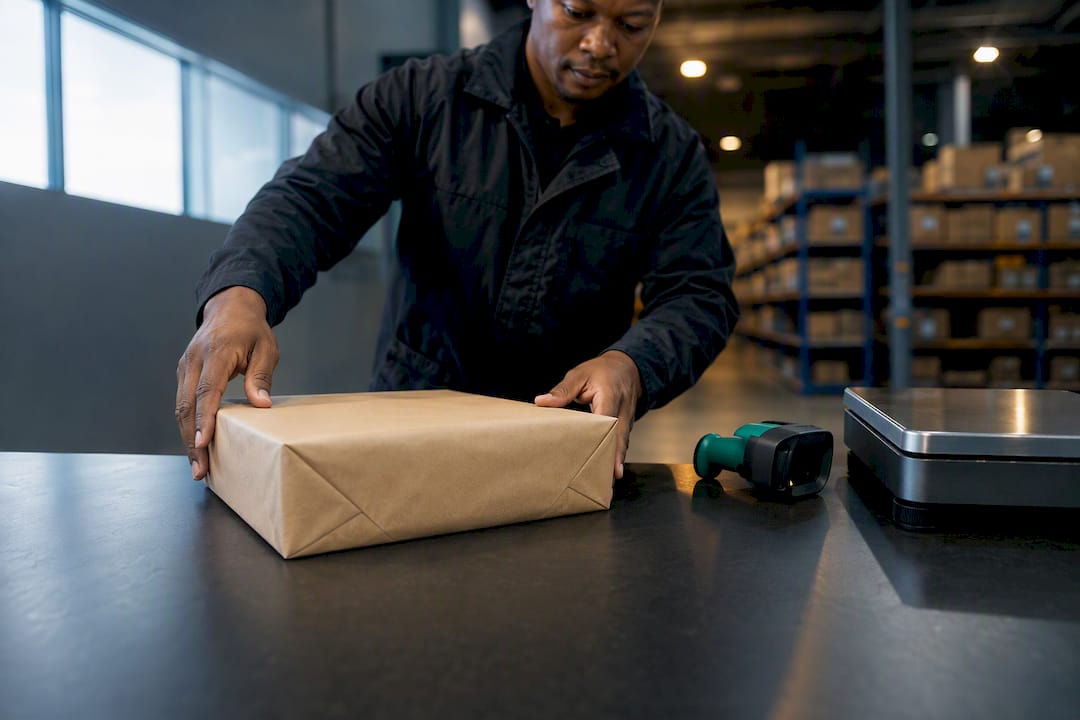
Both individuals and registered businesses can apply to sell on Takealot, provided you have three things ready before you open the Seller Portal: valid ID or company registration documents, a bank account matching the seller name, and barcodes for every product you plan to list. Budget for three ongoing costs too: a success fee, fulfilment and storage charges, and VAT on both your listed price and the fees themselves. Get those pieces lined up first, and the rest of onboarding moves fast.
TL;DR:
- Successful onboarding requires having a South African ID or company registration, matching bank account, and valid product barcodes before applying.
- Seller fees can consume 30 to 40 percent of the list price, with success, fulfillment, storage fees, and VAT stacking on top of each other.
- Fulfillment by Takealot offers faster delivery and Prime eligibility but involves storage fees and packaging standards, while self-shipping suits oversized or low-volume stock.
- Meeting technical listing standards, like white-background images and valid EAN or UPC barcodes, prevents delays and rejections during approval.
- Planning a small initial shipment, verifying all documentation, and fixing issues on trial parcels significantly reduces the risk of costly delays.
Table of Contents
- Meeting Takealot Seller Requirements: Registration and Onboarding
- What Do Takealot Seller Fees Actually Cost You?
- Fulfilment by Takealot vs. Self-Ship: Which Should You Choose?
- Getting Your Listings Right: Images, Barcodes, and Copy
- VAT and Tax Compliance for Takealot Sellers
- How Long Does Takealot Approval Actually Take?
- Your Pre-Launch Checklist Before the First Shipment
- How MoreShores Helps Sellers Meet Takealot’s Operational Requirements
- Quick Lessons From Onboarding Sellers
- Sources
Meeting Takealot Seller Requirements: Registration and Onboarding
Every application starts on the Takealot Seller Portal, where you fill in business or personal details, select your product categories, and upload supporting documents. The portal walks you through a fairly standard sequence: contact information, banking details, category selection, then document upload. Whether you’re a sole proprietor or a registered company changes what you upload, not whether you can apply.
Before you start the form, confirm you have:
- A South African ID (for individuals) or CIPC company registration documents (for registered businesses)
- A bank account confirmation letter, dated recently, showing an account name that matches your seller name exactly
- Contact details you’ll actually monitor, since Takealot communicates review status by email
- A barcode for each product, since listings without a valid EAN or UPC won’t go live
- VAT registration details if you’re registered, or an understanding of when you’ll need to register as revenue grows
Mismatched names between your bank account and your ID or CIPC documents are one of the most common reasons applications stall. If your business trades under a name different from the one on your bank account, sort that out before you apply rather than after.
Certain categories carry extra scrutiny. Health, beauty, and electronics listings often require product safety documentation or brand authorization letters before Takealot approves the listing. If you’re importing supplements, cosmetics, or electronics, have your compliance paperwork or supplier invoices ready to upload the moment a reviewer asks. Sellers who scramble for this documentation after submission tend to lose a week or more waiting on back-and-forth emails.

Tax documentation matters too, even for sellers below the VAT threshold. Have your tax reference number on hand and, if you’re VAT registered, your VAT number ready to enter during onboarding.
What Do Takealot Seller Fees Actually Cost You?
Three fee types determine what you actually take home: a success fee, fulfilment fees, and storage fees. All three interact with VAT in ways that catch new sellers off guard.
The success fee is a percentage of your VAT-inclusive selling price, charged only when an item sells. The percentage varies by category. Electronics typically sit at the lower end, while categories like apparel or beauty carry higher rates. Fulfilment fees depend on the size and weight of your product; a small, light item costs far less to pick and ship than something bulky. Storage fees kick in after a free window, then climb the longer stock sits unsold.
VAT applies on top of these fees, which means the fee you see quoted often isn’t the fee you actually pay once VAT is added.
| Fee type | What it’s based on | When it’s charged |
|---|---|---|
| Success fee | Percentage of VAT-inclusive selling price, varies by category | On each sale |
| Fulfilment fee | Product size and weight | On each sale processed through FBT |
| Storage fee | Volume stored, beyond the free window | Recurring, monthly |
| VAT on fees | Standard VAT rate applied to the above | On each fee charged |
Fee composition, not any single fee, is what wrecks new-seller margins. Success fee plus fulfilment plus storage plus VAT on all three can quietly consume 30 to 40% of your list price before you’ve accounted for your own cost of goods, according to Takealot’s fee guidance.
Here’s a simplified example. Say you list a product at R300, VAT-inclusive:
- Success fee (assume 12% for this category): R36
- Fulfilment fee (small item): roughly R25
- VAT on those combined fees: adds a further amount on top
- Net revenue before your product cost: somewhere around R220 to R230, depending on exact category rate and item size
Low-ticket items are the most exposed. A R100 product with a R25 fulfilment fee and VAT stacked on top can leave you with almost no margin once you subtract what you paid your supplier. Heavy or bulky items face the same squeeze from the fulfilment side, since fees scale with size and weight regardless of sale price. Run the numbers before you commit to a price point, not after your first sale.
Fulfilment by Takealot vs. Self-Ship: Which Should You Choose?
Fulfilment by Takealot (FBT) means Takealot’s warehouse stores, picks, packs, and ships your inventory. Self-fulfilment means you handle storage and courier logistics yourself, and Takealot simply lists the product. The trade-off is straightforward: FBT buys you Takealot’s delivery speed and Prime eligibility in exchange for storage fees and less day-to-day control over your stock.
The inbound process for FBT follows a set sequence:
- Create a Shipment Request in the Seller Portal specifying which SKUs and quantities you’re sending.
- Print barcode labels for every individual unit. Not one label per box, one per unit.
- Stick labels securely so they survive handling and scanning at the warehouse.
- Pack according to Takealot’s packaging standards to prevent damage in transit.
- Ship to the designated warehouse, where staff run quality checks against your Shipment Request before accepting stock.
Packaging matters more than most new sellers expect. Flimsy or oversized packaging can bump your item into a higher fulfilment-size tier, which raises your per-unit fee even though the product itself didn’t change.
Pro Tip: Test your packaging with one unit before sending a full shipment. A single rejected parcel at the warehouse costs you far less time to fix than discovering the same packaging problem across two hundred units.
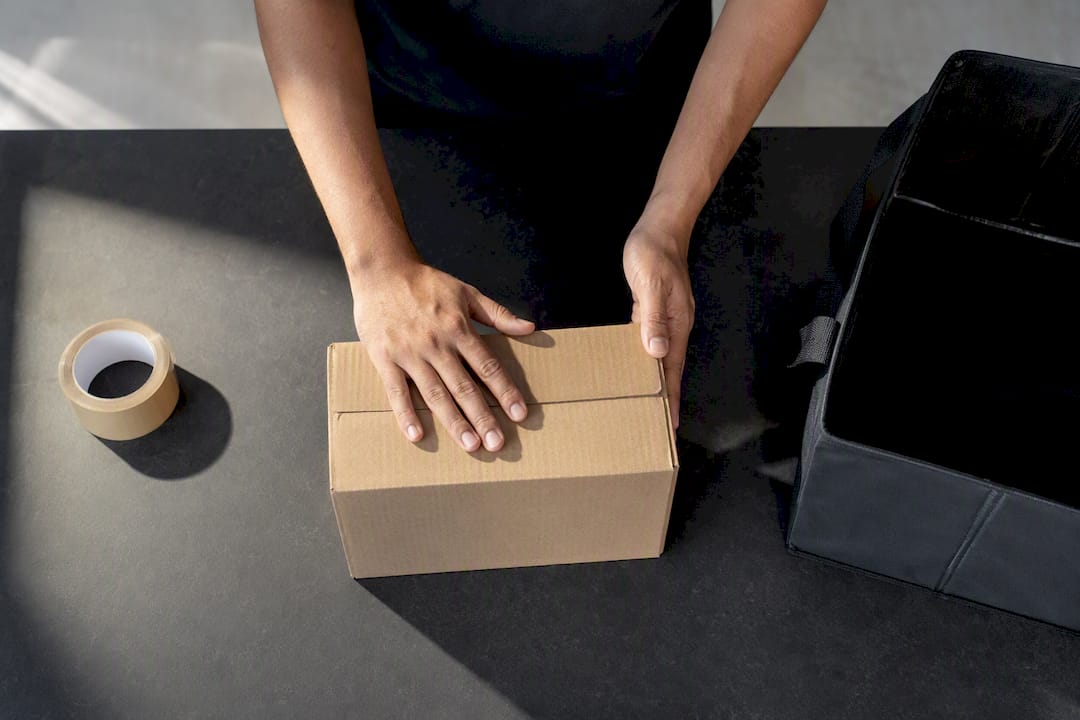
Self-ship makes sense for oversized items, low-volume or slow-moving stock, or products where you want direct control over how they’re handled. FBT tends to suit fast-moving, standard-sized goods where speed to the customer matters more than the storage cost.
Getting Your Listings Right: Images, Barcodes, and Copy
Listings that meet Takealot’s technical standards on the first submission move to live status faster than ones that need correction rounds.
- Product images need a plain white background, and Takealot’s minimum recommended resolution is 1,000 by 1,000 pixels.
- Submit multiple angles where relevant: front, back, packaging, and any size or usage shots that help a buyer decide.
- Every product needs a valid EAN or UPC barcode. GS1 is the recognized source for authentic barcodes, and using unverified or reused barcodes is a common cause of listing rejection.
- Titles should lead with the brand and product name, followed by the key distinguishing detail (size, color, quantity) rather than promotional language.
- Bullet points and specification fields should match the structured data Takealot expects for that category. Fields left blank or filled with vague text tend to get flagged in review.
The most frequent rejection reasons are duplicate or invalid barcodes, image backgrounds that aren’t white, and descriptions that don’t match the product’s actual category specifications. Fixing these before submission saves days.
VAT and Tax Compliance for Takealot Sellers
Every price you list is VAT-inclusive, and VAT applies again on top of the success, fulfilment, and storage fees Takealot charges you. That double layer is easy to miss when you’re pricing a new product for the first time.
If your annual taxable turnover crosses the mandatory VAT registration threshold, you’re legally required to register with the South African Revenue Service and charge VAT accordingly. Below that threshold, voluntary registration is an option worth discussing with a tax advisor, particularly if most of your input costs already carry VAT you’d like to claim back.
Keep supplier invoices, bank confirmation letters, and any proof of exports on file from day one. These documents matter at tax return time and if Takealot ever requests re-verification of your seller details.
Pro Tip: Set up a simple folder structure, digital or physical, from your very first shipment: invoices, bank statements, and barcode records in separate, dated folders. Retrofitting this after a year of trading is far more painful than starting organized.
Good data hygiene extends to customer information too. Keep order and customer data secure and don’t retain more personal information than the transaction requires.
How Long Does Takealot Approval Actually Take?
Review windows commonly run several business days, though the Seller Portal process can take up to around 10 business days when a category needs extra verification. Plan your launch date with that buffer in mind rather than assuming same-week approval.
The most common causes of delay:
- Bank account name that doesn’t match your ID or CIPC registration
- Missing or invalid barcodes on products you’ve listed for review
- Insufficient documentation for regulated categories like health, beauty, or electronics
Once approved, you get full Portal access, an invitation to an onboarding walkthrough covering the interface and shipment process, and the ability to create your first Shipment Request. If Takealot requests additional verification at any point, responding within a day or two rather than letting it sit is the single fastest way to shorten your time to going live.
Your Pre-Launch Checklist Before the First Shipment
Run through this sequence in the one to two weeks before your first inventory leaves your premises:
- Confirm Portal access and double-check your banking details are correctly linked.
- Verify your tax and VAT status matches what you’ve entered in the Portal.
- Finalize every listing with images, full specifications, and correct EAN or UPC mapping.
- Build a SKU-to-barcode reference sheet so you’re not hunting for numbers mid-pack.
- Confirm packaging materials meet damage-prevention standards for each product type.
- Book your courier or plan your Shipment Request delivery slot in advance.
- Size your first shipment to fit inside the free storage window rather than overstocking.
- Print a test batch of labels and send one trial parcel to confirm the warehouse accepts it before committing your full inventory.
That last step catches more problems than any other item on this list. A rejected trial parcel is a minor delay. A rejected full shipment is a costly one.
How MoreShores Helps Sellers Meet Takealot’s Operational Requirements
Meeting Takealot’s paperwork requirements is one challenge. Managing customs, warehousing, and multi-channel listings behind the scenes is another, especially for sellers sourcing stock internationally.
MoreShores acts as Importer of Record for cross-border shipments, handling customs clearance, duties, and VAT so your inventory arrives compliant and ready to list rather than stuck at a border post.
- Importer-of-record services that manage customs paperwork and duty calculations before stock reaches South Africa
- Warehousing and inventory management aligned with Takealot’s inbound labeling and packaging expectations
- A multi-courier fulfilment network that supports both FBT-style inbound shipments and self-fulfilled orders
- Marketplace integration that syncs listings and automates SKU-to-barcode mapping across Takealot and other channels
| What you need | How it typically gets solved |
|---|---|
| Customs clearance on imported stock | Importer-of-record handling of duties and VAT |
| Warehousing before first shipment | Inventory management with multi-courier dispatch |
| Consistent barcode/SKU mapping | Marketplace integration and listing sync tools |
| Managing multiple sales channels | Centralized channel distribution and listing management |
For sellers bringing products in from overseas suppliers, this kind of cross-border enablement removes a layer of complexity that has nothing to do with Takealot’s own review process and everything to do with getting stock into the country in the first place.
Quick Lessons From Onboarding Sellers
Three mistakes repeat constantly: underestimating fees when pricing, packaging that fails inbound checks, and shipping too much stock before sales velocity is proven. Start with a small first batch, watch what sells, then scale. Slow and deliberate beats fast and overstocked.
— Matt