Streamline global sourcing for Africa: Strategies for brands

TL;DR:
- Sourcing for African markets requires understanding diverse regulatory frameworks, logistics, and compliance realities.
- Brands often face customs delays, payment failures, and operational hurdles if they apply global playbooks without adaptation.
- Effective strategies involve evaluating market-specific factors, choosing flexible models, and partnering with experienced local logistics providers.
Sourcing for African markets is not simply a scaled-up version of what works in Europe or North America. Regulatory frameworks shift by country, logistics infrastructure varies widely, and cross-border e-commerce requires navigating complex rules and regulations that are still evolving under AfCFTA. Brands that copy and paste their existing global sourcing playbooks into Africa routinely encounter customs holdups, payment failures, and compliance gaps that erode margins fast. This guide gives you a practical, criteria-driven framework to evaluate your options, compare sourcing models, and make confident decisions for African market entry or expansion.
Table of Contents
- How to evaluate sourcing strategies for African markets
- The main global sourcing models: Pros and cons for Africa
- Supplier selection and sourcing diversification: When and why to mix models
- Making the right sourcing choice for your brand
- Why the classic playbook doesn’t work: What most brands get wrong in Africa
- Partnering for sourcing success: Next steps with MoreShores
- Frequently asked questions
Key Takeaways
| Point | Details |
|---|---|
| Tailor to Africa’s realities | Successful sourcing in Africa depends on adapting to local regulations, volatility, and logistical challenges. |
| Diversify suppliers smartly | Relying on 2–3 dependable suppliers with backup plans balances risk, cost, and agility. |
| Aggregator models are vital | Aggregator and consolidator models often solve fulfillment challenges that direct shipping cannot. |
| Leverage AfCFTA advantages | Using AfCFTA-enabled frameworks can simplify cross-border sourcing for international brands. |
How to evaluate sourcing strategies for African markets
Before choosing a sourcing model, you need an honest assessment of the operating environment. Africa is not a single market. It is a collection of 54 countries with different customs regimes, consumer protection laws, tax structures, and logistics realities. What works in South Africa may not translate directly to Kenya, Nigeria, or Egypt.
Start by asking these core questions:
- Customs and duties: What tariff classifications apply to your products in each target market? Are there preferential rates available under AfCFTA?
- Regulatory compliance: Do your products require in-country certification, labeling, or pre-shipment inspection? South Africa’s NRCS (National Regulator for Compulsory Specifications) approval, for example, is mandatory for many product categories.
- Catalog availability: Are all the SKUs you sell globally legal or registerable in your target African markets? Some products face restrictions on imports.
- Payment and checkout: Can customers in your target markets pay in local currency through a trusted method? Mobile money, USSD-based payments, and cash on delivery remain dominant in many regions.
- Consumer protection laws: Many African countries have strengthening consumer protection legislation that places return, refund, and warranty obligations on sellers.
- In-market presence: Some regulatory frameworks require a registered local entity or a designated Importer of Record (IOR) to clear goods through customs.
“Trade and cross-border execution must be designed around AfCFTA-enabled compliance and logistics realities, not simply catalog expansion. The rules are changing, and brands that build compliance into their sourcing model from day one move faster and at lower cost.”
This last point is critical. An Importer of Record handles customs clearance, duties, VAT, and regulatory filings on your behalf. If you lack an IOR arrangement, your shipments can be held indefinitely at the port of entry. Review the brand onboarding guide to understand what this looks like in practice before you commit to a sourcing path.
Pro Tip: Work with logistics and trade partners who already have documented experience operating under AfCFTA rules in your specific target markets. AfCFTA compliance is not theoretical. It requires operational relationships on the ground, not just paperwork.
The main global sourcing models: Pros and cons for Africa
With evaluation criteria in place, you can assess which sourcing model fits your brand’s market entry goals. Three main approaches apply in the African context: direct-to-consumer (D2C), aggregator or consolidator, and hybrid.
Direct-to-consumer shipping
D2C means your brand ships directly from origin to the end customer in Africa. It sounds simple, but in practice, it runs into several hard constraints:
- Shipping restrictions: Many international carriers restrict delivery to specific African addresses or impose high surcharges.
- Address validation: Street addressing is inconsistent in many African cities. Delivery failure rates spike without local last-mile partnerships.
- Payment failures: International payment gateways frequently decline African-issued cards due to fraud prevention rules.
- Customs delays: Without a reliable IOR arrangement, clearance can take days or weeks.
D2C can work for premium, low-volume shipments to major cities like Johannesburg, Lagos, or Nairobi where logistics infrastructure is strongest. But it rarely scales without significant support infrastructure.
Aggregator and consolidator models
The future of African cross-border e-commerce points to workarounds like retail aggregators as a practical alternative when direct fulfillment falls short. An aggregator buys or consolidates products through existing retail infrastructure, then handles cross-border shipping into Africa, often absorbing the complexity of customs, payments, and last-mile delivery.
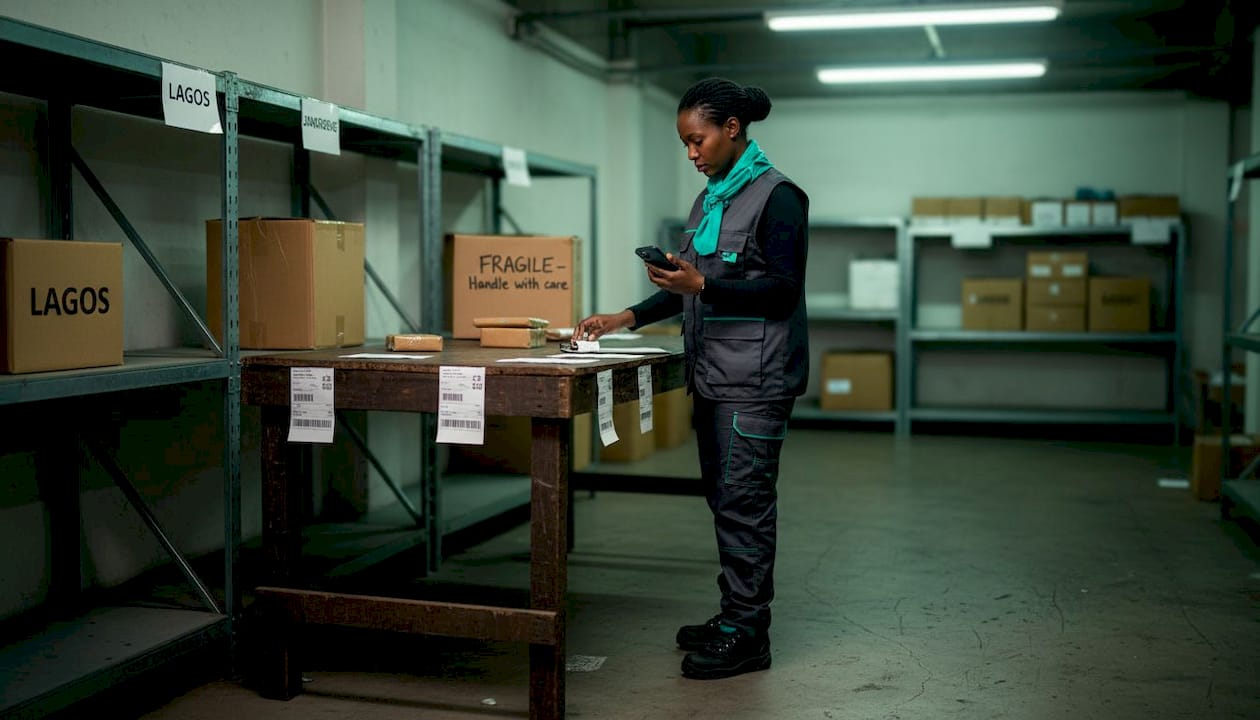
A US retail buying and re-shipping model, for example, involves a third-party buying from your retail storefront in the US, then consolidating orders for shipment to African buyers. This bypasses many of the direct D2C payment and address barriers. The tradeoff is margin compression and reduced brand control.
Hybrid and parallel sourcing
A hybrid model pairs D2C for supported markets with an aggregator or local fulfillment partner for markets where direct shipping does not reliably work. This approach adds operational complexity but maximizes reach. It also allows you to run contingency sourcing, where a backup supply channel is ready if your primary route faces disruption.
| Model | Cost | Brand control | Compliance burden | Scalability in Africa |
|---|---|---|---|---|
| Direct-to-consumer | Low (unit cost) | High | High | Limited without IOR |
| Aggregator/consolidator | Medium | Medium | Low to medium | High, faster entry |
| Hybrid/parallel | Medium to high | High | Medium | Best long-term fit |
Good marketplace integration is what makes hybrid models manageable at scale. Integrating your catalog across platforms like Takealot, Jumia, and Kilimall alongside your own storefront gives you visibility into which channel is performing, without having to manage each one as a separate silo. Review your e-commerce entry strategies to see how this maps to your product categories.
Pro Tip: In markets where D2C shipping is blocked or payment validation fails consistently, pairing a D2C approach with a local aggregator for that specific country reduces compliance headaches without abandoning your brand’s direct channel strategy.
Supplier selection and sourcing diversification: When and why to mix models
Choosing a sourcing model is only half the equation. You also need to decide how many suppliers to work with, and at what level of dependency. A nature.com study on Zimbabwe’s hospitality industry illustrates how supplier selection choices in an African context directly relate to operational outcomes, including cost control, delivery reliability, and resilience during supply disruptions.
Three approaches dominate in practice:
-
Single sourcing: One primary supplier for a product or category. Simple to manage, often cheaper due to volume, but creates significant risk if that supplier fails or raises prices unexpectedly.
-
Dual sourcing: Two suppliers for the same product or category. More resilient, allows price competition, and gives you a fallback. Slightly higher administrative burden. This is the most common recommendation for brands entering Africa with moderate product volumes.
-
Parallel sourcing: Multiple suppliers running simultaneously, often across different geographies. Highest resilience. Best suited for high-volume brands or categories with tight delivery SLAs. Higher management and coordination overhead.
When to use each:
- Use single sourcing when launching a pilot in one market with a trusted, proven partner who has an existing compliance and logistics track record in that country.
- Use dual sourcing when scaling to two or more African markets and you need price leverage or a backup in case of customs delays or supplier disruptions.
- Use parallel sourcing when you are operating across multiple African regions with diverse logistics needs, or when product demand is high enough that a single supplier cannot meet volume requirements reliably.
“Procurement planning in markets with volatility must account for transaction costs beyond the unit price. Long-term relationships with vetted suppliers reduce these hidden costs significantly, because trust lowers the overhead of verification and renegotiation.”
The transaction cost principle matters here. Every time you switch suppliers in a new market, you absorb onboarding, vetting, and compliance verification costs. Building long-term sourcing partnerships reduces these recurring costs and creates a more predictable supply chain.
| Model | Risk level | Unit cost | Agility | Best for |
|---|---|---|---|---|
| Single sourcing | High | Low | Low | Pilots, trusted markets |
| Dual sourcing | Medium | Medium | Medium | Multi-market scaling |
| Parallel sourcing | Low | Higher | High | High-volume, multi-region |
Contingency planning is not optional in Africa. Currency volatility, port congestion, political changes, and sudden regulatory shifts can disrupt even the most carefully constructed supply chain. Build contingency sourcing into your model from the start, not as a reaction to the first crisis.
Making the right sourcing choice for your brand
Having reviewed your options, the next step is aligning your sourcing strategy with your specific business goals, product category, and target markets.
Start with these checkpoints:
- Product type: Is your product regulated, high-value, perishable, or subject to import restrictions in your target markets? This narrows your model options quickly.
- Shipping constraints: Can your product be reliably shipped directly to end customers in your target African countries, or does it require in-country warehousing and local fulfillment?
- Compliance requirements: Have you identified the specific regulatory requirements (certifications, labeling, IOR) for each market? If not, this must come first.
- Consumer expectations: What are the expected delivery times and return policies in your target market? Marketplace customers in South Africa have different expectations than buyers in West Africa.
- Cost structure: What is your landed cost per unit under each model? Factor in duties, VAT, fulfillment fees, and marketplace commissions to get a real comparison.
- Brand control: How much control do you need over the customer experience, packaging, and post-sale service? Aggregator models reduce control; D2C and hybrid models preserve it.
When the analysis is complete, match your sourcing model to your entry objective. If you are testing a new market, start with an aggregator or hybrid model to minimize upfront risk. If you are scaling in a market you already understand, invest in local warehousing and a dual or parallel supplier structure.
The future of African cross-border e-commerce is clear on one point: when D2C shipping, product listing, or payment validation is blocked, the best sourcing strategy for that market may require an aggregator or consolidator as the primary operating model, not a secondary one. Build your decision process around this reality, not around the assumption that D2C will always be possible.
Revisit your e-commerce solutions options regularly. African market conditions change faster than most brands anticipate.
Pro Tip: Start with a flexible pilot model in one or two markets. Use real data from those pilots to inform how you structure sourcing for broader rollout. Your logistics partner’s operational insights from live market experience are more reliable than pre-launch market research alone.
Why the classic playbook doesn’t work: What most brands get wrong in Africa
Here is something most articles will not say plainly: the majority of international brands entering Africa underinvest in operational readiness and overinvest in catalog expansion. They spend months perfecting product listings and pricing, then get stopped at customs because they never established a proper IOR arrangement. Or they launch a D2C channel, only to discover that 40% of orders fail at the payment step because their gateway does not support local methods.
The classic playbook assumes that if your product is competitive and your marketing is sharp, distribution will follow. In mature markets, this is often true. In Africa, it is frequently wrong. Distribution infrastructure, compliance pathways, and consumer payment behavior must be sorted before you scale, not after.
What works instead is an adaptive, local-first model. This means:
- Building compliance and logistics infrastructure ahead of catalog launch, not in parallel with it.
- Treating each African market as operationally distinct, even when consumer demand signals look similar across borders.
- Investing in long-term local partnerships rather than transactional vendor relationships that collapse under the first disruption.
- Staying genuinely open to aggregator or hybrid routes, even if D2C is your preferred long-term model.
The brands that win in African market entry realities are the ones that treat operational pivots as normal, expected parts of market entry, not as failures. They build flexibility into their sourcing models from the start and learn fast when conditions change.
The most successful brands treat Africa as a set of dynamic, high-opportunity markets by designing their sourcing and logistics infrastructure to match those markets’ actual operating conditions, rather than forcing a global template onto local realities.
Partnering for sourcing success: Next steps with MoreShores
Understanding your sourcing options is the first step. Executing them reliably is where most brands need a partner with proven infrastructure and real market experience.
MoreShores provides end-to-end cross-border enablement designed specifically for brands entering or expanding in African markets. We act as your Importer of Record, handling customs clearance, duties, VAT, and regulatory compliance so your products move without unnecessary delays. Our fulfillment and logistics network covers warehousing, inventory management, and multi-courier last-mile delivery across key African markets. And our marketplace integrations connect your catalog directly to platforms like Takealot, Amazon SA, Jumia, and Kilimall, as well as your Shopify or WooCommerce storefront.
Whether you are running a pilot with an aggregator model or scaling a hybrid approach across multiple markets, MoreShores gives you a single point of accountability for compliance, fulfillment, and marketplace performance. Explore our full Africa e-commerce solutions to find the right starting point for your brand.
Frequently asked questions
What is the biggest sourcing challenge for international brands selling in Africa?
Navigating customs, country-specific regulations, and last-mile logistics is the primary challenge, because cross-border e-commerce requires navigating complex rules and regulations that vary significantly across African markets and are still evolving under AfCFTA.
How does the aggregator or consolidator model help with sourcing in Africa?
Aggregators buy products from retail sources and manage the cross-border logistics into Africa, providing access to markets where the future of African cross-border e-commerce shows direct fulfillment consistently falls short due to shipping, payment, or address validation barriers.
Should a brand use a single supplier or diversify sourcing in Africa?
Diversifying with two to three reliable suppliers and building contingency plans is strongly recommended, because a nature.com study on Zimbabwe’s hospitality industry confirms that procurement planning in volatile markets must account for transaction costs and supply disruption risks.
Is AfCFTA compliance mandatory for all cross-border sourcing into Africa?
AfCFTA compliance is not universally mandatory for all trade today, but brands that structure their sourcing around AfCFTA-enabled compliance gain preferential tariff access, faster clearance, and stronger long-term positioning across member states.