
Local parcel delivery in South Africa typically costs from a low amount of rand for small items to considerably more for bulky or rural deliveries, and cross-border orders add freight, insurance, duties, and VAT on top of that base rate. The single most useful move you can make this week is to run a landed-cost audit on your top SKUs and adjust checkout pricing or free-shipping thresholds before the gap between quoted and actual cost eats your margin.
TL;DR:
- Most shipping costs in South Africa vary significantly based on route, parcel size, weight, and delivery type, with rural and bulky items costing the most.
- Carriers bill either actual weight or dimensional weight, whichever is greater, making packaging choices and measurements critical for cost control.
- Automating shipping operations and using multi-courier rate shopping can cut costs and reduce manual workload, especially when testing on a single product line.
- Cross-border costs include freight, insurance, customs duties, VAT, and CIF charges, making landed-cost audits essential before listing international products.
- Setting appropriate shipping rates, thresholds, and speed options based on real costs helps optimize profit margins and customer satisfaction.
Table of Contents
- 1. Typical shipping costs and what affects them
- 2. How carriers calculate billable shipping: weights, dimensions, and surcharges
- 3. Shipping options and automation that cut cost and time
- 4. Cross-border and landed-cost basics for sellers importing into or shipping from South Africa
- 5. Practical pricing strategies for merchants
- 6. How MoreShores helps merchants manage shipping costs and cross-border complexity
- 7. How shipment size and order volume change your cost per unit
- 8. Comparing local and international courier services
- 9. Strategies for negotiating better shipping rates with carriers
- 10. How shipping speed options change the price you pay
- 11. How fuel price swings move your shipping rates
- 12. Reducing shipping damage and its hidden costs
- 13. Author perspective: practical priorities for merchants setting shipping policy
- How MoreShores can help you manage South African shipping costs
- Sources
- FAQ
1. Typical shipping costs and what affects them
Shipping price in South Africa depends heavily on lane: metro-to-metro deliveries (Johannesburg to Cape Town, for example) are the cheapest and fastest, regional routes cost more, and rural or farm-area deliveries carry the highest surcharges and longest transit windows. A small parcel, think a cap or a paperback, generally lands at the low end of the local courier’s rate card. A medium box runs noticeably more once dimensional weight kicks in, and bulky items like furniture or large appliances move into a different pricing tier entirely because couriers charge for the space a parcel occupies, not just its mass.
Several factors push a quoted price higher than the headline rate:
- Same-day or express delivery commands a premium over standard multi-day service.
- Cash-on-delivery options add a handling fee that many merchants forget to model.
- Rural or outlying postal codes often carry a remote-area surcharge regardless of parcel size.
- Peak season volume (November through January) can trigger temporary rate increases across most carriers.
Merchants selling into the South African market can use Statista’s ecommerce outlook to understand revenue and user behavior trends that inform how aggressively to price shipping relative to order value.
2. How carriers calculate billable shipping: weights, dimensions, and surcharges
Every courier bills whichever is greater: actual weight or dimensional weight. Dimensional weight is calculated by multiplying a parcel’s length, width, and height, then dividing by a volumetric divisor that varies by carrier and typically falls in a range disclosed on that carrier’s own rate calculator. A lightweight but bulky item, a lampshade or a stack of foam packaging, can end up billed well above its scale weight once this formula applies.
To avoid rate-card surprises, check these steps before you commit to a price on your storefront:
- Weigh and measure your packaged product, not just the item itself.
- Run the dimensions through your carrier’s online calculator to see actual versus dimensional weight.
- Add fuel surcharges, which most carriers adjust monthly.
- Add remote-area or residential delivery fees if your typical buyer is outside a metro.
- Add insurance and signature-required fees for higher-value orders.
Packaging choices matter more than most merchants assume. Oversized boxes with excess void fill inflate dimensional weight, and slower handling at your own warehouse can push a parcel into a different cutoff time, adding a day to transit and sometimes triggering a different rate tier entirely.
Pro Tip: Re-measure your packaged dimensions for your top five SKUs every quarter since packaging changes and seasonal inserts often increase billed weight without anyone noticing.
3. Shipping options and automation that cut cost and time
Merchants generally choose between two operational setups: a multi-courier rate-shopping platform that compares several carriers per shipment, or a single-courier contract negotiated directly. Rate-shopping tends to win on price because it exposes competition on every lane, but it adds a layer of software and occasionally inconsistent service quality between carriers. A single-courier contract is simpler to manage and can deliver more predictable transit times, though you lose the ability to shop around when one carrier raises rates.
Automation delivers the clearest return on time, not just cost:
- Bulk label printing removes the single biggest manual bottleneck in daily pack-and-ship work.
- Scheduled pickups eliminate the need to drop parcels at a depot.
- Automated tracking notifications cut support tickets asking “where is my order.”
- Return automation speeds refunds and frees warehouse staff from manual exception handling.
To pilot this without overhauling your whole operation, pick one product line, measure how long pack-to-pick currently takes per order, implement one automation feature, and compare labor cost before and after over two weeks.
4. Cross-border and landed-cost basics for sellers importing into or shipping from South Africa
Landed cost is the real number that determines whether a cross-border order is profitable, and it includes more than freight. Before you price an international listing, account for:
- Product cost, the base price you pay your supplier.
- Freight, the cost of moving the shipment from origin to destination.
- Insurance, which protects the shipment’s declared value in transit.
- CIF treatment (cost, insurance, and freight combined), since many duty calculations use this total as their base rather than the product price alone.
- Customs duty, assessed on the commodity’s classification and declared value.
- VAT, charged on the full landed value in most destination markets, not just the product price.
Decide early whether you will show customers an estimated duty and VAT figure at checkout or collect it on delivery. Estimated-at-checkout pricing improves conversion because buyers see one final number; collect-on-delivery shifts risk back to the customer and often causes abandoned parcels at customs.
Three operational choices reduce the chance of a nasty landed-cost surprise: working with an Importer of Record so a qualified party handles customs clearance on your behalf, using bonded warehousing to defer duty payment until goods actually sell, and quoting Delivered Duty Paid (DDP) terms so the price a customer sees already includes everything they will pay.
5. Practical pricing strategies for merchants
Choosing how to charge for shipping is as important as calculating what it actually costs you. Follow a simple decision rule, then monitor the outcome.
- Use a flat shipping rate when your parcel sizes and destination mix are tightly predictable, since flat rates are easy for customers to understand and easy for you to forecast.
- Switch to live carrier rates at checkout when your catalog includes a wide spread of weights, sizes, or destinations, because a flat rate in that scenario either overcharges light orders or loses money on heavy ones.
- Set a free-shipping threshold by dividing your target shipping cost ratio into your average order value, then round to a number slightly above your current average order value to nudge basket size upward.
- Review the threshold whenever your shipping cost ratio drifts, recalculating rather than leaving the number static for a full year.
Track three numbers on a recurring basis: average shipping cost per order, shipping cost ratio (total shipping cost divided by total order revenue), and shipping exceptions per 1,000 orders, which catches address errors, failed deliveries, and damage claims before they become a pattern.
6. How MoreShores helps merchants manage shipping costs and cross-border complexity
MoreShores maps directly onto the cost drivers above. Its Importer of Record service handles customs clearance, duties, and VAT so landed cost stops being a guessing game. Fulfilment and warehousing addresses packaging and handling time, the same factors that push dimensional weight and dispatch delays. Multi-courier fulfillment spreads orders across carriers to find the better rate on each lane, and marketplace integration connects listings across Takealot, Amazon SA, Jumia, and Kilimall so shipping rules stay consistent regardless of where the order originates.
A practical pilot looks like this:
- Run a landed-cost audit on your five highest-volume SKUs.
- Test fulfillment through one courier relationship for a single product line.
- Compare the resulting landed cost against your current checkout price.
Before reaching out, have your SKU list, typical parcel dimensions, and top three destination regions ready. It shortens the first conversation considerably.
7. How shipment size and order volume change your cost per unit
Bulkier shipments cost more per parcel, but larger volume often costs less per unit once a carrier offers a tiered discount. Courier rate cards typically step down per-kilogram pricing as total monthly volume crosses certain thresholds, which rewards merchants who consolidate shipping under one account rather than splitting volume across multiple small accounts to chase marginally better quoted rates on individual lanes.
Consolidation has a second benefit beyond price: it simplifies your billing and claims process, since you are tracking exceptions against one carrier relationship instead of three or four. Merchants who ship a mix of small and bulky items sometimes assume splitting by size across different couriers saves money, but in practice the administrative overhead of managing separate accounts, separate rate cards, and separate claims processes frequently outweighs the marginal rate difference. Before switching providers to chase a volume discount, calculate whether your current monthly volume is actually close to the next discount tier, since a small increase in consolidated volume can unlock a better rate without needing to add new business.
8. Comparing local and international courier services
South African merchants generally choose between domestic courier networks built for metro and regional delivery, and international carriers suited to cross-border parcels. Domestic couriers tend to offer faster transit within major metro areas and more competitive rates for standard parcel sizes, since their networks are optimized for in-country delivery density. International carriers bring broader customs documentation support and tracking visibility across borders, which matters more once a shipment leaves South Africa or enters it from abroad.
Neither category is universally cheaper: a domestic courier usually wins on price and speed for local orders, while an international carrier’s value shows up in customs handling and documentation accuracy for cross-border shipments. UPS and similar carriers publish online quote tools that let you validate pricing and confirm service availability for a specific lane before committing to it in your checkout settings. The right choice often depends less on brand reputation and more on whether a given carrier’s network actually reaches your customer’s postal code reliably.

9. Strategies for negotiating better shipping rates with carriers
Carriers negotiate on volume, consistency, and predictability, so the first step is documenting your actual monthly shipment count, average parcel weight, and destination mix before any conversation starts. A merchant who can show six months of steady volume has far more leverage than one presenting a one-time spike.
Ask specifically about tiered pricing thresholds, since many carriers will not volunteer where the next discount break sits. Bundling services, combining standard delivery, returns handling, and packaging supplies under one contract, often unlocks a better blended rate than negotiating each service separately. Multi-courier relationships also give you a credible comparison point: quoting one carrier’s rate card to another during a renewal conversation is a straightforward way to test whether your current price is still competitive.
Renegotiate on a schedule rather than waiting for a rate increase notice to prompt the conversation. Annual reviews, timed before peak season contracts lock in, give you room to switch providers if a current partner will not move on price.
10. How shipping speed options change the price you pay
Faster delivery costs more, and the gap between standard and express service is often larger than merchants expect once fuel surcharges and priority handling fees stack on top of the base expedited rate. Same-day dispatch, cutoff times before noon in most networks, typically carries the steepest premium because it requires dedicated handling outside a carrier’s normal sorting schedule.
Offering speed tiers at checkout lets customers self-select into the cost they are willing to pay rather than forcing every order through the same expensive service level. A standard tier should remain your default, with express and same-day offered as paid upgrades rather than absorbed into your base shipping price. This keeps your average shipping cost per order predictable while still giving time-sensitive buyers an option.
11. How fuel price swings move your shipping rates
Fuel surcharges are one of the most volatile line items on any courier invoice, and most carriers adjust them monthly based on prevailing fuel prices rather than locking them into an annual contract. A sustained rise in fuel costs shows up quickly in your shipping bill even if your negotiated base rate has not changed at all.
Because this surcharge sits outside your control, the practical response is monitoring rather than negotiation. Review your carrier invoices monthly to confirm the surcharge matches the published rate, and build a small buffer into your shipping cost assumptions rather than pricing checkout shipping exactly to the current month’s rate card. Merchants who price shipping too tightly to a single month’s fuel surcharge often find themselves absorbing losses the next time fuel prices climb.
12. Reducing shipping damage and its hidden costs
Damaged parcels cost more than the replacement item: they trigger return freight, a reship, customer support time, and often a refund on top of the original shipping fee you already paid the carrier. Packaging quality is the first line of defense, matching box size to product rather than over-boxing or under-boxing, and using appropriate void fill rather than relying on a courier’s handling care alone.
Fragile or high-value items benefit from a second layer of protection, rigid inner packaging plus a cushioned outer box, even when it adds slightly to dimensional weight. The added shipping cost from a larger box is almost always smaller than the combined cost of a damage claim, a reship, and a frustrated customer. Track damage incidents per 1,000 orders alongside your other shipping exception metrics, since a rising damage rate on a specific SKU usually points to a packaging fix rather than a carrier problem.

13. Author perspective: practical priorities for merchants setting shipping policy
Most merchants chase marginal carrier discounts before fixing the basics, and that order of operations is backward. Fast, reliable dispatch and accurate tracking do more for repeat purchase behavior than shaving a few rand off a rate card. Invest in that order: measure your current cost and exception rates, fix packaging, automate the repetitive steps, then negotiate with carriers once you know your real numbers. Merchants who want a managed option instead of building this in-house will find a shortcut in the next section.
— Matt
How MoreShores can help you manage South African shipping costs
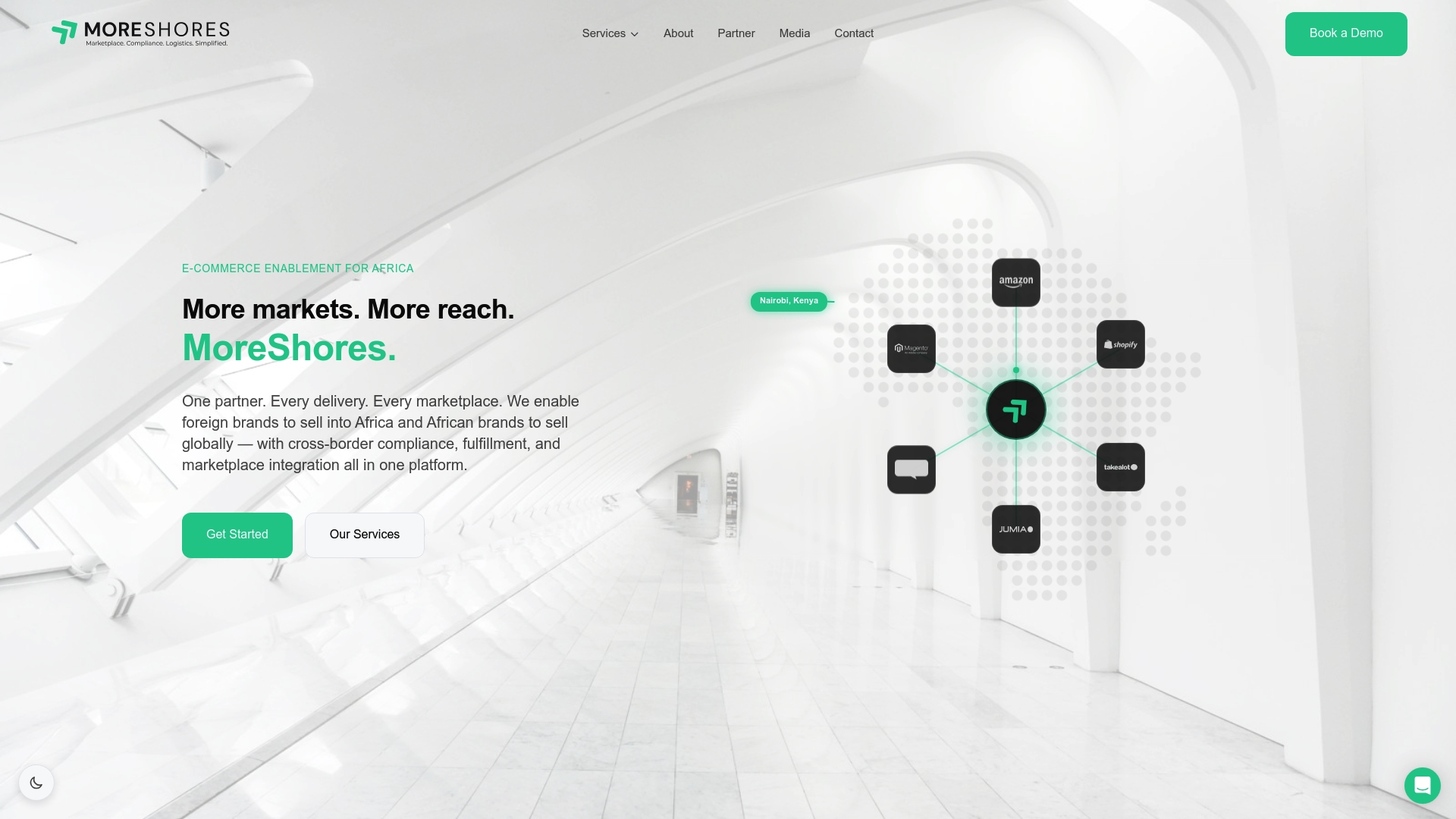
If you would rather hand landed-cost calculation, customs clearance, and multi-courier dispatch to a single partner, MoreShores handles Importer of Record compliance, warehousing, and fulfillment under one contract instead of separate agreements with brokers, couriers, and warehouses.
Before reaching out, have your SKU list, typical parcel dimensions, and top destination markets ready. Review the pricing page and fulfilment and warehousing details to see which services match your current volume, then get in touch to scope a pilot.
FAQ
What are the typical shipping costs in South Africa?
Local delivery costs vary by parcel size and route, with metro-to-metro deliveries generally priced lower than regional or rural lanes. Small parcels sit at the low end of a courier’s rate card, while bulky or dimensionally large items move into a higher pricing tier regardless of actual weight.
How much does it cost to ship a package from the US to the South African market?
Cross-border shipping cost depends on weight, dimensions, declared value, and the carrier’s fuel and remote-area surcharges at the time of shipment. The most accurate way to get a current figure is to run your exact parcel dimensions and destination through a carrier’s own online quote tool, such as UPS’s calculator, since rates change monthly with fuel surcharges.
How much does Amazon charge for shipping to South Africa?
Shipping charges on marketplace orders depend on the specific listing, seller, and fulfillment method chosen at checkout, and these fees are set by the marketplace and individual sellers rather than a single published rate. Check the specific listing’s shipping details at checkout for an accurate figure before ordering.
How can I ship something from South Africa to another country?
You will need to choose a carrier (domestic courier or international carrier), accurately declare the shipment’s value and contents for customs, and account for destination-country duties and VAT that the receiving customer or your business may need to cover. Working with an Importer of Record in the destination market removes much of the compliance guesswork from this process.
What is a reasonable free-shipping threshold for a South African online store?
A reasonable threshold is calculated by dividing your target shipping cost ratio into your current average order value, then setting the number slightly above that result to encourage larger baskets. Revisit the threshold whenever your shipping cost ratio moves outside your target range rather than leaving it fixed indefinitely.