Exporters: Avoid Delays on South Africa ePhyto Phytosanitary Certificate

A phytosanitary certificate is the official document confirming a plant shipment is free of regulated pests and meets the importing country’s plant health rules, and South Africa now issues these largely as ePhytos through the eCertification (eCert) platform. If you’re preparing an export or import, your first move is registering on eCert and contacting the National Plant Protection Organisation of South Africa (NPPOZA) to confirm your commodity’s specific requirements before you book any inspection.
TL;DR:
- Most exports of fresh fruit, flowers, seeds, or wood packaging require a phytosanitary certificate, especially for pest risk mitigation.
- Register on the eCert platform early and prepare complete, consistent documentation to reduce inspection delays and rejections.
- Inspection scheduling is the main bottleneck; booking immediately after application submission can prevent missing shipping deadlines.
- Costs vary with government fees, courier charges, and seasonal surcharges; confirm current tariffs and exchange system updates with South Africa’s authorities.
- A cross-border partner handling compliance, warehousing, and customs can streamline the certification process for high-volume or multi-market shipments.
Table of Contents
- What a phytosanitary certificate actually covers
- Who issues South Africa’s certificates and under what authority
- When you actually need a phytosanitary certificate
- Getting your certificate: the exporter’s step-by-step process
- Documents you need before you apply
- How long it takes and what drives the cost
- What inspectors look for and how to fix rejections
- A pre-shipment checklist to run before you ship
- How a cross-border partner reduces certification friction
- Deciding whether to handle certification yourself
- How MoreShores handles the compliance work for you
- Where to check official rules and system status
- Sources
- FAQ
What a phytosanitary certificate actually covers
A phytosanitary certificate is a formal attestation from a national plant protection organization that a shipment of plants, seeds, or plant products has been inspected and meets the importing country’s phytosanitary import requirements. Its core purpose in trade is preventing the spread of pests and diseases across borders while giving customs authorities in the destination country evidence that inspection has already happened.
The certificate’s structure and content follow International Standards for Phytosanitary Measures, and the electronic version, known as an ePhyto, is treated as the full equivalent of the traditional paper certificate rather than a lesser substitute. According to the IPPC ePhyto factsheet, an ePhyto should be produced according to ISPM 12 and carries the same phytosanitary data as a paper certificate, structured in XML format so it can move directly between national plant protection organizations.
That electronic exchange format matters for a few practical reasons:
- Speed: data moves between exporting and importing NPPOs without waiting on physical mail or courier delivery.
- Authenticity: XML-based exchange between official systems reduces the risk of altered or fraudulent paper documents reaching customs.
- Traceability: because the same structured data feeds both sides of the transaction, exporters can track a certificate’s status rather than guessing whether it arrived.
For exporters, the practical takeaway is that your internal records, invoice descriptions, and packing details need to be clean enough to map onto that XML structure without contradictions. A phytosanitary certificate is only as reliable as the data an inspector feeds into the system that produces it.
Who issues South Africa’s certificates and under what authority
The National Plant Protection Organisation of South Africa, operating under the Department of Agriculture, Land Reform and Rural Development (DALRRD), is the body responsible for inspecting consignments and issuing phytosanitary certificates for exports leaving South Africa. This authority is grounded in South Africa’s plant health legislation, which gives DALRRD the mandate to regulate the movement of plants and plant products to prevent pest introduction and spread.
The eCert platform is the operational arm of that authority. It is the government’s online system for submitting export applications, verifying commodity and consignment details, processing inspection outcomes, and delivering the finished phytosanitary certificate, according to the gov.za eCertification (eCert) page. Rather than a separate private tool, eCert is the official channel DALRRD uses to run the certification workflow from application to issuance.
If you need help navigating the system or confirming your obligations, a few channels are worth knowing:
- The eCert registration portal itself, where exporters and agents create accounts and submit applications.
- DALRRD’s help desks, listed on the gov.za eCertification page, for questions on account setup or processing delays.
- IPPC’s official country reporting page, which tracks formal notifications South Africa files about changes to its certification system, useful when you want to confirm the current status rather than rely on secondhand summaries.
Contacting NPPOZA directly before you commit to a shipping date is worth the extra step, particularly if your commodity or destination market has any history of additional scrutiny.
When you actually need a phytosanitary certificate
Not every plant-related shipment requires certification, but most commercial ones do. Fresh fruit, cut flowers, live plants, seeds for planting, and wood packaging material are the categories most consistently flagged for phytosanitary requirements, since these carry the highest risk of transporting pests or plant pathogens.

For imports into South Africa, the process usually starts before certification even enters the picture. Gov.za’s guidance on the plant import permit explains that importers must apply for an import permit when their product isn’t exempt, and that the NPPO inspects the consignment and issues a phytosanitary certificate once import requirements are confirmed met. In other words, the import permit sets the conditions, and the certificate is the proof those conditions were satisfied.
A few practical notes worth keeping in mind:
- Exemptions exist for some low-risk, highly processed plant products, but the exemption list is narrow and commodity-specific.
- Always verify with the destination country, since import requirements differ by market even for the same South African commodity.
- Wood packaging material often needs separate treatment certification (commonly heat treatment) in addition to, or instead of, a standard phytosanitary certificate.
When in doubt, treat certification as the default requirement and confirm exemption status rather than assuming your shipment qualifies.
Getting your certificate: the exporter’s step-by-step process
Once you’ve confirmed your commodity needs certification, the workflow follows a fairly consistent sequence, whether you’re shipping citrus, cut flowers, or packaged seed.
- Register on eCert and, where required, the central business registry. Your company profile needs to be active and verified before you can submit any export application.
- Prepare your submission with complete commodity and consignment details. This includes botanical names, quantities, packing type, origin location, and any traceability records tied to the farm or facility of production.
- Submit the application through eCert and note the reference number it generates, since this is what ties your paperwork to the eventual inspection booking.
- Arrange the physical inspection. An NPPOZA inspector examines the consignment for pests, contamination, and packaging compliance against the requirements of the destination market.
- Receive certification once the inspection passes. The inspector’s findings feed back into eCert, which produces the ePhyto record.
- Track and retrieve the certificate. Depending on the importing country’s system and your buyer’s preference, the ePhyto can be exchanged electronically NPPO to NPPO, or you can print a paper copy to travel physically with the cargo.
- Address any special import-country declarations. Some destinations require additional endorsements, such as specific treatment statements or additional pest freedom declarations, which need to be flagged before inspection, not after.
Since October 1, 2025, South Africa resumed and updated aspects of its ePhyto exchange system, and the IPPC’s reporting notification on this change is the most reliable place to confirm current exchange modes rather than relying on older guidance. If your buyer’s country accepts ePhyto electronically, confirm that with them directly, because not every importing NPPO has the same level of system readiness.
Pro Tip: Book your inspection slot as soon as your eCert application is submitted, not after you’ve finished packing, since inspection scheduling is often the longest single delay in the whole process.
The sequence sounds linear, but the real bottleneck is usually step two: incomplete or inconsistent commodity data. Inspectors cannot certify what they cannot verify, and any mismatch between your application and the physical consignment triggers a hold rather than an approval.
Documents you need before you apply
A clean phytosanitary application depends on having your supporting paperwork ready before you submit, not scrambled together after an inspector asks for it.
- Commercial invoice and packing list, matched exactly in commodity description, quantity, and packaging detail.
- Bill of lading or air waybill, confirming the shipment’s actual transport route and consignee.
- Copy of the importer’s permit, when the destination country requires one on the receiving end.
- Phytosanitary statement elements, which typically include pest freedom declarations and, for certain commodities, additional attestations like cold treatment records or pre-shipment fumigation certificates.
- Traceability records, tying the consignment back to a specific farm, packhouse, or production batch.
The most common paperwork failure isn’t a missing document. It’s a mismatch: the packing list says one quantity, the invoice says another, and the certificate application says a third. Inspectors treat these discrepancies as a compliance issue first and a clerical error second, so reconcile every figure across every document before submission rather than assuming small differences will be waved through.
How long it takes and what drives the cost
Getting a certificate issued involves several sequential phases, and delays tend to stack rather than run in parallel. Registration and account verification on eCert typically happens once and is fast if your company details are already in order. Application processing and inspection scheduling are the phases most affected by seasonal shipping volume, particularly around South Africa’s peak fruit and flower export windows. Certificate issuance itself is usually quick once inspection is complete and the outcome is favorable.
Fee considerations sit alongside timeline pressure. Government inspection fees form the baseline cost, and according to eCert user guides, tariffs can change at the start of the government’s financial year, which is worth checking if you’re planning shipments that straddle that period. On top of the base fee, seasonal surcharges, courier costs for physical certificate delivery, and administrative charges from any agent handling your application on your behalf can add up.
A South African government notification confirms that NPPOZA resumed and updated its ePhyto exchange arrangements on October 1, 2025, which matters directly for exporters planning shipment timing around that transition. Confirming your buyer’s system readiness against that update avoids a shipment stuck waiting on a certificate exchange method neither side has fully tested.
- Register early in the season rather than during peak export windows to avoid inspection queue delays.
- Confirm tariff changes at the start of each financial year before budgeting shipment costs.
- Use a single point of contact for document assembly to avoid the back and forth that adds days to processing.
What inspectors look for and how to fix rejections
Inspectors are checking for a specific set of risks, not conducting a general quality review. Pest presence, contamination, correct labeling matched to the consignment, and packaging integrity are the priorities, since these are the exact factors a phytosanitary certificate is meant to attest to.
Common documentation issues that trigger delays or outright rejection include mismatched commodity descriptions between the application and the physical shipment, missing import permits on the receiving end, and incomplete traceability records that leave inspectors unable to confirm origin. For perishable exports specifically, inspectors often expect confirmation that cold treatment began before the inspection itself, and storage facilities are expected to maintain physical segregation between consignments headed to different destinations to prevent cross-contamination.
- Reconcile all documents before submission so descriptions and quantities match exactly across invoice, packing list, and application.
- Confirm import permit status with your buyer before shipping rather than assuming it exists.
- Maintain physical segregation for perishable goods bound for different markets, since mixed storage is a frequent cause of failed inspections.
If a consignment fails inspection, the corrective path usually involves addressing the specific nonconformance identified, whether that’s re-treating the goods, correcting documentation, or improving segregation, and then requesting a re-inspection through the same eCert application reference rather than starting from scratch.
Pro Tip: Keep a written log of every corrective action taken after a failed inspection, since a documented paper trail speeds up re-inspection requests and reduces the chance of the same issue recurring.
A pre-shipment checklist to run before you ship
Running through a structured checklist in the days before shipment catches the errors that cause the most common holds.
- Confirm your eCert and central business registry accounts are active and that your contact details on file are current.
- Assemble your full document pack, cross-checking commodity descriptions, quantities, and packaging details across every paper.
- Verify cold-chain and segregation arrangements for perishable goods, confirming treatment started where required and that storage keeps destination-specific consignments apart.
- Check labeling and traceability records trace back cleanly to the originating farm or facility.
- Confirm your inspection appointment time and any follow-up steps the inspector may require.
- Track the ePhyto’s delivery status once issued, and print a paper copy if your buyer’s country requires physical documentation to travel with the cargo.
Running this list in the days before dispatch, rather than only once, catches problems while there’s still time to fix them.
How a cross-border partner reduces certification friction
Most of the friction exporters hit isn’t the certification rule itself, it’s the operational load around it: registering accounts, entering the same commodity data multiple times across different systems, and coordinating inspection scheduling with a shipping deadline that doesn’t move.
A cross-border enablement partner handling document workflows, importer-of-record responsibilities, and warehousing segregation removes a meaningful chunk of that load. Rather than an exporter managing eCert submissions, customs entries, and courier coordination as separate manual tasks, a single partner can track them as one connected workflow.
- Document handling that keeps invoice, packing list, and certificate application data consistent across every submission.
- Importer-of-record services that take on customs clearance and regulatory compliance responsibilities directly, reducing the exporter’s own compliance burden.
- Warehousing with proper segregation, particularly valuable for perishable consignments headed to multiple destination markets at once.
- Proof-of-inspection filing and courier coordination, so the physical or electronic certificate reaches the right recipient without manual chasing.
MoreShores’ cross-border and compliance services work along these lines, managing import-of-record duties, customs clearance, and regulatory documentation as part of a connected fulfillment workflow rather than a series of disconnected vendor relationships. For exporters juggling multiple markets or perishable timelines, that kind of tracked, single-partner process is often what separates a smooth shipment from a delayed one.
Deciding whether to handle certification yourself
Whether you manage phytosanitary certification internally or bring in specialist help really comes down to volume, frequency, and the risk profile of what you’re shipping. A business exporting a handful of pallets a few times a year can usually manage the eCert process directly, provided someone owns the paperwork consistently. Once you’re shipping weekly, across multiple commodities, or into markets with stricter phytosanitary demands, the coordination cost of doing it all internally starts to outweigh the savings.
A few small process changes prevent most of the common delays: assign one person to own document reconciliation, book inspections the moment an application is submitted rather than after packing is finished, and keep a running file of every past rejection and its fix so the same mistake doesn’t repeat with a new shipment.
For first-time exporters, budget for the government inspection fee as your baseline cost, then add a buffer for courier delivery and any agent fees if you’re using outside help. Underestimating the coordination time, not the certificate fee itself, is where most first shipments run into trouble.
— Matt
How MoreShores handles the compliance work for you
Exporting plant products from South Africa means juggling eCert submissions, customs entries, and warehousing logistics at the same time, and MoreShores exists to take that combined load off your plate rather than hand you another portal to manage.
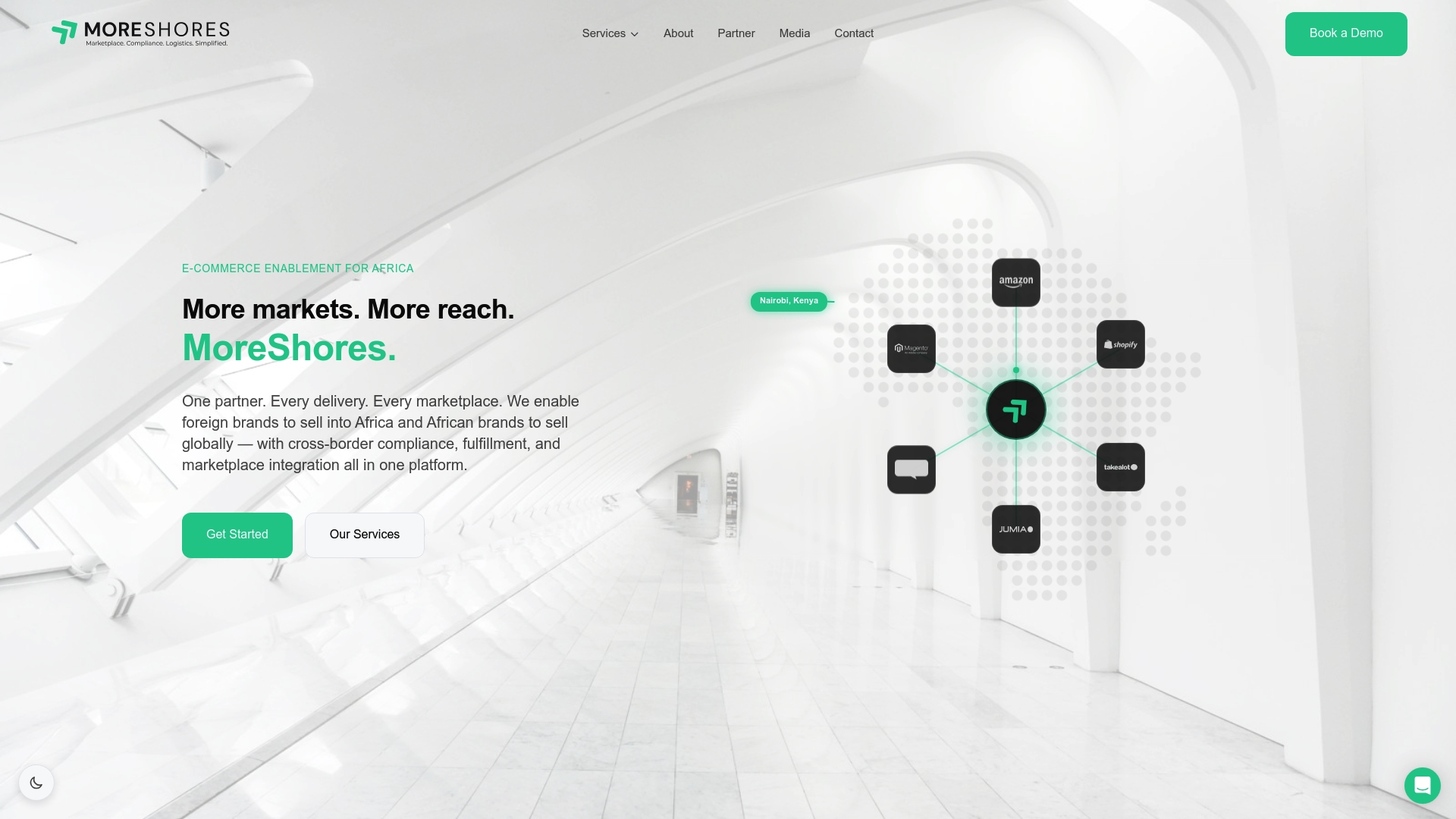
Our Cross-Border & Compliance service covers importer-of-record duties, customs clearance, and regulatory documentation as one connected process, so your certificate data, customs entry, and shipment records stay consistent instead of scattered across separate vendors. Paired with Fulfilment & Warehousing, which includes proper segregation for perishable or multi-destination consignments, the documentation flow and the physical handling of your goods move on the same timeline.
- Cross-border compliance handling for customs clearance, duties, VAT, and regulatory filings.
- Warehousing with segregation built for consignments headed to different markets or requiring cold storage.
- A single point of contact instead of separate brokers, couriers, and compliance agencies.
- Multi-courier fulfillment once your certified goods are cleared and ready for distribution.
If you’re planning your first export run or scaling up shipment frequency, check our pricing page for a breakdown of setup and fulfillment fees, or reach out directly to talk through how your specific commodity and destination market would move through the process.
Where to check official rules and system status
For the most current and authoritative information, go directly to the source rather than secondhand summaries. The gov.za eCertification (eCert) page covers registration, user guides, and support contacts. The gov.za import permit guidance explains South Africa’s import requirements and NPPO inspection process. For international standards context, the IPPC ePhyto factsheet and South Africa’s 2025 ePhyto system notification are the definitive references for how ePhyto exchange currently works.
Sources
FAQ
How much does a phytosanitary certificate cost?
The cost depends on government inspection fees, which can change at the start of the financial year according to eCert user guides, plus any courier or administrative charges tied to your shipment. There’s no single fixed price listed publicly, so confirm current tariffs directly through eCert or NPPOZA before budgeting.
What documents do I need to export from South Africa?
You’ll typically need a commercial invoice, packing list, bill of lading or air waybill, and the importer’s permit copy if the destination country requires one. Depending on your commodity, you may also need additional declarations such as cold treatment records or pest-free attestations as part of the phytosanitary certificate application.
How long does it take to get a phytosanitary certificate?
Processing time varies by phase: registration is usually fast, but inspection scheduling and application processing can slow down during peak export seasons. Booking your inspection as soon as you submit your eCert application, rather than waiting until packing is finished, helps avoid the longest common delay.
What is the purpose of a phytosanitary certificate?
A phytosanitary certificate confirms a plant shipment has been inspected and meets the importing country’s plant health requirements, preventing the spread of pests and diseases across borders. The IPPC ePhyto factsheet confirms the electronic ePhyto version carries the same data and legal weight as the traditional paper certificate.