
If your team is small and stretched thin, single-channel selling is usually the smarter starting point. If you can build or access a unified operational backbone, covering inventory, orders, and fulfillment, multichannel selling typically wins on reach and resilience, even with more moving parts to manage.
TL;DR:
- Multichannel selling requires a unified inventory management system to prevent overselling and ensure real-time stock synchronization across platforms.
- Adding new channels is profitable only if the margins after commissions and returns remain healthy and operational capacity can handle near real-time inventory updates.
- A proper multichannel setup depends on integrating inventory, content, fulfillment, and ownership via reliable tools, not just increasing the number of channels.
- Disconnected systems cause overselling and customer distrust, leading to higher customer service costs and lost margins; seamless data integration is key.
- Partnering with managed operations providers like MoreShores streamlines compliance, logistics, and integration, making multichannel expansion more achievable for cross-border sellers.
Table of Contents
- Multichannel vs Single Channel Selling: A Side-by-Side Comparison
- Benefits and Trade-Offs of Each Selling Model
- The Operational Backbone Multichannel Selling Actually Requires
- Should You Expand Channels or Stay Put? A Quick Scorecard
- How to Pilot a New Sales Channel Without Breaking Your Core Business
- Which KPIs Actually Matter Across Channels
- Single-Channel, Multichannel, and Omnichannel: What Each Term Actually Means
- How Customer Experience Changes Between the Two Models
- The Tools That Actually Run Multichannel Selling Day to Day
- What Happens When Multichannel Goes Right, and When It Doesn’t
- Author Perspective: What Actually Trips Up Multichannel Sellers
- How MoreShores Handles the Backbone So You Don’t Have To
- Sources
Multichannel vs Single Channel Selling: A Side-by-Side Comparison
The choice rarely comes down to which platform sells more. It comes down to what your operations can absorb without breaking.
Single-channel selling means running your business through one storefront or marketplace, whether that’s your own Shopify store or a single marketplace listing. Multichannel selling means listing and fulfilling across several platforms at once, say Amazon, a marketplace like Takealot, and your own WooCommerce site. Each has a distinct profile:
- Reach: Single-channel caps your audience at whoever visits that one store or marketplace; multichannel puts your products in front of shoppers who never would have found you otherwise.
- Complexity: Single-channel requires one set of listings, one pricing rule, one fulfillment path; multichannel multiplies each of those by the number of channels.
- Cost structure: Single-channel costs are predictable, platform fees plus fulfillment; multichannel adds integration tools, marketplace commissions, and sometimes extra staffing.
- Concentration risk: A single channel means one algorithm change or policy shift can cut your revenue overnight, a risk that’s growing as marketplaces tighten control over visibility and fees.
- Customer experience: Siloed channels tend to create inconsistent pricing, stock, and messaging unless something ties them together.
None of this makes multichannel automatically better. It makes multichannel more demanding, and that demand only pays off if you’re set up to meet it.
Benefits and Trade-Offs of Each Selling Model
Multichannel sellers tend to earn more from each customer over time. Research from Harvard Business School found that shoppers who buy across multiple channels spend more and generate higher lifetime value than single-channel shoppers. That’s the headline case for expansion.
Single-channel selling has its own real advantages, though. It’s easier to optimize one product page, one ad funnel, one customer service queue than five of each. Overhead stays low, and every operational decision is simpler to make and reverse.
Multichannel comes with costs that don’t show up on the pitch deck:
- Duplicated product content that has to be maintained across every listing.
- Higher return rates when customers order the same item from different fulfillment sources.
- Marketplace commissions that quietly erode margin on top of payment processing fees.
- Attribution headaches when a shopper researches on one channel and buys on another.
Pro Tip: Before adding a channel, calculate your fully loaded margin after commissions and returns, not just the marketplace’s advertised take rate. Some channels look profitable until you subtract the hidden fulfillment cost of split shipments.
The Operational Backbone Multichannel Selling Actually Requires
Channel count isn’t what breaks multichannel sellers. Disconnected systems are. A retailer running five channels off five separate inventory spreadsheets is one flash sale away from overselling every single one of them.
Four things separate multichannel sellers who scale smoothly from those who don’t:
- Unified inventory and order management. Centralizing stock data lets you fulfill from whichever warehouse or location makes sense, which cuts logistics costs and prevents stockouts that hit hardest during peak demand.
- A single source of product content. Pricing and descriptions need to match everywhere, or customers lose trust the moment they compare listings.
- A deliberate fulfillment design. Decide upfront whether orders ship from one central warehouse or from distributed nodes closer to each channel’s customers, and build a returns process that doesn’t require three different workflows.
- Clear ownership and governance. Someone needs to own each channel’s performance, compliance, and analytics, or accountability disappears into the gaps between platforms.
Retailers who consolidate customer, sales, and inventory data into one view make faster, better calls on where to put stock and marketing spend. That’s the backbone. Everything else is just channels sitting on top of it.
Should You Expand Channels or Stay Put? A Quick Scorecard
Before adding a channel, score yourself honestly on four factors:
- Operational capacity: Can your inventory sync in near real time, and can your fulfillment partner hit its service-level agreement without adding headcount?
- Marginal profitability: After commissions, ad spend, and return costs, does the new channel still clear a healthy margin?
- Demand signal: Have customers already asked for the product on that channel, or searched for you there, before you invest?
- Compliance readiness: Does the channel require certifications, import documentation, or tax registration you haven’t handled yet?
Score three or four of those “yes,” you’re Ready. Score two, you’re Needs Work, fix the gap before launching. Score zero or one, you’re Wait, and that’s not a failure. It’s the discipline that keeps single-channel sellers profitable while multichannel competitors bleed margin chasing reach they can’t support. Assessing costs and operational readiness before adding channels is standard advice for a reason.
How to Pilot a New Sales Channel Without Breaking Your Core Business
Expansion should happen in stages, not all at once.
- Pick a small set of pilot SKUs and define exactly what success looks like, whether that’s units sold, contribution margin, or repeat orders, before you list anything.
- Build your product feed and pricing rules for the new channel, then test inventory sync under real order volume, not just a demo environment.
- Define fulfillment and returns flows specific to that channel before the first order ships, including who handles a return that arrives at the wrong warehouse.
- Track KPIs daily during the pilot window and only scale once you’ve hit your predefined thresholds for margin and fulfillment accuracy.
This staged approach mirrors what ecommerce platforms recommend for testing channel-market fit before committing real budget.
Pro Tip: Run your pilot for at least one full order-to-delivery cycle, including a return, before deciding whether to scale. A channel that looks great on day three can fall apart the first time a customer sends something back.
Which KPIs Actually Matter Across Channels
Start with a short list: channel revenue, customer acquisition cost by channel, contribution margin, repeat purchase rate, average order value, and return rate. That’s enough to make real decisions without drowning in dashboards.
For customers who touch more than one channel before buying, use assisted-conversion and cohort views rather than forcing a single last-click model to explain the whole journey.
A useful benchmark: multichannel shoppers carry higher lifetime value than single-channel shoppers, which is exactly why contribution margin and repeat rate matter more than first-touch attribution alone. Add complexity to your measurement only once you trust the basics.
Single-Channel, Multichannel, and Omnichannel: What Each Term Actually Means
Single-channel selling means one storefront, one marketplace, one point of sale. It’s the simplest model to run and the easiest to master, which is exactly why so many businesses start there.
Multichannel selling means selling through several independent channels at once, your own site plus one or more marketplaces, each often operating with its own listings, pricing, and inventory count. The channels coexist without necessarily talking to each other.
Omnichannel is a different animal entirely. It merges every touchpoint into one unified customer experience, so a customer can browse on mobile, check stock at a physical location, and pick up an online order in person without any friction between systems. The distinction matters because businesses often say “multichannel” when they mean omnichannel, then get surprised when their disconnected channels don’t deliver a seamless feel. The real difference, as omnichannel marketing research points out, is integration depth, not the number of places you sell.
Multichannel can absolutely deliver strong results without full omnichannel integration. It just requires you to be honest about which model you’re actually running, so you don’t promise customers a unified experience your systems can’t support yet.
How Customer Experience Changes Between the Two Models
Single-channel selling gives you total control over the customer experience because there’s only one path a buyer can take. Pricing, messaging, and support are consistent by default, simply because there’s nothing to be inconsistent with.
Multichannel selling fractures that control unless you actively manage it. A customer who sees a product for one price on a marketplace and a different price on your own site loses trust fast, even if the discrepancy is an honest timing issue rather than deception. Shipping timelines can vary by channel too, since marketplace fulfillment rules often differ from what your own site promises, and customer service can get confusing when support tickets arrive from five different platforms with five different data formats.
The businesses that handle this well treat every channel as a front door to the same house, not five separate houses. That means synchronized pricing, consistent product descriptions, and a support team that can see order history regardless of where the sale happened. Get that right, and multichannel customers often report a better experience than single-channel ones, simply because they can shop wherever is convenient and still get the same service. Get it wrong, and every new channel becomes a new way to disappoint customers who expected consistency and didn’t get it.
The Tools That Actually Run Multichannel Selling Day to Day
Most multichannel operations run on a stack of four tool categories, whether the business realizes it or not.
Inventory and order management systems sit at the center, syncing stock counts across every channel so a sale on one platform updates availability everywhere else within minutes, not hours. Product information management (PIM) tools keep descriptions, images, and specifications consistent, so a listing on one marketplace doesn’t drift from what’s on your own storefront. Marketplace integration platforms handle the technical work of pushing listings, pricing, and order data to and from each channel’s own systems, since Amazon, Takealot, and Jumia each speak a different technical language. Fulfillment and logistics networks, whether in-house or outsourced, execute the actual shipping, and this is often where multichannel plans fall apart, because promising fast delivery across five channels means nothing if the warehouse can’t physically keep up.
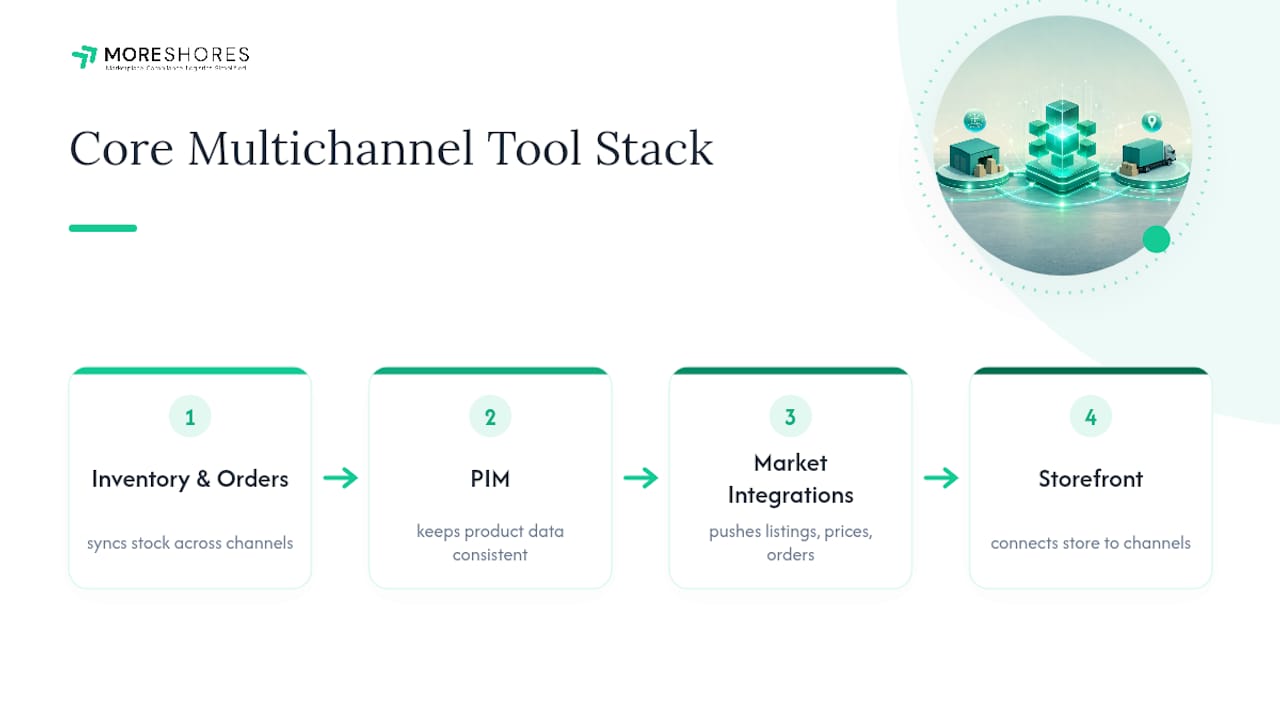
Storefront platforms like Shopify and WooCommerce typically sit at the hub, connecting to marketplace channels through integrations rather than replacing them. The businesses that scale multichannel selling without chaos usually didn’t build all four categories from scratch. They partnered with providers who already run that infrastructure, which is a faster and often cheaper path than building an in-house tech team for a problem that’s already been solved.
What Happens When Multichannel Goes Right, and When It Doesn’t
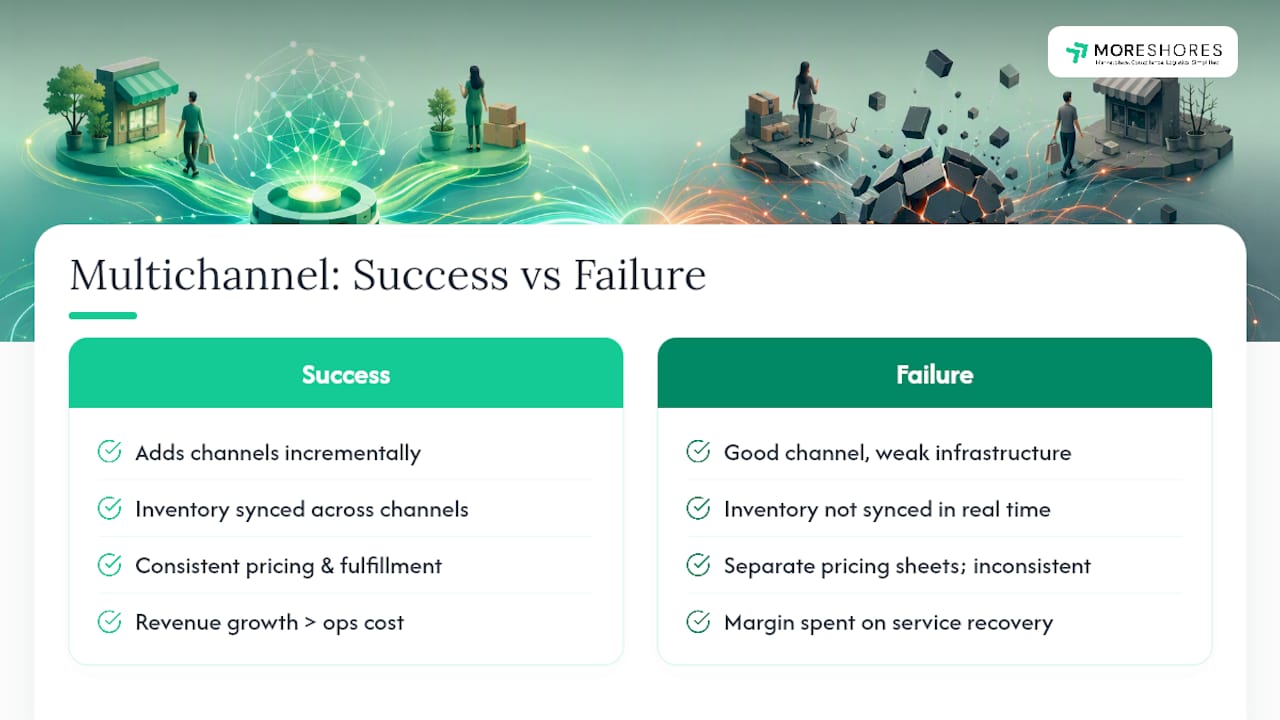
The success pattern shows up consistently: a brand adds a second or third channel, keeps inventory synchronized across all of them, and captures customers it never would have reached through one storefront alone. Multichannel shoppers already carry higher lifetime value, and businesses that protect that value with consistent pricing and reliable fulfillment tend to see revenue growth outpace the added operational cost.
The failure pattern is just as consistent, and it rarely starts with a bad channel choice. It starts with a good channel choice paired with weak infrastructure. A brand lists on a new marketplace without syncing inventory in real time, oversells a popular item during a promotion, and spends weeks handling cancellation complaints instead of new sales. Another brand keeps separate pricing sheets for its own site and a marketplace listing, forgets to update one during a sale, and trains customers to distrust its pricing altogether.
The common thread in both directions is the same: channel count didn’t determine the outcome. Data integration did. A business running two well-connected channels routinely outperforms one running five disconnected ones, because the disconnected seller is spending its margin on customer service recovery instead of growth. This is why strategic, incremental channel expansion beats an all-at-once launch nearly every time. Add one channel, prove the systems can handle it, then add the next.
Author Perspective: What Actually Trips Up Multichannel Sellers
The mistakes that sink multichannel sellers are rarely about picking the wrong platform. They’re about siloed inventory that lets two channels sell the same last unit, reactive fulfillment that only gets fixed after a stockout embarrasses the brand, and product content that drifts out of sync until customers notice before you do.
A managed operations partner earns its keep by absorbing that integration burden, so compliance, inventory, and fulfillment work as one system instead of five improvised ones.
— Matt
How MoreShores Handles the Backbone So You Don’t Have To
Building unified inventory, compliance, and fulfillment systems from scratch is exactly the kind of infrastructure project that stalls multichannel plans before they start. This setup provides an operational backbone handling Importer of Record services for customs and VAT compliance, warehousing and fulfillment via a multi-courier network, and integration of listings across several marketplaces and storefronts.
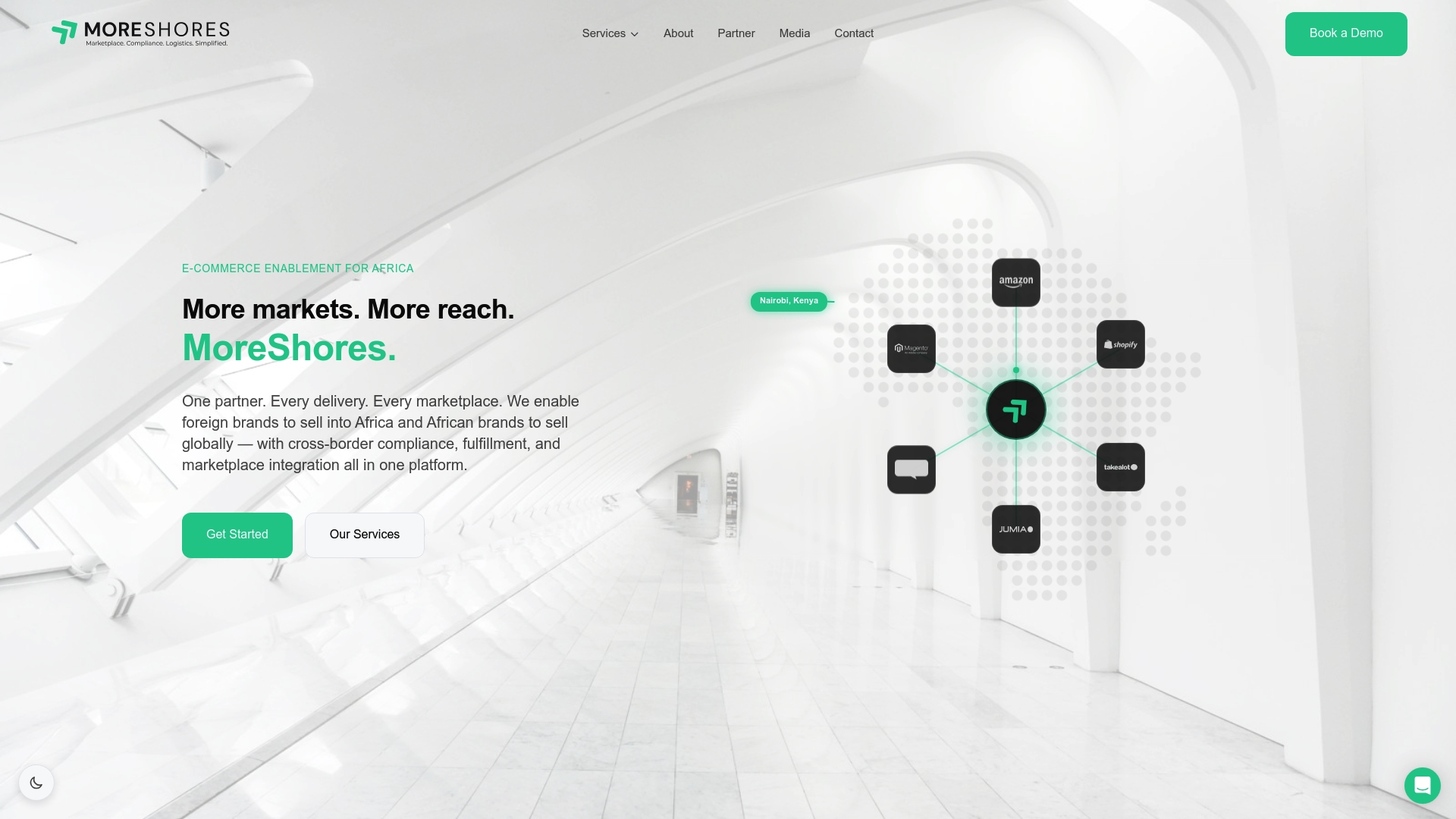
This setup fits cross-border sellers and brands entering new markets particularly well, since the compliance and logistics overhead that makes multichannel risky is precisely what MoreShores manages on your behalf. Instead of hiring a team to reconcile inventory across five platforms, you get one partner coordinating the whole channel mix. If you’re weighing whether your business can support multichannel expansion, start by reviewing MoreShores’ cross-border enablement services to see what a managed backbone looks like in practice.
Sources
- Omnichannel vs multichannel (Salesforce)
- Single Channel vs. Multichannel Customers: Determinants and Value to Retailers (HBS working paper)
- What is multi-channel retailing (Shopify Enterprise)
- Multichannel retail strategy (NetSuite)