International trade logistics: streamline cross-border e-commerce

TL;DR:
- Cross-border e-commerce growth faces logistical barriers, especially in Sub-Saharan Africa’s connectivity and dwell times. Understanding and optimizing each stage of the international trade logistics chain is crucial for reliable growth and risk mitigation. Using data-driven benchmarks and resilient strategies enables businesses to navigate regional challenges and maintain customer satisfaction.
Cross-border e-commerce is growing fast, but the businesses scaling internationally often hit the same invisible wall: logistics. Digital platforms make it easy to list products globally, yet Sub-Saharan Africa lags in connectivity and dwell times despite rapid digital adoption. That gap between what’s digitally possible and what’s operationally achievable is where growth stalls. This article breaks down exactly what international trade logistics means for e-commerce businesses, what the critical components are, where things go wrong, and how to build operations that hold up under pressure.
Table of Contents
- What is international trade logistics?
- Core components of the international trade logistics chain
- Emerging dynamics: Data, transparency, and Africa’s unique challenges
- Reducing risk: Best practices for resilient international trade logistics
- Why most businesses misunderstand international trade logistics
- Unlock expert international trade logistics
- Frequently asked questions
Key Takeaways
| Point | Details |
|---|---|
| Logistics underpins cross-border growth | A robust logistics strategy is critical for e-commerce businesses expanding internationally. |
| Data-driven insights matter | Modern metrics like LPI 2.0 empower sellers to pinpoint risks and improve performance. |
| Resilience is non-negotiable | Inventory buffers and scenario planning help prevent costly disruptions in supply chains. |
| Regional gaps affect outcomes | Connectivity challenges in African markets require tailored logistics solutions. |
| Expert support accelerates success | Partnering with experienced logistics providers unlocks global opportunities for your business. |
What is international trade logistics?
International trade logistics is the end-to-end process of moving goods across national borders, from the moment a product leaves a supplier’s facility to the moment it arrives at a customer’s door. For e-commerce businesses, it’s the operational backbone that either enables growth or quietly drains profit.
At its core, international trade logistics covers:
- Shipment planning and freight booking: Choosing between air, sea, rail, or road freight based on cost, speed, and product category.
- Export documentation: Commercial invoices, packing lists, certificates of origin, and export licenses where applicable.
- Customs clearance: Submission of import declarations, payment of duties and VAT, and compliance with destination country regulations.
- Regulatory compliance: Product-specific approvals such as NRCS approval in South Africa, safety certifications, and labeling requirements.
- Warehousing and inventory management: Storage at origin, in-transit hubs, or destination markets.
- Last-mile delivery: The final leg from a local warehouse to the end customer, often the most expensive and unpredictable part of the chain.
According to LPI 2.0 benchmarks, international logistics now spans everything from shipment tracking to border management across 172 economies. That scale matters because it means no two markets are identical. A logistics strategy that works perfectly for shipping into Germany may fail completely when applied to Nigeria or Kenya.
The biggest pitfall businesses fall into is treating logistics as a back-office function rather than a strategic priority. When you’re managing cross-border e-commerce logistics solutions, every delay compounds. A customs hold that lasts three extra days can flip a profitable shipment into a loss once storage fees, redelivery costs, and customer service overhead are factored in.
Pro Tip: Integrate shipment visibility tools early, ideally before your first commercial shipment. Real-time tracking reduces reactive problem-solving and gives you the data to identify recurring delays at specific touchpoints.
Understanding what international trade logistics covers sets the foundation. Now let’s walk through exactly how the chain is structured and where the leverage points are.
Core components of the international trade logistics chain
Understanding each link in the logistics chain helps you pinpoint where risks and opportunities exist. A typical cross-border e-commerce shipment moves through six distinct stages, each involving different stakeholders and decision points.
The six-stage logistics chain:
- Supplier or manufacturer: The origin point. Your supplier determines lead times, packaging quality, and export documentation accuracy. Poor documentation here causes downstream delays at every subsequent stage.
- Freight forwarder: Acts as the orchestrator of your international shipment. They book cargo space, consolidate loads when needed, and manage the handoff between domestic and international carriers. Choosing an experienced forwarder with regional expertise is critical, especially for African lanes.
- Customs broker: Handles the legal submission of import and export declarations. In high-compliance markets like South Africa, a skilled customs broker ensures tariff classifications are correct, duties are calculated accurately, and prohibited goods are identified before they reach the border.
- International carrier: The ocean shipping line, airline, or overland trucking company physically moving your cargo. Carrier reliability varies significantly by route, and service disruptions on major lanes (such as the Red Sea diversions in 2024) can add weeks to transit times.
- Destination warehouse: Once goods clear customs, they move into local storage. Warehouse location relative to your customer base directly affects last-mile costs. A centrally located warehouse in Johannesburg, for example, enables faster delivery across South Africa compared to a port-city-only facility.
- Last-mile delivery provider: The final handoff to the customer. In Africa, last-mile is often the most complex stage due to addressing challenges, inconsistent courier coverage in rural areas, and high failed-delivery rates.
LPI 2.0 data-driven benchmarks now track key logistics steps including shipment preparation, customs processes, and delivery performance. This granular data helps businesses identify which specific stage is causing delays in a given market.
| Feature | Traditional logistics chain | Data-driven logistics chain |
|---|---|---|
| Visibility | Limited, manual tracking | Real-time shipment tracking |
| Delay detection | Reactive, after the fact | Proactive alerts at each stage |
| Customs processing | Paper-based, variable timelines | Digital submission, faster clearance |
| Performance benchmarking | Anecdotal or annual surveys | Continuous, data-backed metrics |
| Risk management | Experience-based decisions | Predictive analytics and scenario modeling |
The table above makes the contrast clear. Traditional logistics chains rely heavily on relationships and experience. Data-driven chains use live information to make faster, better decisions. For businesses exploring fulfillment and logistics options, moving toward a data-driven model is no longer optional if you want to compete.
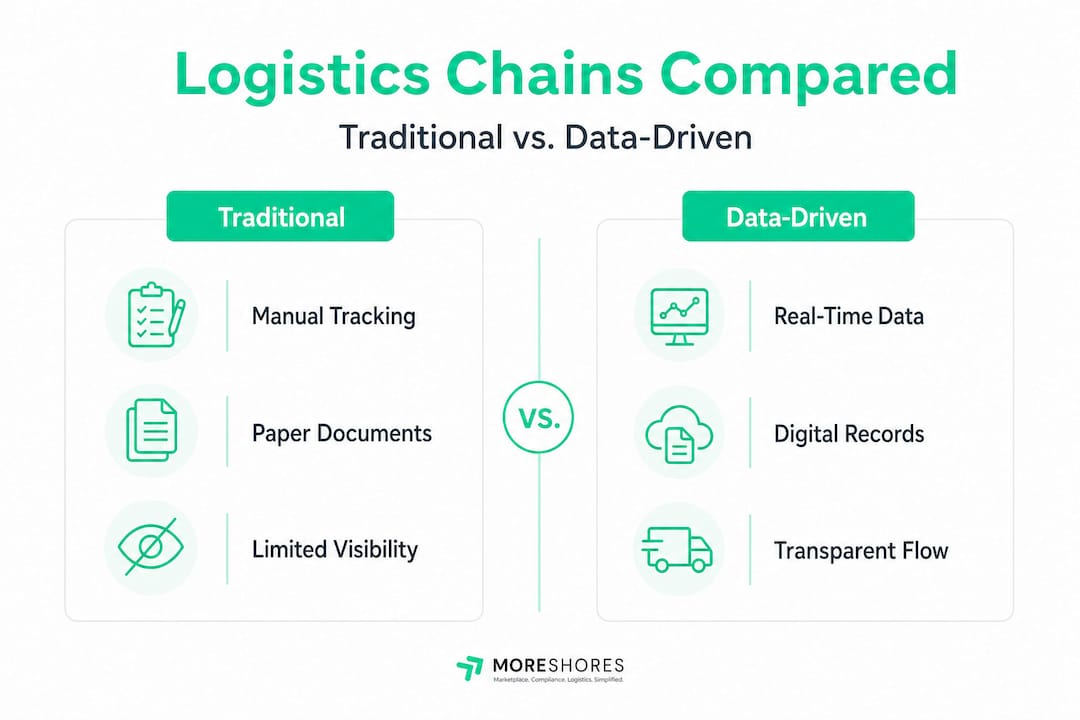
One practical step when you’re onboarding to international logistics is to map your specific chain on paper before you ship a single unit. Identify who is responsible at each stage, what documentation is required, and what your contingency is if a stage fails.
Emerging dynamics: Data, transparency, and Africa’s unique challenges
Now let’s examine how real-world data and local conditions can affect logistics plans, especially for sellers serving or sourcing in Africa.
The World Bank’s LPI (Logistics Performance Index) has been tracking global trade performance since 2007. The original LPI relied on surveys from logistics professionals, which introduced subjectivity and lag time. LPI 2.0 shifts to actual shipment data, including real dwell times at ports, border crossing durations, and transit time variability. The result is a more accurate and actionable picture of where logistics systems genuinely perform well and where they fall short.
| Region | LPI 2.0 connectivity ranking | Average dwell time | Key strength |
|---|---|---|---|
| Europe | Top tier | Low | Infrastructure and digital integration |
| North America | Top tier | Low to moderate | Scale and carrier competition |
| Southeast Asia | Mid-high tier | Moderate | Manufacturing and export corridor strength |
| Sub-Saharan Africa | Lower tier | High | Improving mobile payments and informal networks |
| South Africa | Strongest in Africa | Moderate | Port capacity and formal retail infrastructure |
“Europe and North America lead global logistics benchmarks, while Sub-Saharan Africa continues to lag in connectivity and dwell and delivery times, despite notable advances in individual economies.” — World Bank LPI 2.0 analysis
What does this mean in practice? If you’re shipping into African e-commerce solutions markets like Kenya, Nigeria, or Ghana, you need to plan for longer customs processing windows, higher document error rates, and potential secondary inspections. Budget extra time at the border, not as an exception but as the baseline.
South Africa stands out as the strongest performer on the continent. Its port infrastructure at Durban and Cape Town, combined with a developed road network and formal retail sector, makes it the most accessible entry point for international e-commerce sellers targeting Africa. That said, even South Africa faces port congestion challenges and irregular customs processing timelines, so buffer planning remains essential.
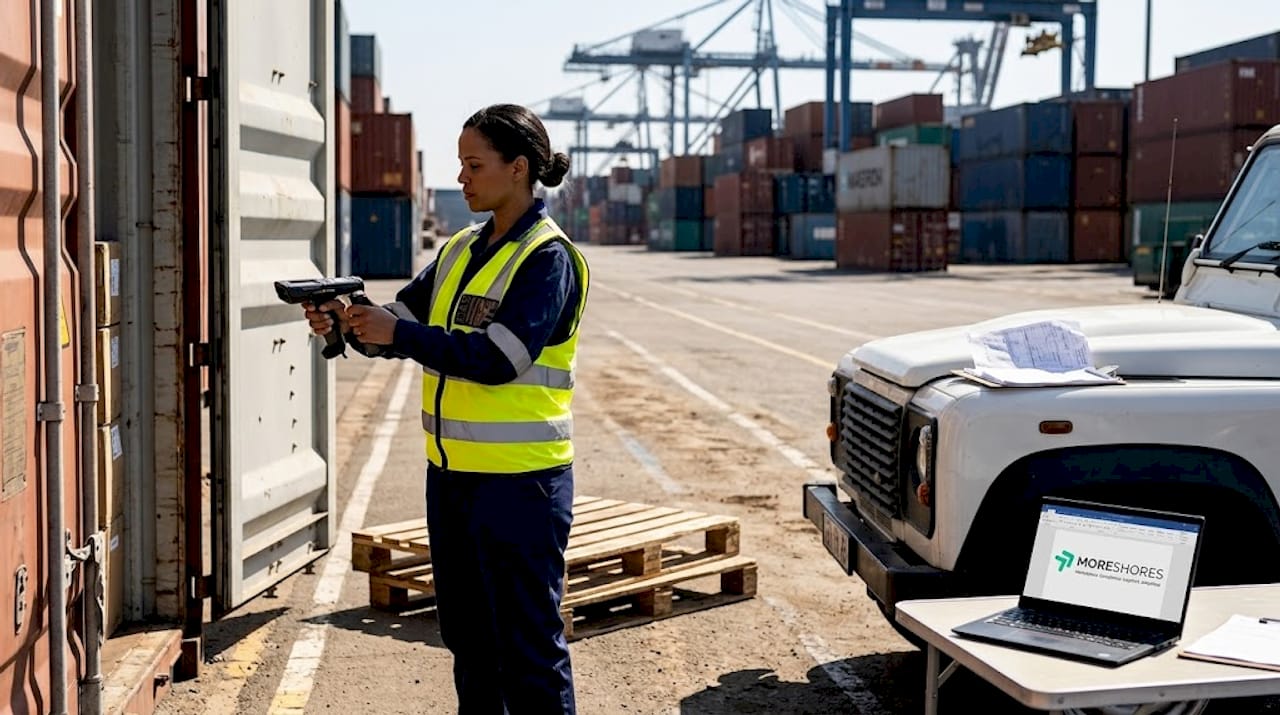
The shift to LPI 2.0 gives e-commerce businesses something genuinely useful: the ability to compare specific lane performance using real data rather than general reputation. If you’re deciding between routing shipments through Mombasa versus Dar es Salaam, LPI 2.0 data provides measurable dwell time comparisons to inform that decision.
The practical advice here is straightforward. Use logistics performance data as a market entry input, not just an afterthought. Before launching into a new African market, review available LPI 2.0 metrics for that country, consult with local customs brokers, and factor realistic transit and clearance timelines into your pricing model.
Reducing risk: Best practices for resilient international trade logistics
Armed with this knowledge, let’s turn to making your operations more robust and future-proof.
Recent years have demonstrated that global supply chains are far more fragile than most businesses assumed. The COVID-19 pandemic disrupted manufacturing and shipping simultaneously. The Suez Canal blockage in 2021 highlighted how a single chokepoint can freeze global trade. Conflict in the Red Sea region in 2023 and 2024 forced massive rerouting of vessels around the Cape of Good Hope, adding weeks to Asia-Europe shipping times and significantly increasing freight costs. Each of these events caught businesses with lean, just-in-time supply chains especially hard.
Supply chain resilience now requires more than diversification. Recommended practices include maintaining 30 to 60 days of inventory in neutral buffer zones, building scenario plans for major disruption events, and deploying predictive analytics to catch early warning signals.
Here’s what best practice looks like in concrete operational terms:
- Build inventory buffers: Hold 30 to 60 days of your core SKUs in a destination-country warehouse rather than relying purely on just-in-time replenishment. This protects you when upstream disruptions delay inbound stock.
- Identify neutral buffer zones: Bonded warehouses or free trade zones in strategically located markets can hold inventory without triggering full import duties until goods are released for sale. This gives you flexibility to redirect stock if demand shifts unexpectedly.
- Develop scenario plans: Map out at least three disruption scenarios: a port closure, a carrier insolvency, and a regulatory change in your destination market. For each scenario, define your response steps before the event happens.
- Use predictive analytics: Modern logistics platforms offer early-warning dashboards that flag unusual delays, carrier performance drops, or customs processing slowdowns. Acting on these signals early is dramatically cheaper than responding to a full disruption.
- Diversify your carrier mix: Relying on a single carrier or freight forwarder for a critical lane creates concentration risk. Maintaining relationships with at least two carriers per major lane gives you switching options when service degrades.
- Monitor geopolitical risk: For sellers operating in or through Africa, tracking developments in key maritime corridors and border regions provides advance warning of potential disruptions to plan around.
Pro Tip: Use predictive analytics tools to monitor port congestion levels and carrier on-time performance on your key lanes. Set alerts for when metrics drop below your acceptable threshold so you can act before delays hit your inventory.
Connecting these practices to your cross-border enablement strategies means building resilience into your operations from the start, not retrofitting it after your first major disruption.
Why most businesses misunderstand international trade logistics
Putting all this together, it’s clear the classic approach often misses the mark on what actually fuels cross-border success.
The dominant mindset in logistics procurement is cost minimization. Businesses shop for the cheapest freight rate, negotiate hard on warehousing fees, and run inventory as lean as possible. That approach looks rational on a spreadsheet. In practice, it creates brittle operations that break the moment conditions deviate from the plan.
We’ve seen this pattern repeatedly. A seller enters a new African market with a lean supply chain, minimal buffer stock, and a single customs broker relationship. Everything runs smoothly for the first few months. Then a port strike, a regulatory change, or a documentation error triggers a delay. Suddenly, products are out of stock during peak demand. Customer orders go unfulfilled. Marketplace performance metrics fall. Seller ratings drop. Recovery from that kind of setback takes months, and some sellers never fully recover their position.
The real cost of poor logistics isn’t the freight bill. It’s the lost sales, the damaged customer relationships, and the marketplace ranking penalties that follow a fulfillment failure. Customer retention in e-commerce is directly tied to delivery reliability. Buyers who experience a late or missing order are significantly less likely to purchase again, and they’re vocal about their experience.
The businesses that sustain cross-border growth treat cross-border enablement as a strategic investment. They allocate budget to compliance expertise, maintain buffer inventory, and actively monitor logistics performance data. The cost of that investment is real but predictable. The cost of a logistics failure is unpredictable and often far larger.
Invest in your logistics infrastructure the same way you invest in your product and marketing. It’s not a cost center. It’s the operational foundation that determines whether your customer experience holds up at scale.
Unlock expert international trade logistics
Ready to avoid pitfalls and lead in your e-commerce market? Here’s how to level up your international logistics in practice.
MoreShores is built specifically for businesses navigating the complexity of cross-border trade in and out of Africa. Whether you’re a foreign brand entering African markets or an African seller expanding globally, the operational challenges are real and the stakes are high.
MoreShores handles the full chain: acting as Importer of Record for customs clearance, managing duties and VAT, providing Fulfillment & Logistics through a multi-courier network, and integrating your product listings across Takealot, Amazon SA, Jumia, and Kilimall. Our cross-border enablement services give you the infrastructure to compete in African markets without building costly operations from scratch. Explore our full range of E-Commerce Solutions and find out how we can simplify your next market entry.
Frequently asked questions
What is the biggest challenge in international trade logistics for African e-commerce?
Connectivity and long dwell times remain the largest obstacles for African e-commerce operations, limiting speed and reliability. Sub-Saharan Africa lags significantly behind Europe and North America in both areas according to LPI 2.0 data.
How can businesses make their international supply chains more resilient?
Building inventory buffers of 30 to 60 days, developing scenario plans, and leveraging predictive analytics make supply chains significantly more shock-resistant. Buffers and analytics are now considered essential, not optional, for international sellers.
What is LPI 2.0 and why is it relevant?
LPI 2.0 is a data-driven logistics performance index that measures connectivity and dwell times using actual shipment data rather than surveys, giving businesses more accurate benchmarks for market entry decisions.
Which regions are global leaders in international trade logistics?
Europe and North America currently lead global benchmarks for connectivity and logistics performance, while South Africa leads within the African continent.