How to Track Cross-Border Deliveries: A Pro Guide

TL;DR:
- Effective cross-border shipment tracking relies on collecting multiple identifiers like carrier numbers, AWBs, BOLs, and customs entry numbers from the start. Monitoring involves sequentially checking origin, handoff, destination, and customs systems while focusing alerts on significant milestones to manage expectations. Utilizing integrated tracking platforms and proactive communication minimizes delays, ensuring visibility throughout international delivery processes.
Cross-border deliveries have a reputation for going dark at the worst possible moments. You ship an order, share a tracking number with your customer, and then the updates stop. Knowing how to track cross-border deliveries effectively is not optional for e-commerce merchants and logistics professionals. It is the difference between managing customer expectations confidently and scrambling for answers. This guide walks you through the exact tools, identifiers, step-by-step processes, and troubleshooting methods you need to maintain visibility across every leg of an international shipment, from origin carrier to customs to last-mile delivery.
Table of Contents
- Key takeaways
- How to track cross-border deliveries: what you need first
- Step-by-step process for monitoring international deliveries
- Troubleshooting stalled tracking and common mistakes
- Technology tools that improve cross-border shipping status
- My take on mastering cross-border tracking
- How Moreshores simplifies your international tracking
- FAQ
Key takeaways
| Point | Details |
|---|---|
| Multiple identifiers matter | Collect the carrier tracking number, AWB or bill of lading, and customs entry number before tracking begins. |
| Courier handoffs cause gaps | When a parcel changes hands, tracking visibility shifts to the destination carrier’s system. |
| Customs tracking is separate | Customs entry numbers require different query methods than carrier waybills for accurate clearance status. |
| Alert design reduces noise | Configure notifications for meaningful status changes only, such as handoffs, customs events, and delivery attempts. |
| Technology fills visibility gaps | Integrated platforms consolidate multi-carrier updates and flag exceptions before they become escalations. |
How to track cross-border deliveries: what you need first
Before you open a single tracking portal, you need the right identifiers. Without them, you are guessing. Cross-border shipments typically generate more than one reference number, and each number unlocks different information at different stages.
Here are the primary tracking identifiers you will encounter:
- Carrier tracking number: Generated by the origin courier (FedEx, DHL, UPS, or a local postal service). This is the number most merchants share with customers first.
- Air Waybill (AWB): A unique 11-digit number for air cargo shipments. It covers acceptance, transit, customs clearance, and delivery milestones, combining both a contract and a tracking function in a single document.
- Bill of lading (BOL): Used for ocean freight. Container tracking tools like Maersk’s system use the BOL or booking reference to show vessel departure, arrival milestones, and exception alerts.
- Customs entry number: Separate from carrier numbers entirely. In the US, the CBP ACE system uses this number alongside a filer code to return hold status, release dates, and multi-modal bill tracking.
The table below summarizes these identifiers at a glance.
| Identifier | Format | Where generated | What it tracks |
|---|---|---|---|
| Carrier tracking number | Alphanumeric, varies by carrier | Origin courier on booking | Parcel movement from pickup to handoff |
| Air Waybill (AWB) | 11-digit numeric | Airline or freight forwarder | Air cargo checkpoints and customs milestones |
| Bill of lading (BOL) | Alphanumeric, carrier-specific | Shipping line or freight broker | Ocean container vessel milestones |
| Customs entry number | Alphanumeric with filer code | Customs broker or importer | Customs clearance, hold status, release date |
Gather all available identifiers the moment a shipment is booked. Store them in a centralized log, whether that is a spreadsheet, a logistics platform, or your order management system. Building tracking logic that stores multiple identifiers from the start prevents dead-ends when the original carrier’s tracking stops updating mid-journey.
Pro Tip: Create a simple shipment tracking sheet with columns for carrier number, AWB or BOL, customs entry number, origin carrier URL, and destination carrier URL. Filling this out at booking takes two minutes and saves significant time when a customer asks for an update.
Step-by-step process for monitoring international deliveries
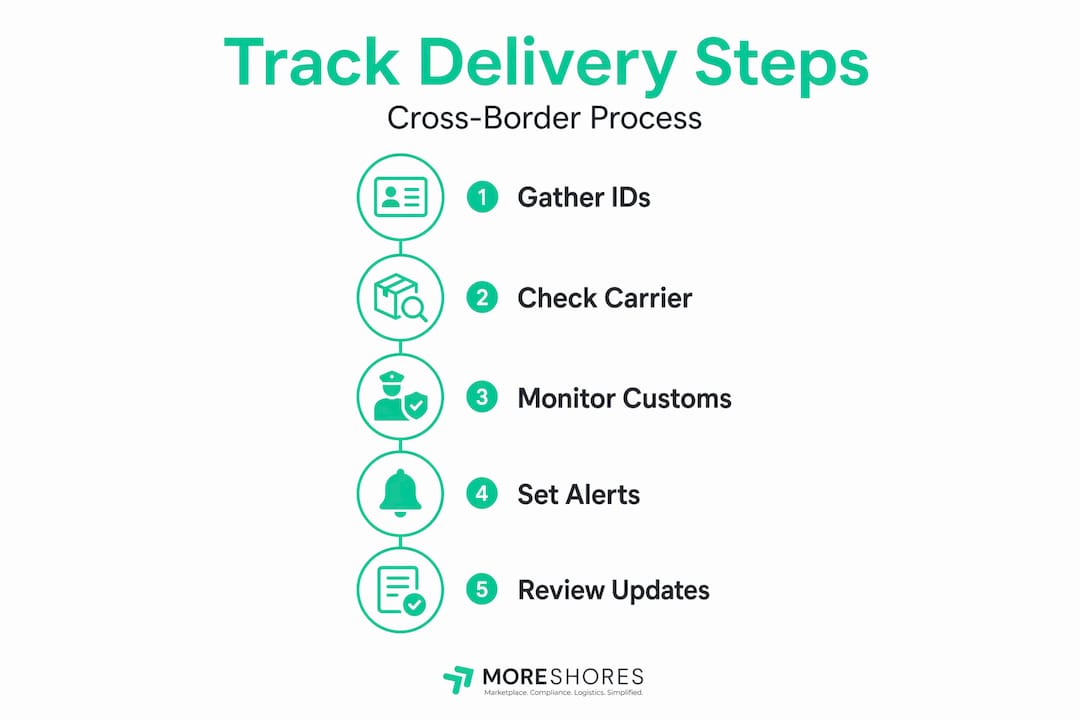
Once you have your identifiers ready, the tracking process itself follows a logical sequence tied to how shipments physically move. Here is how to work through it.
-
Start with the origin carrier’s tracking portal. Enter your carrier tracking number. Confirm the shipment has been accepted and is in transit. Note the last scan location and whether the shipment has cleared the origin country.
-
Identify when and where a courier handoff occurs. Tracking visibility often shifts when a parcel changes hands. Your origin carrier may pass the shipment to a national postal service or a local delivery partner in the destination country. At this point, the original tracking number may stop updating or show no further scans.
-
Switch to the destination carrier’s system. When the origin carrier shows “handed to destination carrier” or a similar status, move your tracking to the destination country’s carrier portal. Global integrators often transfer tracking responsibility to local carriers after handoff, so the last-mile updates live in a different system entirely.
-
Track customs clearance separately using your entry number. The CBP ACE system allows merchants to query entry status using a customs entry number and filer code, covering entries within a six-month window. Check the ACE query for hold status and release dates independently of the carrier tracking.
-
Interpret key status milestones correctly. Here is what each major update actually means:
- Accepted: The origin carrier has the shipment in its possession.
- In transit: The shipment is moving between facilities.
- Arrived in destination country: The shipment has crossed the border. Customs processing begins here.
- Customs clearance: The shipment is being reviewed by border authorities. This can take hours or several days.
- Out for delivery: The destination carrier’s local driver has the parcel. Delivery is imminent.
-
Verify the active carrier at each stage. Do not assume the origin carrier retains responsibility throughout. Confirm which entity is currently handling the shipment by checking the most recent scan location against known carrier hubs in that region.
Pro Tip: Set tracking alerts only for meaningful status changes: handoffs, customs holds, failed delivery attempts, and out-for-delivery notifications. Constant “in transit” pings create noise without value and dilute the urgency of genuine exception alerts.
Troubleshooting stalled tracking and common mistakes
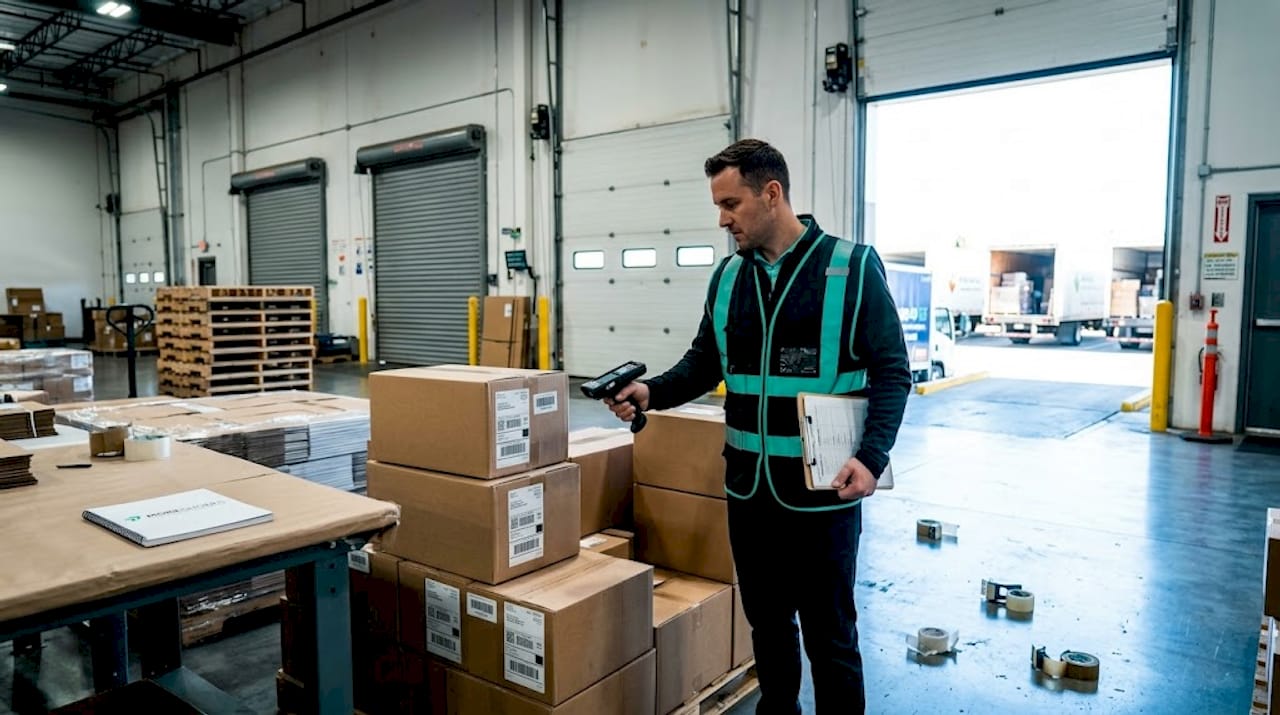
Tracking updates stop for a reason. Usually, it is not because the shipment is lost. Tracking gaps during courier handoff and customs are common and normal. The scan infrastructure between two carrier systems does not always synchronize in real time. What looks like a dead shipment is often a package sitting in a transit hub waiting for the next carrier to ingest it into their system.
That said, some gaps do signal a real problem. Here is how to tell the difference.
Watch for these urgent status triggers:
- Customs documents required: This means a customs authority is waiting for paperwork. Act immediately. Contact your customs broker or freight forwarder with the relevant commercial invoice, packing list, or import permit.
- Return to sender: The shipment is being rejected. This requires escalation within hours, not days.
- Delivery failed, no access: A missed delivery that may result in the parcel being returned if not rescheduled quickly.
Common mistakes that make tracking harder than it needs to be:
- Relying on a single tracking identifier when multiple exist
- Only checking the origin carrier’s portal after a handoff has occurred
- Ignoring customs documentation requirements until a hold appears
- Not verifying the destination carrier name before querying the wrong portal
- Treating all tracking gaps as errors and escalating prematurely
“Shipment ‘disappearance’ perceptions usually stem from shifts in who operates the tracking system digitally rather than physical loss.” — International Parcel Tracking
When you do need to escalate, contact the carrier or customs broker with your full identifier set: carrier number, AWB or BOL, and customs entry number. Agents resolve issues faster when you can reference all three. Customs visibility depends on using correct identifiers and querying within the permitted time window, so having your entry number documented from booking is not just best practice. It is necessary.
Technology tools that improve cross-border shipping status
Manual tracking across multiple portals works, but it does not scale. Once your shipment volume grows, the process becomes unsustainable without technology support.
Container and air cargo tracking platforms provide milestone-level visibility for high-volume shippers. Container tracking tools show vessel departure, port arrivals, and exception alerts for multi-leg ocean freight. AWB tracking provides real-time coverage of air cargo acceptance, transit, customs, and delivery. Both tools remove the need to manually query individual carrier portals at each stage.
Integrated multi-carrier tracking platforms consolidate updates from origin carriers, destination carriers, and customs systems into a single dashboard. They also flag exceptions automatically. Understanding your carrier network options is useful context when evaluating which integrations matter most for your shipping lanes.
Here is a quick comparison of platform types available to merchants today.
| Platform type | Best for | Key benefit | Limitation |
|---|---|---|---|
| Carrier portal (single) | Low-volume, single-carrier shipments | Free, direct source data | Does not cover handoffs or other carriers |
| AWB/BOL tracking tool | Air and ocean freight | Milestone visibility, exception alerts | Requires correct AWB or BOL number |
| CBP ACE query tool | US customs clearance status | Precise hold and release data | Limited to six-month history, requires filer code |
| Integrated multi-carrier platform | High-volume cross-border merchants | Consolidated updates, automated alerts | Cost, requires setup and integration |
| Mobile tracking app | On-the-go monitoring | Convenience, real-time push notifications | Depends on carrier API coverage |
Tracking multiple identifiers in parallel and configuring alerts around meaningful state changes improves both operational efficiency and the customer experience. The merchants who manage international order tracking well are not checking portals manually every few hours. They have systems that surface the right information at the right time.
My take on mastering cross-border tracking
I have worked with enough merchants to know that most tracking problems are not technology problems. They are process problems. The merchant who calls in a panic because a shipment “disappeared” almost always has only one identifier on hand and has never checked the destination carrier’s portal. The fix takes five minutes, but it required weeks of frustration to get there.
What I have found actually separates the merchants who manage this well is their approach to identifier transitions. They know that the AWB is not just a reference number. It is a contract that combines tracking and shipment documentation in one place, and gaps in its updates reflect timing at checkpoints, not missing cargo. They treat customs entry numbers as a second, independent tracking thread that runs parallel to the carrier system, not a backup they check only when things go wrong.
I also think the industry undersells how much proactive communication with carriers and customs brokers reduces delays. A quick message confirming documentation before a shipment arrives in a customs-intensive market can shave days off clearance time. That is not a technology solution. It is a discipline.
My recommendation: invest in a platform that stores multiple tracking identifiers and fires alerts on meaningful events only. Then invest the time to train your team on what each status milestone actually means. The combination of good tooling and informed people is what makes cross-border e-commerce logistics manageable at scale.
— Matt
How Moreshores simplifies your international tracking
Managing cross-border tracking across multiple carriers, customs systems, and destination countries is a real operational burden. Moreshores was built to take that burden off your plate.
Moreshores provides end-to-end cross-border enablement for merchants selling into or from Africa, including acting as the Importer of Record, handling customs clearance and compliance, and managing fulfillment through a multi-courier network. That means you get consolidated tracking visibility across the full shipment journey, not fragmented updates from three separate portals. Moreshores also integrates with Shopify, WooCommerce, Takealot, Jumia, and other major marketplaces, so your order and fulfillment data flows in one place. If you are ready to stop chasing tracking updates manually and start running a tighter logistics operation, contact Moreshores for a tailored solution.
FAQ
What causes tracking to stop updating on cross-border shipments?
Tracking gaps most often occur during courier handoffs, when the origin carrier passes the shipment to a destination country carrier or postal service. The shipment is still moving, but updates will only appear in the new carrier’s system.
How do I find my package when the tracking number shows no updates?
Identify which carrier currently has the shipment by checking the last scan location, then query that carrier’s portal directly. For US imports, use the CBP ACE system with your customs entry number to check clearance status separately.
What is an Air Waybill and how does it help with international shipping tracking?
An AWB is an 11-digit number assigned to air cargo shipments that tracks the parcel from acceptance through customs clearance and delivery. It functions as both a tracking reference and a shipment contract, giving real-time visibility at airline and airport checkpoints.
How do I check customs clearance status for a US import?
Use the CBP ACE query tool with your customs entry number and filer code to retrieve hold status, release dates, and clearance milestones. Note that this system only returns results for entries filed within the past six months.
What are the best ways to track parcels across multiple carriers?
Collect all identifiers at booking, including carrier number, AWB or BOL, and customs entry number. Use an integrated multi-carrier tracking platform to consolidate updates, and configure alerts for meaningful events like handoffs, customs holds, and delivery attempts rather than routine in-transit scans.