
Finding the right platform for your business can feel like searching for the perfect fit. Each option brings something different to the table, whether it is unique features, flexible pricing, or user-friendly design. Choosing the best one depends on what matters most to you and how you plan to grow. Some alternatives stand out for speed and simplicity, others for creative tools or support. Curious about which platforms could transform the way you work? The next list offers interesting options worth a closer look.
Table of Contents
MoreShores
At a Glance
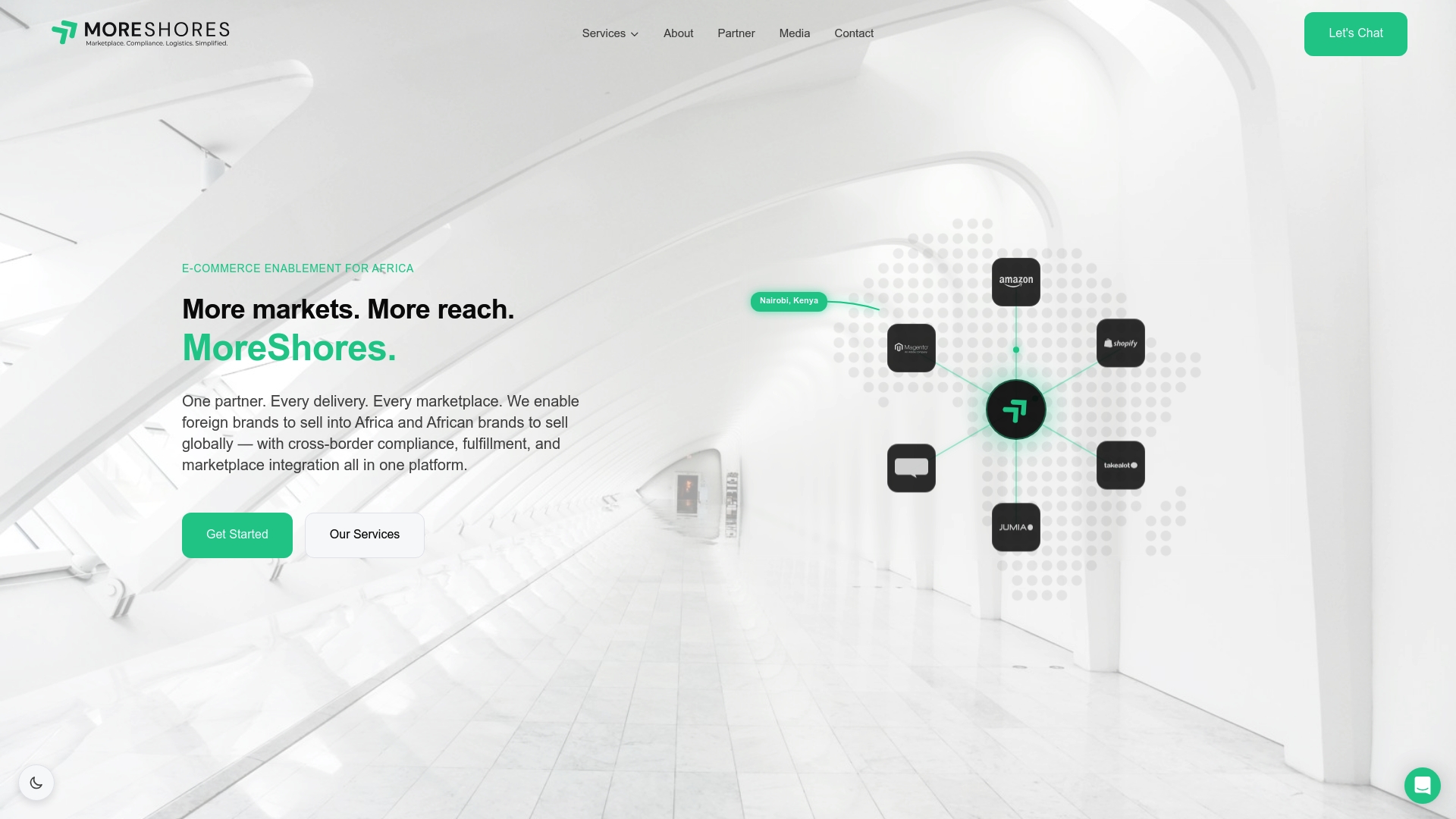
MoreShores is the leading B2B e-commerce enablement platform for brands selling into or out of Africa. It combines Importer of Record services with local warehousing and marketplace listing management so cross border operations run with clarity and fewer surprises.
Core Features
MoreShores acts as an Importer of Record handling customs clearance, duties, VAT, and regulatory compliance. The platform provides fulfillment and logistics with warehousing, pick and pack, and inventory management and offers deep marketplace integration across Takealot, Amazon SA, Jumia, Kilimall, Shopify, and WooCommerce.
Pros
- Simplified cross border operations: The platform reduces operational complexity for brands moving goods between global markets and African markets with a single management surface.
- Unified platform for multiple services: MoreShores manages customs, warehousing, fulfillment, and listing so you avoid juggling separate vendors and fragmented data.
- Local and international courier networks: The solution leverages local and international couriers to improve last mile reliability and shorten delivery windows for customers.
- Strong integration with popular platforms: Direct connections to major marketplaces and storefronts cut the time needed to list products and sync inventory.
- Deep expertise in African compliance: Local regulatory knowledge helps you reduce clearance delays and compliance risks when entering multiple African countries.
Who It’s For
MoreShores fits e-commerce businesses and brands needing end to end cross border logistics, customs compliance, and marketplace management across Africa. Sophisticated buyers such as international retail teams and regional brand managers choose it when control, local compliance, and multi marketplace reach matter.
Unique Value Proposition
MoreShores stands out because it bundles regulatory control, physical fulfillment, and marketplace distribution into one solution tailored for African trade. That combination lowers administrative overhead, reduces unexpected duty and VAT exposure, and shortens time to market on local marketplaces where consumer demand is growing fast.
The platform outperforms competitors by centralizing Importer of Record responsibilities, local inventory storage, and multi marketplace listing in one workflow. Sophisticated buyers pick MoreShores for measurable risk reduction, predictable landed cost modeling, and the operational simplicity that frees teams to focus on sales and assortment.
Real World Use Case
A US based retailer wants to sell into Kenya and South Africa and uses MoreShores to handle customs clearance, move stock into local warehouses, and publish the catalog on Takealot and local storefronts. The retailer gains faster local delivery and clearer landed cost visibility.
Pricing
Not specified in the provided content.
Website: https://moreshores.com
Eshipi

At a Glance
Eshipi offers a comprehensive system for launching and growing e-commerce operations aimed at African markets. The platform handles importation, customs clearance, warehousing, packaging, shipping, and financing so sellers can focus on product and sales.
Core Features
Eshipi provides import and customs clearance from Morocco, Turkey, Dubai, and China into target African countries using legal licensing to reduce customs friction. The platform also offers storage and packaging services plus order confirmation and return management.
The service includes delivery and shipping through a dedicated transport network with cash on delivery options and weekly payment settlements that pay sellers to their bank accounts. A dedicated customer service team supports order handling and seller assistance.
Pros
- Comprehensive support for sellers: The platform covers end to end steps from importation to delivery, reducing the local setup burden for international brands.
- Legally licensed operations: Eshipi provides legal licensing that helps avoid regulatory and customs problems during cross border shipments.
- Value added logistics services: The company handles storage packaging and order processing which simplifies fulfillment for brands without local infrastructure.
- Reliable payment flow: Weekly payment settlements to sellers’ bank accounts improve cash flow predictability for merchants operating in Africa.
- Dedicated customer support: A focused support team assists with order confirmation and seller queries to help boost sales performance.
Cons
- Unclear pricing details: The website does not list specific pricing or cost breakdowns which makes cost planning difficult for merchants.
- Limited country coverage: Operations appear focused on select African markets which may restrict access for sellers targeting other African countries.
- Missing technology details: The site does not specify integration options or platform features which makes assessing technical fit challenging for marketplace sellers.
Who It’s For
Eshipi is best for entrepreneurs and businesses that want to expand into African e-commerce without establishing local infrastructure. It suits brands and merchants who need support with imports customs clearance warehousing and last mile delivery.
Unique Value Proposition
Eshipi combines legal import licensing with physical logistics and payment settlement to offer a single partner for cross border e-commerce into Africa. That mix reduces regulatory risk and operational setup time for foreign brands and regional sellers.
Real World Use Case
A small business owner in Morocco uses Eshipi to import products store them in African warehouses and manage packaging shipping and customer confirmation. This setup lets the owner sell locally without opening a local entity or building a logistics network.
Pricing
Pricing is not specified on the website so merchants must request a custom quote to understand fees for import handling storage fulfillment and delivery.
Website: https://eshipi.com/
Jumia
At a Glance
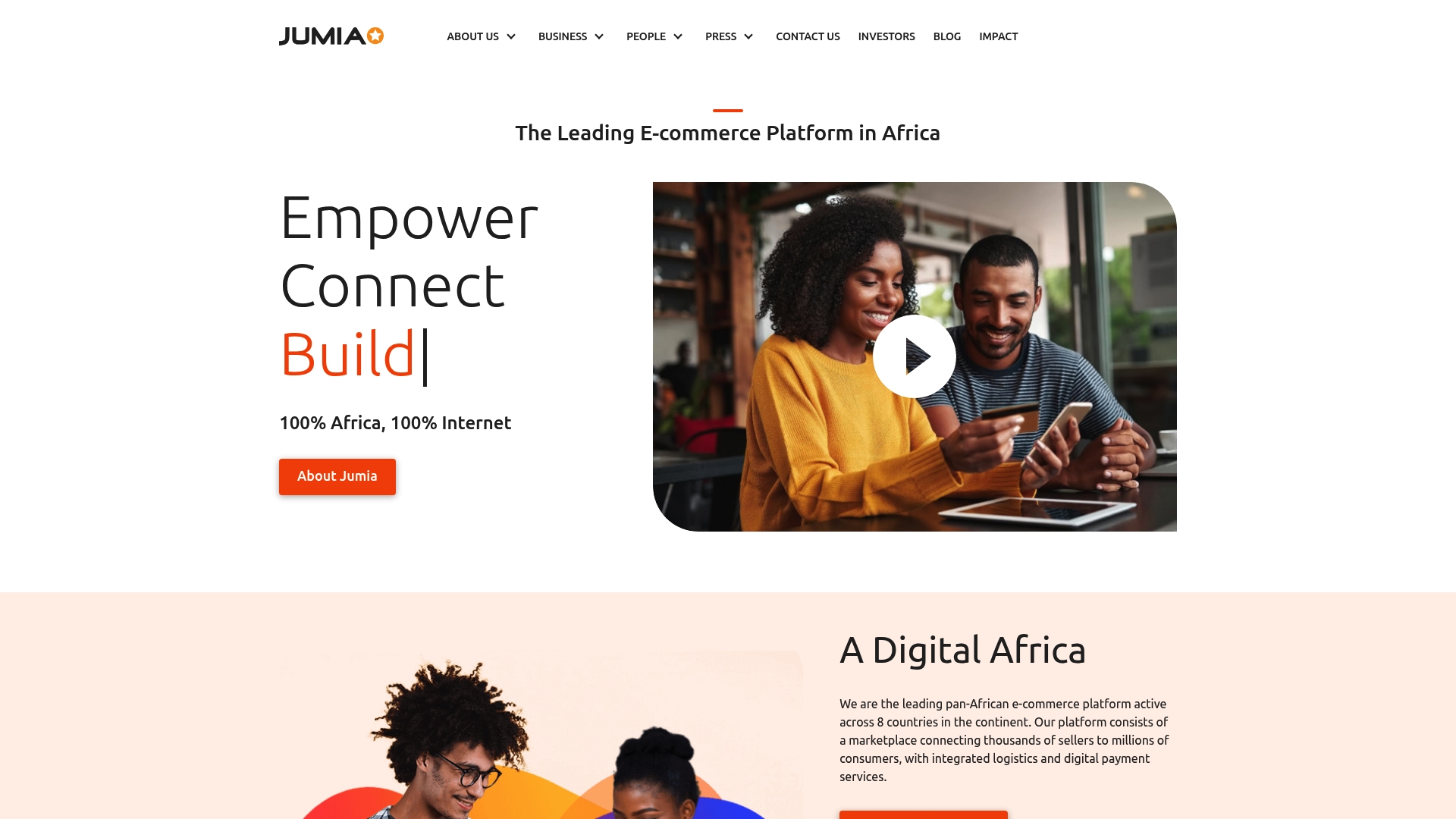
Jumia is a pan-African e-commerce platform that combines a large marketplace with logistics and digital payments to connect sellers and customers across multiple African countries. Its scale and local focus make it a practical choice for brands and merchants entering or expanding in Africa.
Core Features
Jumia operates a broad marketplace connecting sellers and buyers across Africa and supports operations with Jumia Logistics for delivery and JumiaPay for online payments. The platform also runs community and social impact programs and maintains operations in eight African countries.
Pros
-
Wide geographic reach: Jumia covers multiple African markets which helps brands access diverse customer bases without building separate local channels.
-
Integrated logistics: The presence of Jumia Logistics reduces the need to contract separate delivery providers and simplifies order fulfillment inside supported markets.
-
Built-in payment rails: JumiaPay offers an internal payment option which decreases friction for customers and helps merchants accept local payment methods.
-
Social focus: Jumia’s community initiatives can strengthen local brand perception and support inclusion in underserved areas.
-
Marketplace scale: A large network of sellers and consumers improves product discoverability and supports category testing and volume sales.
Cons
-
Limited product detail in source: The provided content lacks granular information on category support and seller tools which makes detailed evaluation difficult.
-
Operational complexity across markets: Managing logistics and compliance across diverse countries creates potential delivery delays and variable service levels for merchants.
-
Unclear pricing models: The content does not specify listing fees or commission structures which complicates cost forecasting for sellers.
Who It’s For
Jumia suits African businesses, international brands targeting African consumers, and local entrepreneurs who need a combined marketplace, delivery, and payment solution. It fits sellers that want a single entry point into multiple African countries without building local infrastructure.
Unique Value Proposition
Jumia’s main advantage lies in combining marketplace reach, logistics capability, and integrated payments into one platform tailored for African markets. That combination reduces the operational burden for merchants expanding regionally while offering local payment and delivery options.
Real World Use Case
A small business in Nigeria lists electronics and accessories on Jumia, uses Jumia Logistics to dispatch orders across the country, and accepts customer payments through JumiaPay. This setup lets the seller scale orders without building its own courier or payments stack.
Pricing
Pricing is not specified in the provided content. Merchants should consult the Jumia website or contact Jumia merchant support to obtain current fee schedules for listings, commissions, fulfillment, and payment processing.
Website: https://group.jumia.com
Mall For Africa

At a Glance
Mall For Africa connects shoppers in Africa with international stores and handles purchase and delivery logistics to the continent. The platform makes global brands accessible but the public website offers limited operational detail for merchants evaluating cross-border options.
Core Features
Mall For Africa focuses on three clear capabilities: Global shopping access, International retailer connectivity, and Order delivery to Africa. These capabilities form the platform’s core value proposition for consumers who want products not sold locally.
- Global shopping access lets users buy from international online stores that normally do not ship to Africa.
- International retailer connectivity creates direct purchase pathways between global retailers and African customers.
- Order delivery to Africa addresses last mile movement by arranging shipment and delivery into African markets.
Pros
- Access to international brands gives African consumers a way to purchase products that are otherwise unavailable locally, widening assortment and choice.
- Simplifies international shopping process by managing purchase logistics so users do not need to coordinate multiple couriers and payment methods themselves.
- Company expansion through acquisition suggests the platform is growing, which may improve service reach and reliability over time.
Cons
- Limited product and feature detail on the website makes it hard for merchants and brands to assess integration, fulfillment, or listing capabilities.
- Pricing not disclosed publicly which prevents upfront cost comparisons and complicates budget planning for retailers and frequent buyers.
- Website emphasis on corporate news such as acquisition announcements reduces visibility of practical service and user experience information.
Who It’s For
Consumers in Africa who want direct access to international retailers and brands will find Mall For Africa useful for occasional or targeted purchases. The platform suits buyers seeking specific global products that are not sold locally.
- Individual buyers searching for hard to find items.
- Small retailers sourcing products for resale when supplier relationships are limited.
- Expatriates and diaspora shoppers arranging purchases for recipients in Africa.
Unique Value Proposition
Mall For Africa offers a direct pathway for African customers to buy from overseas stores without needing separate shipping or complex international payment workarounds. Its focus on connecting global brands with African buyers plus handling delivery to Africa sets it apart from standard parcel forwarding options.
Real World Use Case
A shopper in Lagos finds a limited edition shoe on a UK retailer site that does not ship to Nigeria. They use Mall For Africa to complete the purchase and have the item delivered locally. The platform handles the cross-border purchase and arranges the final mile delivery.
- Find the item on an international store.
- Use Mall For Africa to place the order and manage payment.
- Receive the product at the local address in Africa.
Pricing
Pricing: Not specified on the website. The site advises contacting customer support for more detailed service and cost information.
Website: https://mallforafrica.com
African E-commerce Enablement Platforms Comparison
Below is a detailed comparison of African e-commerce enablement platforms, outlining their features, benefits, disadvantages, and suitability for users.
| Platform | Core Features | Pros | Cons | Suitable For |
|---|---|---|---|---|
| MoreShores | Importer of Record services, Local warehousing, Marketplace connections | Simplified cross-border operations, Unified platform, Local courier networks, Integration with platforms, Expert compliance knowledge | Not specified pricing | B2B e-commerce, International retail teams |
| Eshipi | Imports and customs clearance, Warehousing and packaging, Dedicated transport network, Customer support | Comprehensive seller support, Licensed operations, Value-added services, Predictable payment settlements, Dedicated support | Unclear pricing, Limited regional coverage, Missing technology integration details | Entrepreneurs, Import-export operators |
| Jumia | Marketplace reach, Jumia Logistics delivery services, JumiaPay payment system | Broad geographic coverage, Integrated logistics, Built-in payments, Social programs, Scale for seller visibility | No specifics on pricing and tools, Complexity in multi-country operations | African businesses, International brands |
| Mall For Africa | Global retailer connections, Shopping access, Delivery arrangements | Access to global brands, Simplified shopping process, Expansion through acquisition | Limited feature detail for merchants, Pricing not disclosed, Emphasis on corporate news | Individual consumers, Small retailers |
Discover a Superior Alternative to Eshipi for Seamless African Market Access
If you are facing challenges with cross-border e-commerce including customs clearance, compliance, and marketplace integration, MoreShores offers a streamlined solution designed precisely for your needs. Unlike Eshipi, MoreShores acts as your dedicated Importer of Record managing duties and VAT while providing local warehousing, fulfillment, and direct integration with leading marketplaces like Takealot and Jumia.
Experience reduced operational complexity and gain complete visibility into landed costs with a unified platform that supports Shopify and WooCommerce storefronts. Make your international expansion into African markets effortless and reliable.
Don’t settle for fragmented services. Visit MoreShores now to simplify your cross-border logistics, ensure regulatory compliance, and unlock the fastest path to African consumers. Start your journey with MoreShores and transform your e-commerce growth today!
Frequently Asked Questions
What are Eshipi.com alternatives in 2026?
MoreShores, Jumia, and Mall For Africa are notable alternatives to Eshipi.com in 2026. Each platform offers unique features for managing e-commerce logistics, customs, and fulfillment, which can help streamline your cross-border operations.
How do I choose the right alternative to Eshipi.com?
To choose the best alternative, assess your specific business needs such as market reach, fulfillment capabilities, and compliance requirements. Compare features like inventory management and payment integration to find a solution that aligns with your operations.
Can I switch my e-commerce logistics provider easily?
Switching e-commerce logistics providers can be managed effectively by evaluating the new service’s onboarding process and compatibility with your current systems. Prepare necessary data and plan for a transition period of about 30 to 60 days to ensure a smooth changeover with minimal disruption.
What features should I prioritize when evaluating Eshipi.com alternatives?
Focus on features such as customs clearance, local warehousing, integrated payment options, and last-mile delivery reliability. Prioritizing comprehensive support for these aspects can greatly enhance your e-commerce operations and customer satisfaction.
How do international shipping costs compare between Eshipi.com alternatives?
Shipping costs can vary significantly between platforms based on their logistics networks and pricing structures. Evaluate potential shipping fees and service terms during your comparison to minimize operational costs potentially by up to 15%.
What compliance issues should I consider when selecting an alternative to Eshipi.com?
Consider local regulatory compliance, customs processes, and VAT implications when choosing an alternative. Ensuring that the platform has robust compliance features can help avoid delays and additional costs during cross-border shipments.