
High-volume, low-margin brands generally fare better on marketplace fulfillment, while brands built on customer experience and repeat purchases tend to do better shipping direct. The real decision comes down to trading cost and reach for control and data, and the right answer often changes by SKU, not just by business. Below, we break down the cost model, the operational load, the regulatory shifts, and a decision framework you can run this week.
TL;DR:
- Calculate fully loaded cost per order by including storage, packaging, returns, marketplace fees, and peak surcharges; split inventory can mean paying storage twice.
- Test the worksheet on a fast mover and a slow mover, then pilot one marketplace fulfilled SKU for 90 days before changing the catalog.
- Marketplace fulfillment covers storage, picking, shipping, and often returns, but sellers still handle forecasting, replenishment, listing compliance, and receive limited customer data.
- Amazon applies a 3.5% fuel and logistics surcharge to 2026 multi channel fulfillment orders; model peak season and refresh costs quarterly.
- The INFORM Consumers Act raises seller verification requirements for high volume marketplace sellers, increasing compliance exposure when a business depends heavily on one channel.
Table of Contents
- Comparing cost, control, delivery, returns, and scale
- Building a true per-order cost model for each route
- What each option demands in systems and staffing
- How marketplace fulfillment actually works
- Choosing D2C, marketplace, or a hybrid approach
- How MoreShores fits the hybrid and cross-border path
- What the 2026 fee and regulation shifts mean for your margin
- Where MoreShores fits if you need a cross-border or hybrid setup
- FAQ
- Sources
Comparing cost, control, delivery, returns, and scale
Six dimensions decide most fulfillment debates: unit cost and fees, control over packaging and experience, delivery speed, returns handling, operational complexity, and scalability. Each one pulls differently depending on your margin structure and how much your brand depends on the unboxing experience to drive repeat orders.
A high-volume, low-margin seller of commodity goods usually wins by going where the traffic already is. Marketplace fulfillment trades a cut of revenue for instant reach, built-in trust badges, and delivery speed you could not match alone.
- Cost and fees: marketplace programs charge per-unit storage, pick, and referral fees that scale with volume; D2C shipping trades those for carrier contracts and warehouse overhead you control directly.
- Control over experience: D2C lets you choose boxes, inserts, and the unboxing moment; marketplace fulfillment standardizes packaging and limits branding.
- Delivery speed: marketplace networks often win on guaranteed delivery windows because of their scale and prime-level logistics.
- Returns handling: marketplaces centralize returns processing but limit your visibility into why items come back.
- Operational complexity: D2C means building and staffing a fulfillment operation; marketplace fulfillment outsources most of it for a fee.
- Scalability: marketplace fulfillment absorbs seasonal spikes more easily, while D2C scaling requires planning staffing and space ahead of demand.
U.S. retail e-commerce sales reached an estimated $326.7 billion in the first quarter of 2026, about 16.9% of total retail sales. That growth rate keeps pushing fulfillment networks to be both cheaper and faster at once, which is exactly the tension this comparison is built around.
Building a true per-order cost model for each route
Most sellers underestimate their real D2C cost because they only count the shipping label. A complete model needs every line item that touches an order from the moment it is picked to the moment a return lands back on a shelf.
- Start with pick, pack, and carrier cost per order, including any minimum weight or dimensional charges.
- Add warehouse rent or per-pallet storage, prorated to the SKU’s share of space.
- Include packaging materials, inserts, and any branded box premium.
- Factor in returns processing labor and restocking loss for damaged or unsellable units.
- For marketplace fulfillment, add referral fees, fulfillment fees, and any long-term storage surcharge triggered by slow turnover.
- Layer in seasonal or fuel surcharges that marketplaces apply during peak periods, since these shift the model more than headline fee changes do.
- Compare the fully loaded cost per order against your average order value to get true net margin by SKU.
Split-inventory carrying costs deserve their own line. When you place stock in both a marketplace warehouse and your own 3PL, you pay storage twice for the same catalog, and forecasting errors on either side can trigger long-term storage fees you did not budget for.
Pro Tip: Run this worksheet against two SKUs, a fast mover and a slow mover, before committing your whole catalog to one fulfillment path.

What each option demands in systems and staffing
Shipping D2C means owning every piece of the chain, from the software that tracks inventory to the person who answers a shipping complaint at 6 PM. Marketplace fulfillment hands most of that off, but it does not eliminate your operational responsibilities entirely.
- D2C in-house: requires a warehouse management system, negotiated carrier contracts, a trained pick and pack team, a returns triage process, and a customer service function to handle delivery issues directly.
- Marketplace fulfillment: the marketplace handles storage, picking, shipping, and often returns, but you still manage inventory forecasting, replenishment timing, and listing compliance.
- Hybrid inventory strategy: splitting SKUs between your own warehouse and marketplace fulfillment lets you match each product’s velocity to the cheapest path, though it adds a forecasting layer across two systems.
- Common D2C failure points: unreliable inbound receiving, inconsistent pick and pack quality, and a slow returns loop are the three places costs quietly inflate when D2C operations are built without enough process discipline.
The hybrid path is attractive precisely because it lets a brand keep its best-selling, highest-margin items close for control while pushing commodity SKUs into a network built for volume.
How marketplace fulfillment actually works
Channel-native fulfillment programs like Fulfillment by Amazon, Multi-Channel Fulfillment, and Walmart Fulfillment Services all work on the same basic principle: you ship inventory into their warehouses, and the marketplace handles storage, picking, packing, and last-mile delivery from there.
- Returns and customer service for marketplace-native orders are typically handled by the marketplace, which limits your direct contact with the customer.
- You generally receive aggregated sales and inventory data rather than granular customer-level insight.
- Multichannel fulfillment programs let you use one marketplace’s warehouse network to ship orders placed on your own website or other channels.
Fee mechanics change often. Amazon’s 2026 fulfillment rate cards include a 3.5% fuel and logistics surcharge on multi-channel fulfillment orders, alongside preferred-pricing programs for qualifying sellers, according to Amazon’s supply chain documentation. Surcharges tied to fuel or seasonal peaks often move your per-unit cost more than the base fee changes marketplaces announce each year.
Choosing D2C, marketplace, or a hybrid approach
Running the numbers only matters if you turn them into a decision. Score your business against a handful of honest questions, then apply rules of thumb rather than trying to find a perfect formula.
- Ask what your gross margin looks like after the full cost model from the worksheet above, not just your current assumption.
- Ask how dependent your brand is on packaging and post-purchase communication to drive repeat purchases.
- Ask whether your order volume is steady enough to justify in-house staffing or spiky enough to need a network that absorbs peaks.
- Ask whether you need to reach customers outside your home market and what that does to customs and compliance.
- If margin is thin and volume is high, lean toward marketplace fulfillment for your top-velocity SKUs.
- If customer experience drives loyalty and margin supports it, keep those SKUs in your own fulfillment or a dedicated 3PL.
- Pilot one SKU on marketplace fulfillment, run the worksheet for 90 days, and map which part of your catalog belongs on each side before committing the whole business.
How MoreShores fits the hybrid and cross-border path
Once you know which SKUs belong where, the harder part is often execution, especially when fulfillment crosses borders. MoreShores offers Importer of Record services, handles customs clearance, duties, and VAT, and provides warehousing and fulfillment through a multi-courier network, while enabling integration of listings across multiple marketplaces.
- A brand entering a new market without a local entity can use our cross-border and compliance service instead of setting up separate broker and courier contracts.
- A brand splitting SKUs between marketplace and D2C can route both through our fulfillment and warehousing and marketplace integration services from one dashboard.
| Need from the decision framework | MoreShores capability |
|---|---|
| Cross-border compliance without a local entity | Importer of Record, customs, duties, VAT |
| Hybrid SKU fulfillment | Warehousing plus multi-courier dispatch |
| Marketplace reach | Listing integration across multiple channels |
Check current fees on our pricing page before you commit a SKU split.
What the 2026 fee and regulation shifts mean for your margin
Fee surcharges tend to bite harder during peak season than the headline percentage increases marketplaces publish each year, so model your worst month, not your average one. The INFORM Consumers Act also raises the bar on verified seller information for high-volume marketplace sellers, which changes your risk profile if you lean heavily on one channel. My tactical recommendation: rebuild your per-order cost model every quarter, not once a year, since fee structures shift faster than most catalogs do.
— Matt
Where MoreShores fits if you need a cross-border or hybrid setup
If your decision framework points toward a hybrid model or a market outside your home base, we built our platform to remove the friction of stitching that together yourself. Fragmented logistics and compliance work can be replaced with one partner covering customs, warehousing, multi-courier fulfillment, and marketplace integration under a single dashboard, eliminating the need for a local entity or separate contracts for brokers, couriers, and agencies.
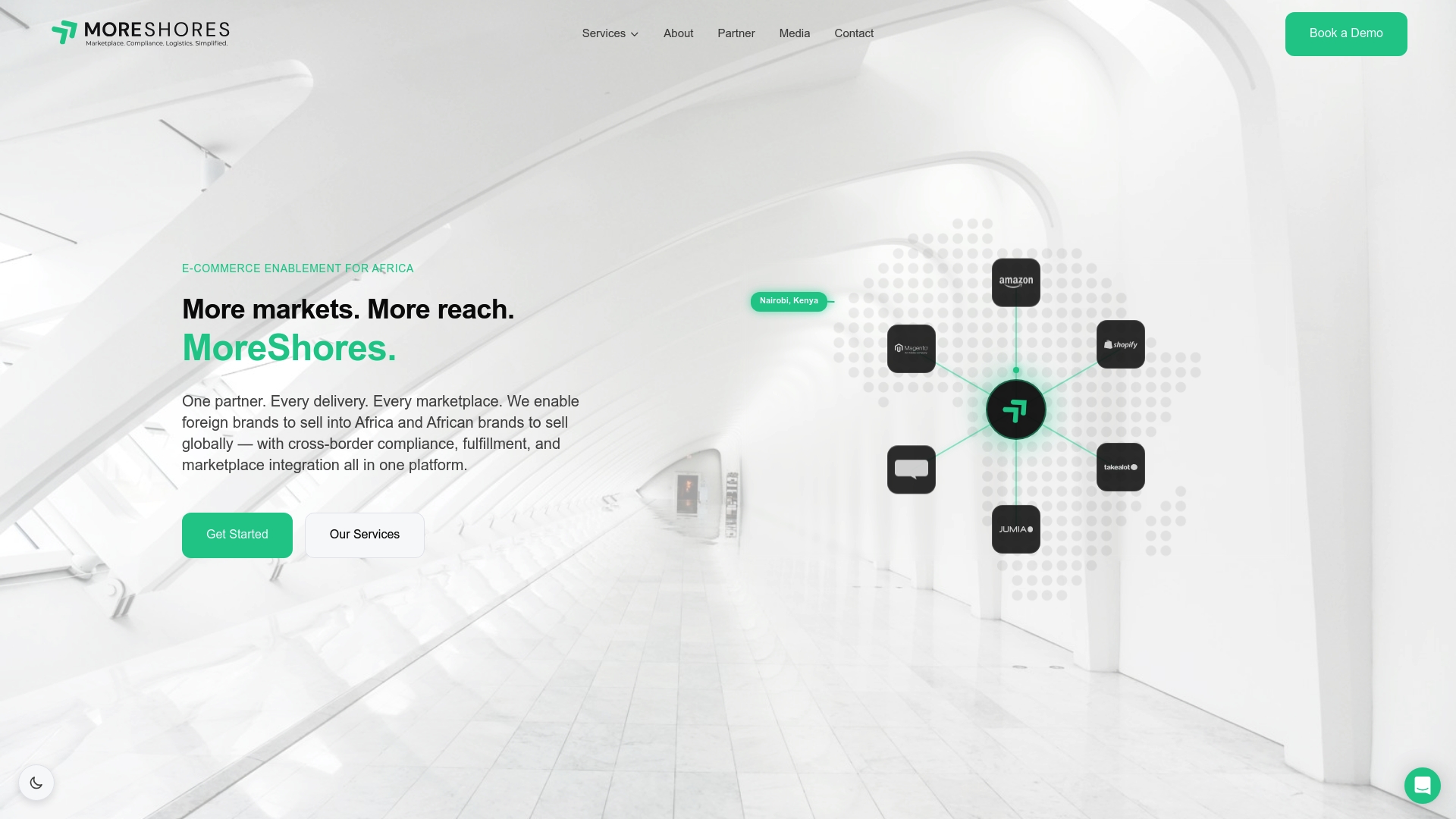
This fits brands reading this comparison because the same SKU-splitting logic you just worked through, keeping high-margin items close while routing volume SKUs through a network, is what our setup is built to run. From import to proceeds, it stays inside one system instead of three vendors you have to manage separately. Check our pricing and solutions overview to see where your catalog fits, or reach out to partner with our team and map your fulfillment split together.
FAQ
Is Amazon a D2C platform?
No, Amazon is a marketplace, not a direct-to-consumer channel, because the marketplace owns the customer relationship and much of the transaction data. Brands selling on Amazon can pair it with their own D2C site to combine marketplace reach with direct customer data.
How does shipping work on a marketplace?
In programs like Fulfillment by Amazon or Walmart Fulfillment Services, sellers ship inventory into the marketplace’s warehouses, and the marketplace handles storage, picking, packing, and delivery to the customer. Fee mechanics include per-unit fulfillment charges plus surcharges such as the 3.5% fuel and logistics fee that applies to multi-channel orders.
What type of products are suitable for e-commerce fulfillment?
Products that ship easily without excessive dimensional weight, have stable demand, and do not require heavy customization tend to do best in channel-native fulfillment networks. Oversized, fragile, or highly seasonal items often fit better with a dedicated 3PL or in-house D2C setup where handling can be controlled more closely.
Is a marketplace B2B or B2C?
Most consumer marketplaces like Amazon or Walmart operate as B2C, selling directly to individual shoppers, though many also run separate B2B programs for bulk or business buyers. The fulfillment and compliance rules, including the INFORM Consumers Act, primarily target the B2C seller relationship.
How do I know if a hybrid fulfillment approach makes sense?
A hybrid approach often makes sense when your catalog has both high-velocity commodity SKUs and higher-margin, brand-sensitive items, since each benefits from a different fulfillment path. Industry guidance suggests placing top-velocity SKUs into channel-native fulfillment while keeping slower-moving or oversized items at a dedicated 3PL.
Sources
- Quarterly Retail E-Commerce Sales Report — U.S. Census Bureau
- What third-party sellers need to know about the INFORM Consumers Act — FTC
- Amazon MCF US peak fulfillment rate card — Supply Chain / Amazon
- How to build a profitable multichannel marketplace strategy in 2026 — Ecommerce Times