
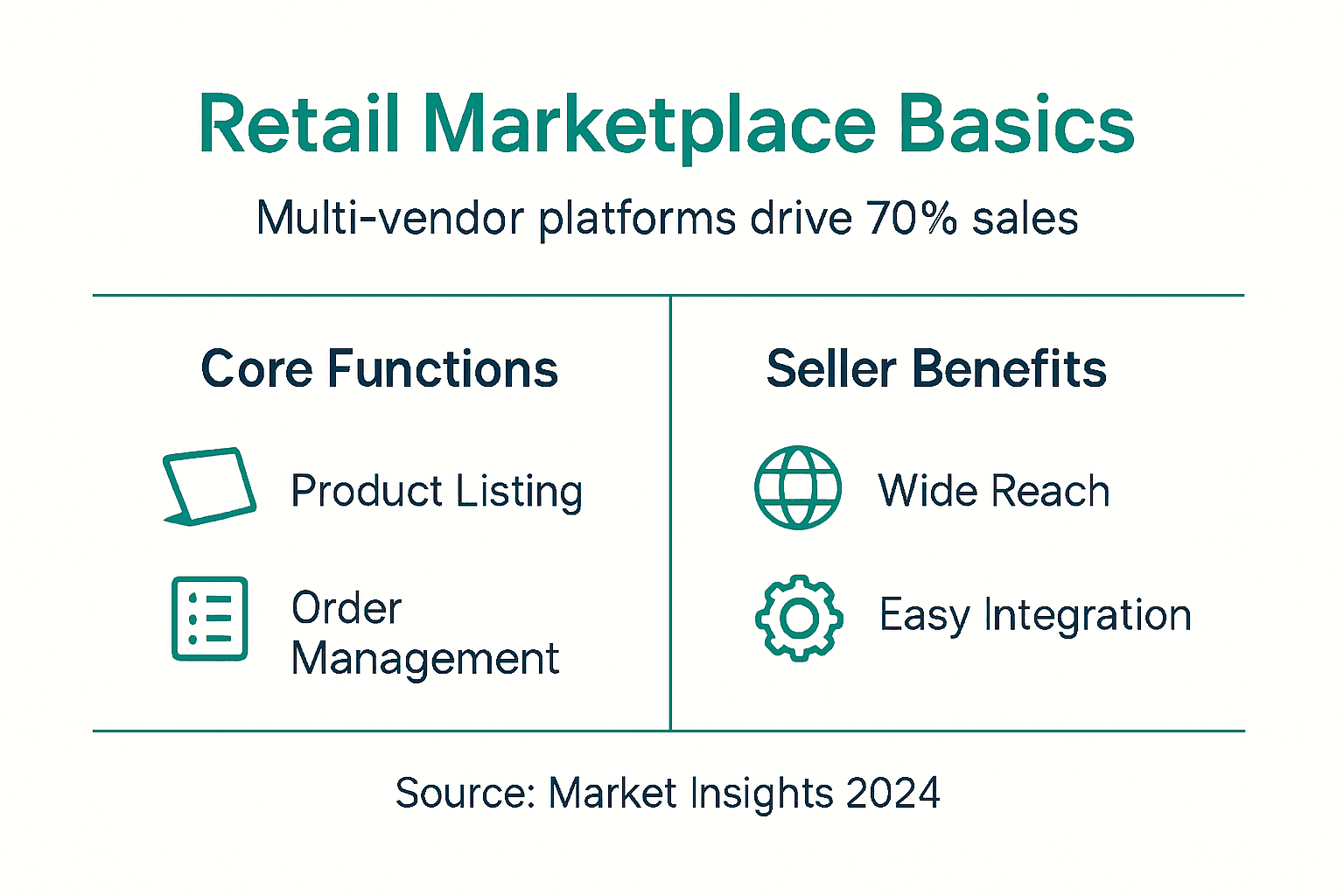
Over 70% of global online retail sales now flow through multi-vendor marketplaces rather than standalone stores. For African B2B merchants expanding cross-border, understanding how these platforms work is essential. This guide explains marketplace mechanics, addresses compliance challenges, and shows you how to manage multi-channel operations effectively to grow your international sales.
Table of Contents
- What Is A Retail Marketplace? Definition And Core Functions
- How Retail Marketplaces Enable Cross-Border Trade
- Key Challenges For African B2B Merchants In Retail Marketplaces
- Marketplace Integration: Multi-Channel Management And Logistics
- Common Misconceptions About Retail Marketplaces
- Practical Steps For African Merchants To Leverage Retail Marketplaces
- Expand Your Cross-Border Reach With MoreShores
- FAQ
Key Takeaways
| Point | Details |
|---|---|
| Definition | Retail marketplaces are digital platforms connecting multiple sellers with buyers through unified technology infrastructure. |
| Cross-Border Role | Marketplaces enable international trade by managing payments, compliance, and logistics across jurisdictions. |
| African Challenges | Merchants face fragmented infrastructure, complex regulations, and limited payment gateway access. |
| Integration Imperative | Multi-channel management synchronizes inventory, listings, and fulfillment to prevent overselling and stockouts. |
| Action Framework | Select aligned marketplaces, establish compliance partnerships, integrate systems, and optimize logistics networks. |
What Is a Retail Marketplace? Definition and Core Functions
A retail marketplace is a digital platform where multiple independent sellers list and sell products to buyers through shared infrastructure. Unlike standalone e-commerce stores owned by single brands, marketplaces aggregate sellers under one digital roof, handling core transactions while sellers maintain their own inventory and fulfillment.
The platform performs several critical functions. It provides the technology backbone for product listing management, enabling sellers to upload catalogs with images, descriptions, and pricing. The marketplace processes customer orders and handles payment collection across multiple currencies and payment methods. Most importantly, it creates a trusted environment where buyers discover diverse products without navigating dozens of separate websites.
For African B2B merchants, cross-border enablement through marketplaces reduces entry barriers to international markets. Instead of building individual storefronts in each target country, you access established buyer networks through platforms already trusted by local consumers.
Key marketplace types relevant to African merchants include:
- Global giants like Amazon connecting sellers to North American and European buyers
- Regional African platforms such as Jumia serving local and pan-African markets
- Integrated storefronts like Shopify enabling direct sales alongside marketplace channels
- Specialized B2B platforms focusing on wholesale and bulk transactions
Marketplaces differ fundamentally from standalone stores in their multi-tenant architecture. While you control branding and customer relationships in your own store, marketplaces provide infrastructure you share with competitors. This tradeoff brings immediate access to millions of buyers but requires navigation of platform rules and fee structures.
How Retail Marketplaces Enable Cross-Border Trade
Marketplaces dramatically reduce friction in international commerce by centralizing complex processes. When you sell across borders independently, you must establish payment processing in each country, navigate varying tax systems, and manage customs clearance for every shipment. Marketplaces consolidate these functions through their infrastructure and partnerships.

Payment processing represents a major enablement factor. Marketplaces integrate local payment methods buyers trust, from credit cards to mobile money, converting transactions into your preferred currency. This eliminates the need to establish merchant accounts in dozens of countries or negotiate with local payment processors.
Compliance handling is where marketplace integration becomes invaluable. Many platforms calculate and collect VAT or sales tax automatically based on buyer location. However, this does not absolve you of all compliance responsibilities. The Importer of Record function, which legally clears goods through customs and pays duties, often requires specialized partners rather than relying solely on marketplace services.
Cross-border logistics coordination through MoreShores cross-border solutions addresses another major challenge. Marketplaces typically integrate with multiple carriers and fulfillment networks, but you must actively manage shipping options, delivery timeframes, and returns handling. The platform mechanics involve technology connecting your inventory systems with marketplace order flows and carrier APIs for real-time tracking.
Regulatory complexity varies dramatically across jurisdictions. What constitutes a legal product import in South Africa may face restrictions in Kenya or Nigeria. Marketplaces provide frameworks for compliance but rarely handle country-specific licensing or certification requirements. You need partners who understand these nuances and can guide your product selection and documentation for each target market.
Key cross-border enablement functions include:
- Automated tax calculation and remittance based on buyer jurisdiction
- Multi-currency pricing and payment settlement reducing forex exposure
- Customs documentation generation for international shipments
- Integration with local fulfillment centers to reduce delivery times
- Dispute resolution and buyer protection programs building trust
Key Challenges for African B2B Merchants in Retail Marketplaces
African merchants face unique obstacles when leveraging marketplaces for cross-border expansion. Infrastructure fragmentation across the continent creates operational complexity. Payment gateways that work seamlessly in Nigeria may not operate in Ghana or Tanzania, forcing you to establish separate financial arrangements for different markets.
Regulatory environments vary wildly between African countries and international destinations. Each jurisdiction maintains distinct import rules, product safety standards, and documentation requirements. Assuming marketplace platforms automatically handle these compliance elements is a costly mistake. Most marketplaces facilitate compliance but require you to provide accurate product classifications, certificates of origin, and regulatory approvals.
Logistics networks remain underdeveloped in many African regions. While global carriers serve major cities, reaching secondary markets often requires partnerships with local couriers offering inconsistent service quality. This impacts delivery timeframes and customer satisfaction, requiring proactive management rather than passive reliance on marketplace default options.
Common errors include launching on marketplaces without proper inventory management systems. When you list the same products across multiple platforms without synchronization, you risk overselling items that are out of stock. This damages your seller reputation and triggers marketplace penalties that can suspend your account.
Another frequent pitfall involves underestimating the importance of cross-border challenges and solutions expertise. Many merchants assume listing products on Amazon or Jumia automatically grants access to international buyers. In reality, success requires understanding each marketplace’s algorithms, optimizing listings for local search behavior, and managing competitive pricing across channels.
Pro Tip: Partner with specialized compliance and logistics providers before launching on new marketplaces. Establishing these relationships upfront prevents costly delays when your first orders arrive and you scramble to clear customs or arrange fulfillment.
Challenges specific to African merchants:
- Limited access to working capital for inventory investment required by some marketplaces
- Currency volatility impacting profit margins on cross-border transactions
- Higher return rates from international buyers unfamiliar with African product quality
- Language barriers when serving markets outside English or French-speaking regions
- Time zone differences complicating customer service and dispute resolution
Marketplace Integration: Multi-Channel Management and Logistics
Successful marketplace selling requires synchronized operations across multiple platforms. When you list products on Amazon, Jumia, your Shopify store, and regional marketplaces simultaneously, manual management becomes impossible at scale. Technology integration ensures your inventory counts, pricing, and product information remain consistent everywhere.
Real-time synchronization prevents the disaster scenario where a customer orders your last unit on Amazon while another buyer purchases the same item on Jumia minutes later. Marketplace integration services connect your central inventory system with each platform’s API, automatically updating stock levels as orders flow in from any channel.
Order management automation routes incoming orders to your fulfillment system regardless of which marketplace generated the sale. This unified view lets you optimize picking, packing, and shipping without logging into five different seller dashboards. You gain visibility into total sales performance and inventory turnover across all channels from one interface.
| Approach | Benefits | Tradeoffs |
|---|---|---|
| Single Marketplace | Simplified operations, focused optimization, lower tech requirements | Limited buyer reach, vulnerability to platform policy changes |
| Multi-Channel Integration | Maximum market coverage, revenue diversification, competitive resilience | Complex inventory management, higher fees, increased operational overhead |
Fulfillment logistics optimization through fulfillment and logistics solutions involves selecting the right carrier mix for each destination. Multi-courier networks let you route shipments based on delivery speed requirements, cost constraints, and destination accessibility. Express carriers serve premium customers paying for fast delivery, while economy options suit price-sensitive buyers.
Warehouse location strategy impacts your ability to serve different markets efficiently. Storing inventory near major buyer concentrations reduces shipping times and costs. However, distributing inventory across multiple facilities increases complexity and requires sophisticated allocation algorithms to prevent stockouts in one location while excess sits elsewhere.
Pro Tip: Automate integration between your inventory management system and marketplace platforms from day one. Manual updates create a false sense of control but inevitably lead to errors as order volumes grow. The cost of integration technology is far less than lost sales and damaged reputation from overselling.
Integration components for effective multi-channel management:
- Central inventory database serving as single source of truth
- API connections to each marketplace for real-time data exchange
- Automated pricing rules adjusting for marketplace fees and competition
- Unified order dashboard consolidating sales from all channels
- Analytics tracking performance metrics across platforms
Partner with experienced providers like MoreShores who understand the technical and operational requirements of multi-marketplace selling.
Common Misconceptions About Retail Marketplaces
Many merchants misunderstand the division of responsibilities between marketplace platforms and sellers. These misconceptions lead to compliance failures, operational breakdowns, and lost revenue. Clarifying what marketplaces actually handle versus what remains your responsibility is essential for success.
Misconception 1: Marketplaces fully manage VAT, duties, and customs compliance. Reality requires nuance. Some marketplaces in certain jurisdictions do collect and remit VAT on your behalf. However, you remain legally responsible for accurate product classification, import licensing, and ensuring goods meet local safety standards. The marketplace facilitates tax collection but does not become your compliance department.
Misconception 2: Products sell automatically once listed without active management. Marketplace algorithms prioritize listings with strong conversion rates, competitive pricing, and positive reviews. Passive sellers who list products then ignore performance metrics watch their visibility decline as competitors optimize continuously. Success requires treating each marketplace as a dynamic channel demanding regular attention.
Misconception 3: Logistics and fulfillment happen automatically through the marketplace. Most platforms offer optional fulfillment services like Amazon FBA, but these come with strict requirements and additional fees. Many merchants must coordinate their own shipping, which means selecting carriers, printing labels, tracking shipments, and handling returns. The marketplace compliance responsibilities include ensuring timely delivery and managing customer service issues.
-
Understand your legal obligations as seller of record even when marketplaces facilitate transactions. Research import regulations, product restrictions, and licensing requirements for each target country before listing items.
-
Implement inventory management systems that sync across all sales channels in real-time. Relying on marketplace inventory tools alone creates blind spots when selling through multiple platforms simultaneously.
-
Establish fulfillment partnerships or build internal logistics capabilities rather than assuming marketplaces handle shipping automatically. Compare costs and service levels across fulfillment options for each market.
-
Monitor regulatory changes affecting your product categories and target markets. Marketplaces rarely proactively notify sellers of new compliance requirements until violations occur.
-
Budget for marketplace fees including listing fees, transaction commissions, payment processing, and optional services. These costs significantly impact profit margins and must factor into your pricing strategy.
Neglecting these realities leads to account suspensions, customs seizures, and financial losses that could have been prevented through proper planning and partnerships.
Practical Steps for African Merchants to Leverage Retail Marketplaces
Systematic implementation reduces risk and accelerates success when expanding through retail marketplaces. Follow this sequential framework to build sustainable cross-border operations.
-
Select marketplaces aligned with your target buyers and product fit. Research where your ideal customers shop rather than listing everywhere. A premium kitchenware brand targets different platforms than a bulk commodity supplier. Evaluate each marketplace’s buyer demographics, fee structures, and category competition before committing resources.
-
Establish Importer of Record partnerships and customs clearance capabilities. Work with specialists who implement cross-border enablement to legally clear your goods through destination country customs. This partnership prevents shipment delays and unexpected duty bills that erode margins.
-
Integrate inventory and product listings across chosen channels. Deploy technology to integrate marketplaces with your central inventory system. This synchronization prevents overselling and enables dynamic pricing adjustments based on competitive conditions in each marketplace.
-
Optimize fulfillment through multi-courier networks and strategic warehousing. Partner with logistics providers who optimize fulfillment by routing shipments through the most cost-effective and reliable carriers for each destination. Consider distributed inventory placement to reduce delivery times to major buyer markets.
-
Monitor performance metrics and iterate continuously. Track conversion rates, customer reviews, return rates, and profitability by marketplace and product category. Successful sellers treat marketplace management as an ongoing optimization process rather than a one-time setup.
This systematic approach transforms marketplace selling from overwhelming complexity into manageable growth. Each step builds on the previous one, creating operational resilience as you scale across borders and platforms.
Expand Your Cross-Border Reach with MoreShores
Navigating retail marketplaces while managing cross-border compliance and logistics challenges requires specialized expertise. MoreShores simplifies this complexity for African B2B merchants expanding internationally through integrated solutions.

Our platform acts as your Importer of Record, clearing goods through customs and handling VAT, duties, and regulatory requirements across multiple jurisdictions. We integrate your product listings across Takealot, Amazon, Jumia, Kilimall, Shopify, and WooCommerce, synchronizing inventory in real-time to prevent costly overselling.
Our cross-border enablement services include warehousing, inventory management, and fulfillment through multi-courier networks optimized for each destination. We reduce your operational overhead while expanding your market reach.
Partner with MoreShores to transform marketplace complexity into competitive advantage. Our marketplace integration solutions and fulfillment and logistics services empower you to focus on product development and customer relationships while we handle cross-border infrastructure.
FAQ
What is the role of Importer of Record in retail marketplaces?
The Importer of Record legally clears goods through destination country customs, paying duties and ensuring regulatory compliance on your behalf. This prevents shipment delays and protects you from unexpected fines or seizures when selling cross-border.
Can African merchants list products on multiple marketplaces without integration tools?
Yes, but manual management creates high risk of overselling when inventory depletes faster than you update listings. Without integration tools synchronizing stock levels in real-time, you face stockouts, cancelled orders, and damaged seller reputation across platforms.
Do marketplaces handle all logistics and fulfillment for sellers automatically?
Most marketplaces offer optional fulfillment services with additional fees and strict requirements. Many merchants must coordinate their own shipping by selecting carriers, managing inventory, and tracking deliveries. Active logistics management remains essential even when using marketplace fulfillment programs.