Most e-commerce merchants think fulfillment happens in one warehouse. That’s a costly misconception. A fulfillment network connects multiple strategic locations, logistics partners, and technology systems to optimize every order from storage to delivery. For businesses expanding across Africa’s 54 countries or reaching global markets, distributed fulfillment transforms impossible logistics into competitive advantages. This guide explains what fulfillment networks really are, how they solve cross-border challenges, and when they make sense for your business. You’ll discover practical strategies to leverage these systems for faster delivery, lower costs, and scalable growth in complex markets.
Table of Contents
- What Is A Fulfillment Network And How Does It Work?
- Why Fulfillment Networks Matter For Cross-Border E-Commerce In Africa
- Fulfillment Networks Versus In-House And Single Warehouse Models
- Advanced Considerations: Handling Peak Demand, Special Products, And Returns
- Discover Moreshores: Your Cross-Border Fulfillment Partner For Africa And Beyond
- Frequently Asked Questions About Fulfillment Networks
Key takeaways
| Point | Details |
|---|---|
| Distributed infrastructure | Fulfillment networks use multiple warehouses positioned near customers to reduce delivery times and shipping costs significantly |
| Cross-border advantage | Networks simplify African trade by leveraging AfCFTA frameworks, regional hubs, and local partnerships to overcome infrastructure gaps |
| Scalability benefit | Networks handle peak demand and growth better than single warehouses through flexible 3PL resources and automated systems |
| Cost threshold | Networks become cost-effective above 500-1000 monthly orders, offering 15-40% savings versus in-house fulfillment |
| Specialized capabilities | Advanced networks manage complex needs like perishables, hazardous materials, and high return rates with expert handling |
What is a fulfillment network and how does it work?
A fulfillment network is a distributed system of interconnected warehouses, distribution centers, and logistics partners that collaboratively handle e-commerce order fulfillment by storing inventory closer to customers, optimizing picking, packing, shipping, and returns to minimize delivery times and costs. Unlike a single warehouse operation, networks strategically position inventory across multiple locations based on customer demand patterns and regional market dynamics.
The mechanics involve sophisticated coordination across several operational layers. Inventory gets distributed to regional nodes using demand forecasting algorithms that predict where products will sell. When orders arrive, real-time routing systems direct each order to the optimal fulfillment center based on proximity, inventory availability, and carrier performance. Automated warehouse management systems then orchestrate picking, packing, and shipping workflows to maximize speed and accuracy.
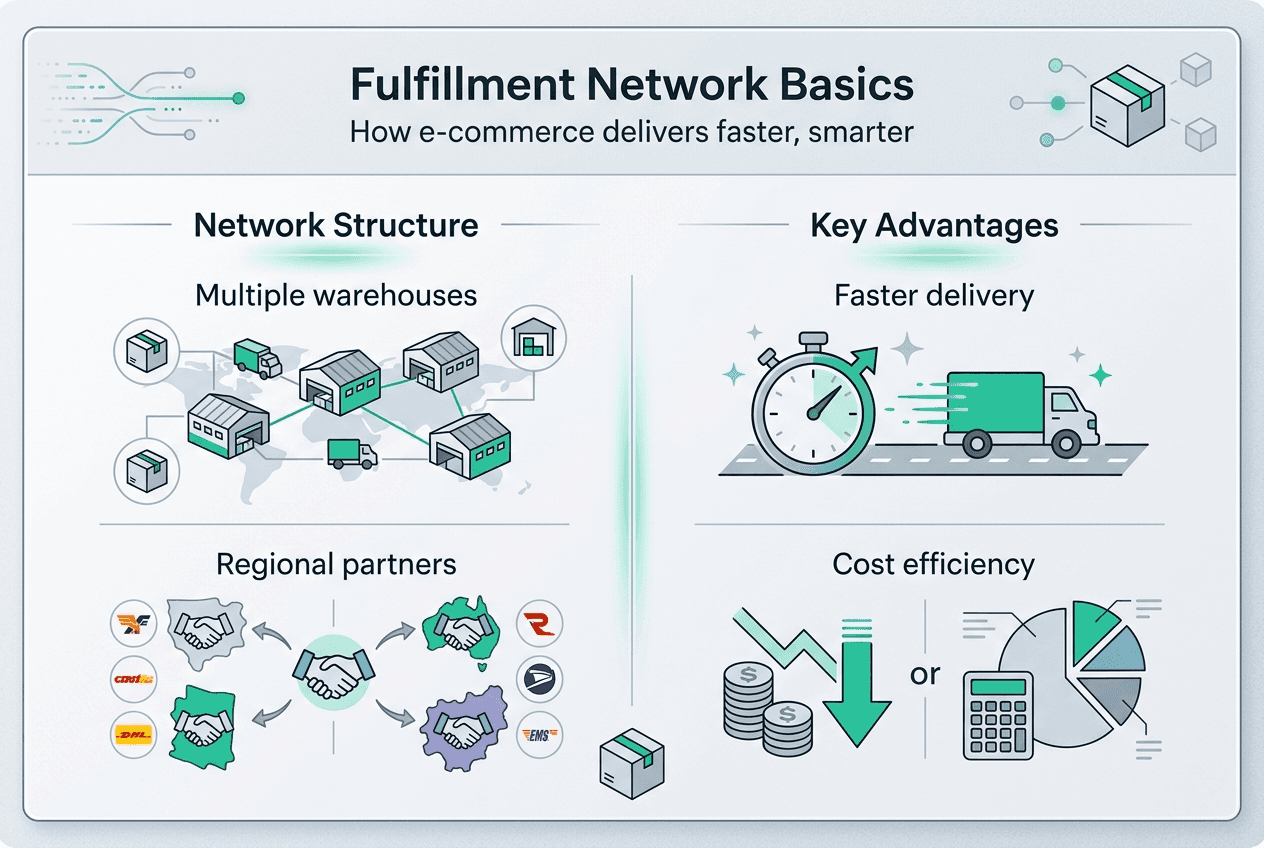
Carrier optimization represents another critical advantage. Networks maintain relationships with multiple shipping providers and dynamically select the best option for each package based on cost, speed, and reliability factors. This flexibility typically reduces shipping expenses by 20-35% compared to single-carrier contracts. Returns handling integrates seamlessly into the same infrastructure, allowing customers to return products to the nearest facility rather than shipping back to a distant origin point.
For merchants using fulfillment and logistics services, these networks operate transparently behind the scenes. You maintain visibility through unified dashboards while the network handles complex routing decisions, inventory rebalancing between nodes, and carrier negotiations. The result is faster delivery, lower costs, and better customer experiences without the capital investment of building your own distributed infrastructure.
Key operational components include:
- Strategic inventory placement near high-demand markets
- Automated order routing to the closest available facility
- Warehouse management systems for efficient picking and packing
- Multi-carrier shipping optimization for cost and speed
- Integrated reverse logistics for streamlined returns processing
- Real-time inventory synchronization across all network nodes
Why fulfillment networks matter for cross-border e-commerce in Africa
African e-commerce faces unique logistics challenges that make fulfillment networks particularly valuable. Only 43% of roads are paved, customs clearance averages over 25 days for inland destinations, and payment systems remain fragmented across 42 currencies. These obstacles traditionally made cross-border selling prohibitively expensive and unreliable for most merchants.
The African Continental Free Trade Area agreement changes this equation dramatically. AfCFTA eliminates 90% of tariffs between member countries and establishes standardized trade protocols that simplify cross-border commerce. Fulfillment networks leverage this framework by establishing regional hubs in key markets like South Africa, Kenya, Nigeria, and Egypt. These strategic nodes allow merchants to serve multiple countries from each location while benefiting from streamlined customs procedures and reduced duties.
Distributed fulfillment directly addresses infrastructure gaps through partnerships with established third-party logistics providers. RSA Global operates 25 facilities across Africa including major nodes in Kenya, providing reliable warehousing and last-mile delivery even in challenging markets. By positioning inventory within destination countries, networks eliminate the delays and costs of repeated international shipments for each order.
Payment innovations integrated into modern fulfillment networks build crucial customer trust. Cash on delivery remains preferred by 60% of African online shoppers due to limited banking access and fraud concerns. Networks coordinate COD collection with local delivery partners and provide multi-currency settlement through systems like the Pan-African Payment and Settlement System. This financial infrastructure removes a major barrier to cross-border sales.
Understanding how it works in practice reveals additional advantages. Pre-clearance arrangements at network facilities expedite customs processing from weeks to days. Consolidated shipping from regional hubs reduces per-unit costs by 40-60% compared to direct international shipments. Local partnerships provide market expertise on regulations, consumer preferences, and optimal delivery methods for each country.
For merchants pursuing African expansion, cross-border enablement through fulfillment networks transforms previously impossible markets into viable growth opportunities. The combination of AfCFTA benefits, strategic infrastructure, and local partnerships creates a scalable foundation for regional commerce.
Critical network advantages for African markets include:
- Regional hubs positioned to serve multiple countries efficiently
- AfCFTA framework leverage for reduced tariffs and simplified customs
- 3PL partnerships providing local expertise and reliable infrastructure
- Multi-currency payment systems including COD capabilities
- Pre-clearance arrangements accelerating customs processing
- Consolidated shipping reducing per-unit logistics costs significantly
Fulfillment networks versus in-house and single warehouse models
Choosing between fulfillment networks and alternative models requires understanding the operational and financial tradeoffs. Networks deliver 1-2 day shipping to 98% of US customers through distributed inventory placement, while single warehouses typically achieve only 60-70% coverage at similar speeds. This geographic advantage translates directly to higher conversion rates and customer satisfaction scores.

Cost structures favor networks at scale but not universally. In-house fulfillment makes financial sense below 500 orders monthly when fixed costs like warehouse leases, equipment, and staff can’t be spread across sufficient volume. Between 500-1000 monthly orders, the economics become competitive. Above 1000 orders, networks typically deliver 15-40% cost savings through shared infrastructure, bulk shipping rates, and operational expertise that individual merchants can’t replicate.
| Model | Best for | Delivery speed | Cost structure | Scalability |
|---|---|---|---|---|
| Fulfillment network | 500+ orders/month, multi-region | 1-2 days to 98% coverage | Variable, 15-40% savings at scale | Excellent, flexible capacity |
| Single warehouse | Regional focus, 200-800 orders | 3-5 days average nationally | Moderate fixed + variable | Limited by facility capacity |
| In-house | Under 500 orders, custom needs | Varies by location | High fixed, lower variable | Requires capital investment |
| Hybrid | Complex product mix | Optimized by product type | Mixed structure | Moderate flexibility |
Control represents the primary advantage of in-house operations. You directly manage quality standards, packaging customization, and special handling procedures without relying on third-party protocols. Businesses selling highly customized products, fragile items requiring specialized care, or goods with complex compliance needs often prefer this hands-on approach despite higher costs.
Peak demand handling reveals another crucial distinction. Networks absorb seasonal surges through flexible 3PL capacity and distributed inventory. During holiday periods when order volumes triple, in-house operations struggle with fixed labor and space constraints. This scalability advantage prevents the stockouts and delayed shipments that damage customer relationships during critical selling periods.
Pro Tip: Calculate your true in-house costs including warehouse rent, utilities, equipment depreciation, insurance, labor with benefits, and management overhead before comparing to network pricing. Most merchants underestimate total fulfillment costs by 30-50% when evaluating options.
Decision factors extend beyond simple cost comparisons. Consider your growth trajectory, product characteristics, target markets, and control requirements. Merchants planning rapid expansion across multiple regions benefit most from networks. Those with stable regional demand and specialized handling needs may find partnering with MoreShores for hybrid solutions optimal, using networks for standard products while maintaining in-house capabilities for specialty items.
Advanced considerations: handling peak demand, special products, and returns
Peak shopping seasons expose the limitations of fixed fulfillment infrastructure. Black Friday, Cyber Monday, and holiday periods generate order volumes 200-400% above baseline for most e-commerce merchants. 3PL fulfillment networks scale flexibly during these surges through shared warehouse capacity, temporary labor pools, and extended operating hours that would be prohibitively expensive to maintain year-round in dedicated facilities.
Specialized product categories require careful consideration when selecting network partners. Perishable goods need temperature-controlled storage and expedited shipping protocols that not all facilities provide. Fragile items demand custom packaging materials and trained handling procedures to minimize damage rates. Electronics require secure storage and anti-static precautions. Verify that network nodes serving your target markets maintain the specific capabilities your products demand.
E-commerce return rates average 20-30% across categories, with apparel and footwear reaching 40-50%. Efficient reverse logistics capabilities separate strong fulfillment networks from basic warehouse operations. Advanced networks process returns at regional facilities, inspect condition, update inventory systems, and either restock sellable items or route damaged goods for appropriate disposition. This distributed approach reduces return processing time from weeks to days while lowering transportation costs.
Hazardous materials compliance varies significantly across jurisdictions and adds complexity to network operations. Batteries, aerosols, flammable liquids, and other HAZMAT items require specialized licensing, storage protocols, and carrier certifications that differ by country and region. Each fulfillment node must maintain appropriate permits and trained staff for the product categories you sell. Regulatory violations carry severe penalties and shipping delays, making compliance verification essential.
Pro Tip: Request specific facility certifications and handling protocols for your product categories during network evaluation. Generic capabilities statements don’t reveal whether a particular node can actually handle your specialized requirements or just the network overall.
Planning for these operational nuances ensures reliable performance across your entire product catalog. E-commerce solutions that integrate specialized handling, compliance management, and efficient returns processing deliver consistent customer experiences regardless of product complexity or order volume fluctuations.
Critical capabilities for complex fulfillment scenarios:
- Flexible capacity scaling for seasonal demand surges up to 400%
- Temperature-controlled storage for perishable and sensitive products
- Custom packaging protocols for fragile or high-value items
- Distributed returns processing reducing cycle time by 60-80%
- HAZMAT licensing and trained staff at relevant network nodes
- Quality control systems catching damage before customer delivery
Discover MoreShores: Your cross-border fulfillment partner for Africa and beyond
Navigating African logistics doesn’t require building your own infrastructure across 54 countries. MoreShores specializes in cross-border enablement through established fulfillment networks positioned strategically across key African markets and global trading hubs. Our platform handles the complex coordination between customs clearance, multi-currency payments, warehousing, and last-mile delivery that makes cross-border commerce viable.
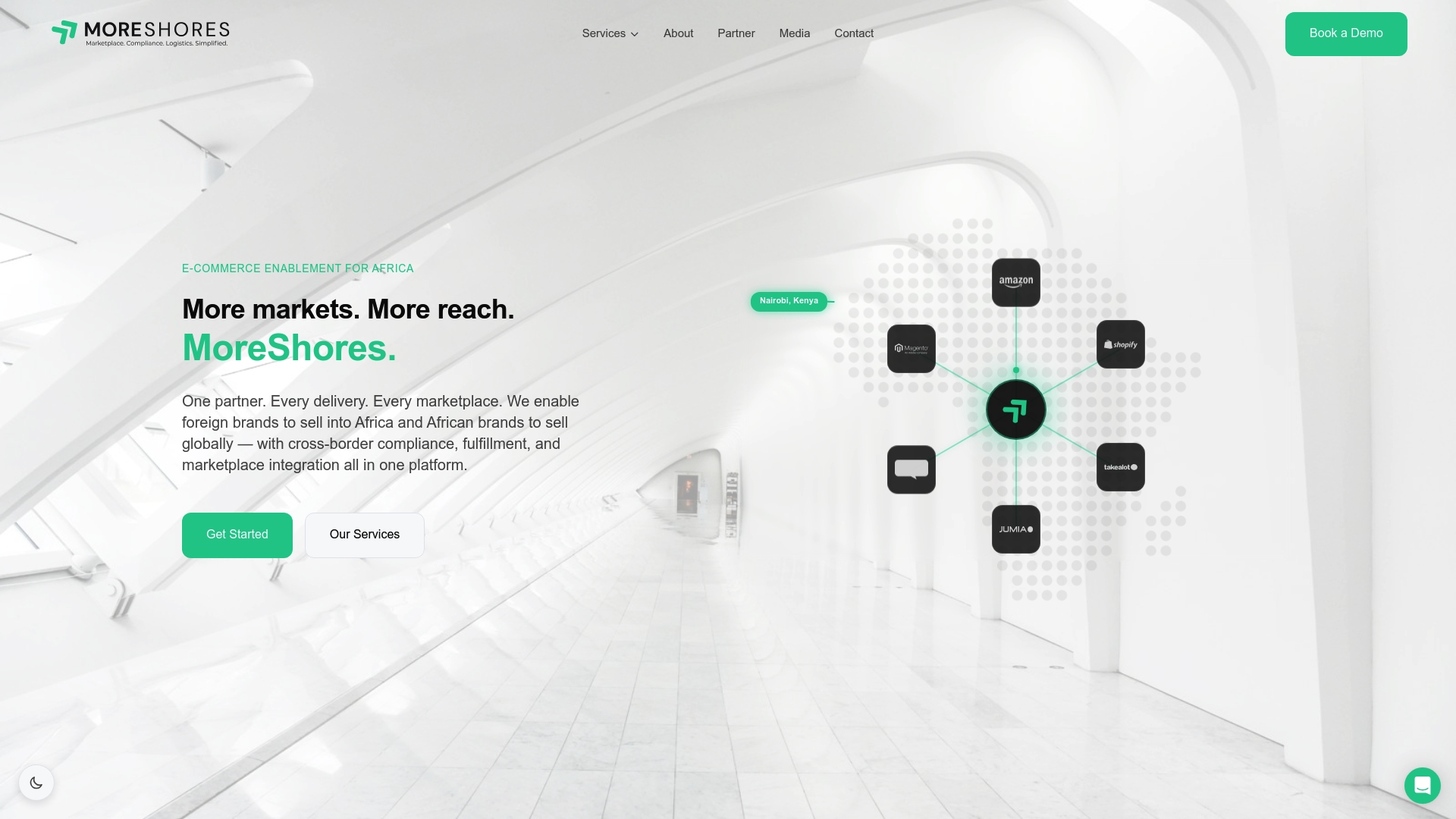
We act as your Importer of Record, managing duties, VAT, and regulatory compliance so you can sell across borders without establishing legal entities in each country. Our fulfillment and logistics network integrates seamlessly with major marketplaces like Takealot, Amazon SA, Jumia, and Kilimall, plus Shopify and WooCommerce storefronts. This unified infrastructure lets you manage inventory, process orders, and track shipments across multiple channels through one dashboard.
Partner with MoreShores to leverage our regional expertise, established carrier relationships, and proven operational systems. We simplify the logistics complexity that stops most merchants from pursuing African expansion, turning challenging markets into profitable growth opportunities.
Frequently asked questions about fulfillment networks
What is the typical cost advantage of using fulfillment networks over in-house?
Fulfillment networks deliver 15-40% cost savings compared to in-house operations for merchants shipping over 1000 orders monthly. These savings come from shared infrastructure costs, bulk shipping discounts, and operational expertise that reduces labor and error rates. Below 500 monthly orders, in-house fulfillment often costs less due to network minimum fees and setup charges.
How does a fulfillment network improve delivery speed for African markets?
Networks position inventory within destination countries, eliminating the 25+ day customs delays typical of direct international shipments. Regional hubs in South Africa, Kenya, Nigeria, and Egypt enable 2-4 day delivery across most African markets versus 3-6 weeks for cross-border shipments. This speed advantage increases conversion rates by 35-50% for time-sensitive products.
Can fulfillment networks handle specialized products like perishables?
Advanced fulfillment networks maintain temperature-controlled facilities and expedited shipping protocols for perishable goods, though not all nodes offer these capabilities. Verify specific facility certifications for your product requirements. Networks specializing in food, pharmaceuticals, or cosmetics typically provide cold chain storage, humidity control, and compliance documentation that general warehouses lack.
What are common challenges when using fulfillment networks for cross-border trade?
Inventory allocation across multiple nodes requires accurate demand forecasting to prevent stockouts in high-demand markets while avoiding excess inventory elsewhere. Customs compliance varies by country, requiring detailed product documentation and classification. Payment reconciliation across multiple currencies and COD collection adds financial complexity. Quality control becomes harder when you can’t directly oversee operations at each facility.
How do fulfillment networks manage high return rates in e-commerce?
Networks process returns at the nearest regional facility rather than routing everything back to a central location, reducing transportation costs by 40-60%. Automated inspection systems assess condition and update inventory in real-time. Sellable items restock immediately while damaged goods route for appropriate disposition. This distributed approach cuts return processing time from 2-3 weeks to 3-5 days, improving customer satisfaction and cash flow.