Why warehousing services drive African e-commerce growth
TL;DR:
- Africa’s e-commerce growth is hindered by a significant warehousing gap, with only 15% of warehouses automated. Utilizing professional, flexible warehousing enhances delivery speed, compliance, and operational efficiency, crucial for cross-border trade under AfCFTA. Most merchants should prioritize warehousing as a growth strategy, not just cost management, to scale successfully across African markets.
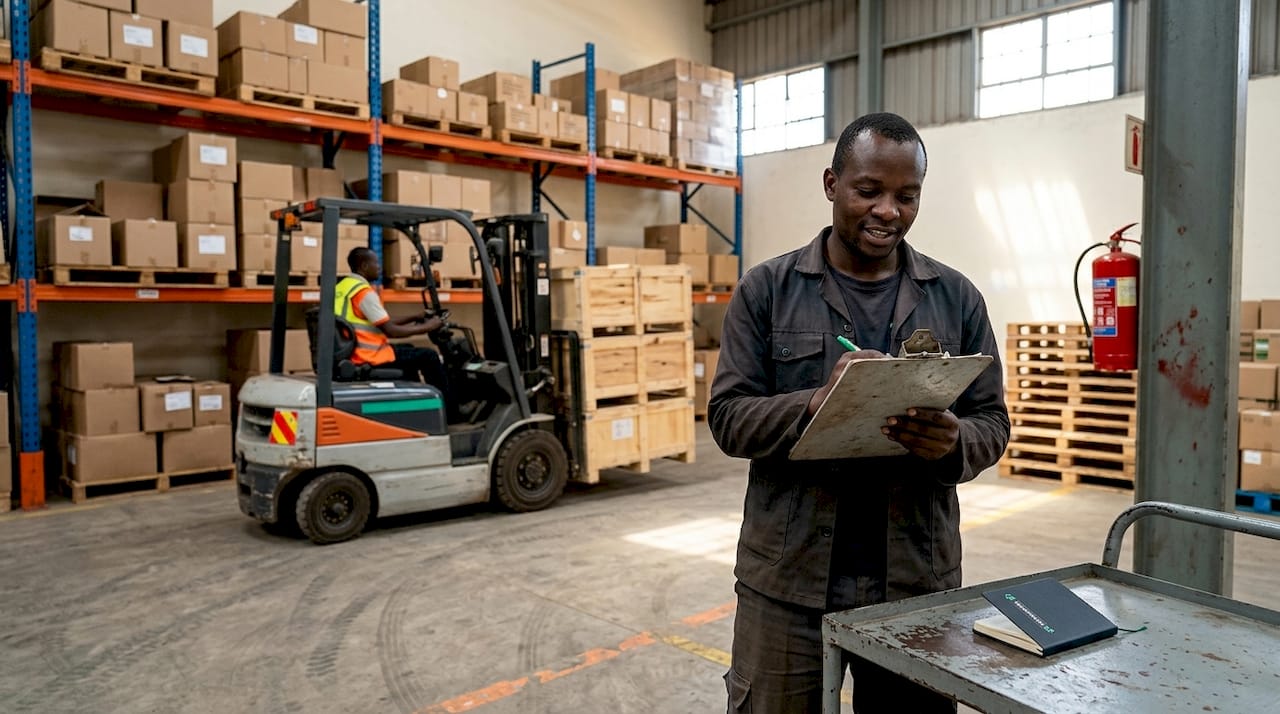
Africa’s e-commerce sector is growing fast, but the infrastructure supporting it is struggling to keep pace. Demand for warehousing space grew by 18% in the first half of 2024, yet only 15% of warehouses on the continent are automated. For merchants trying to scale across borders, that gap isn’t just a statistic. It’s a daily operational challenge. Most sellers focus on product selection and marketplace listings, but overlook the warehousing layer that determines whether orders actually reach customers on time. This guide explains why warehousing services are not a luxury add-on but a core requirement for any African e-commerce merchant serious about growth.
Table of Contents
- The state of warehousing in Africa
- How warehousing services transform e-commerce operations
- Comparing in-house storage vs. third-party warehousing
- Warehousing as Africa’s key to scaling international trade
- Rethinking warehousing: What most e-commerce leaders overlook
- Unlock seamless e-commerce growth with MoreShores
- Frequently asked questions
Key Takeaways
| Point | Details |
|---|---|
| Warehousing gap | African e-commerce is outpacing storage space and technology, creating major opportunities for professional warehousing. |
| Operational efficiency | Modern warehousing slashes delays, cuts costs, and enables reliable inventory management for local and cross-border sales. |
| Growth enabler | Warehousing services are central for capturing AfCFTA-driven trade and scaling across African and international markets. |
| Smart outsourcing | Third-party warehouses reduce risk, complexity, and free merchants to focus on sales, not storage problems. |
The state of warehousing in Africa
Now that we’ve underscored the severity of the warehousing gap, let’s examine what this means for Africa’s e-commerce boom.
Africa’s digital commerce market is projected to reach $72 billion by 2026, creating enormous pressure on a warehousing sector that was never built for this scale. The demand is real and accelerating, but the supply of modern, grade-A warehouse space is not keeping up. This mismatch creates bottlenecks that slow fulfillment, increase costs, and damage customer trust.
The low automation rate is especially concerning. When only 15% of warehouses use automated systems, the rest rely on manual processes that are slower, less accurate, and more vulnerable to theft and misplacement. For merchants managing high-volume orders, this translates directly into lost revenue and poor reviews.
Top warehousing challenges facing African e-commerce merchants:
- Load shedding and power instability: Frequent outages disrupt refrigeration, security systems, and automated equipment.
- Urban and rural divide: Most quality warehouse space is concentrated in major cities, making last-mile delivery to rural areas expensive and slow.
- Manual processes: Without automation, picking errors, stock discrepancies, and slow order processing are common.
- Returns management: Handling reverse logistics without proper systems leads to stock losses and customer dissatisfaction.
- Security risks: Inadequate surveillance and access controls in older facilities increase theft exposure.
| Country/Region | Warehousing maturity | Key challenge |
|---|---|---|
| South Africa | Moderate to high | Load shedding, rising lease costs |
| Nigeria | Low to moderate | Infrastructure gaps, urban congestion |
| Kenya | Moderate | Limited grade-A space outside Nairobi |
| Egypt | Moderate | Regulatory complexity, customs delays |
| Rest of Africa | Low | Fragmented logistics, rural access |
“The gap between warehousing supply and e-commerce demand in Africa is not just an infrastructure problem. It’s a growth ceiling for every merchant who hasn’t yet built a smart storage strategy.”
For merchants exploring e-commerce growth in Africa, understanding this landscape is the first step toward building a resilient supply chain. Pairing that knowledge with strong marketplace integration ensures your products are visible and deliverable at scale.
How warehousing services transform e-commerce operations
With the landscape in mind, it’s time to see how warehousing services directly transform day-to-day e-commerce operations.
The operational benefits of professional warehousing go well beyond simply storing goods. When you use a dedicated warehousing service, you gain access to systems, processes, and infrastructure that most individual merchants cannot build on their own.
Key operational gains from professional warehousing:
- Faster delivery times: Inventory stored closer to your customers means shorter last-mile distances and quicker dispatch.
- Reduced last-mile costs: Consolidating shipments from a central warehouse lowers per-unit delivery costs significantly.
- Easier returns management: Structured reverse logistics processes reduce stock loss and improve customer satisfaction scores.
- Better inventory control: Real-time stock visibility prevents overselling, stockouts, and costly emergency replenishment.
- Scalable capacity: Pay-as-you-go models let you expand or contract storage space based on seasonal demand without long-term lease commitments.
The pay-as-you-go warehousing model deserves special attention in the African context. Seasonality is sharp in many markets, with peaks around holidays, back-to-school periods, and major sales events. Locking into fixed warehouse leases means paying for space you don’t need during slow periods. Flexible warehousing solves this directly.
Pro Tip: Ask your warehousing provider whether they use RFID (Radio Frequency Identification) tagging for inventory tracking. RFID systems scan items automatically without line-of-sight contact, dramatically cutting theft and misplacement rates compared to barcode-only systems. Even in facilities where modern warehousing supports cross-border compliance, RFID adds a critical layer of accuracy.
Automation, even at modest levels, also delivers measurable transparency. When your warehouse uses automated picking or inventory management software, you get real-time data on stock levels, order status, and fulfillment speed. That data is essential for making smart purchasing and pricing decisions.
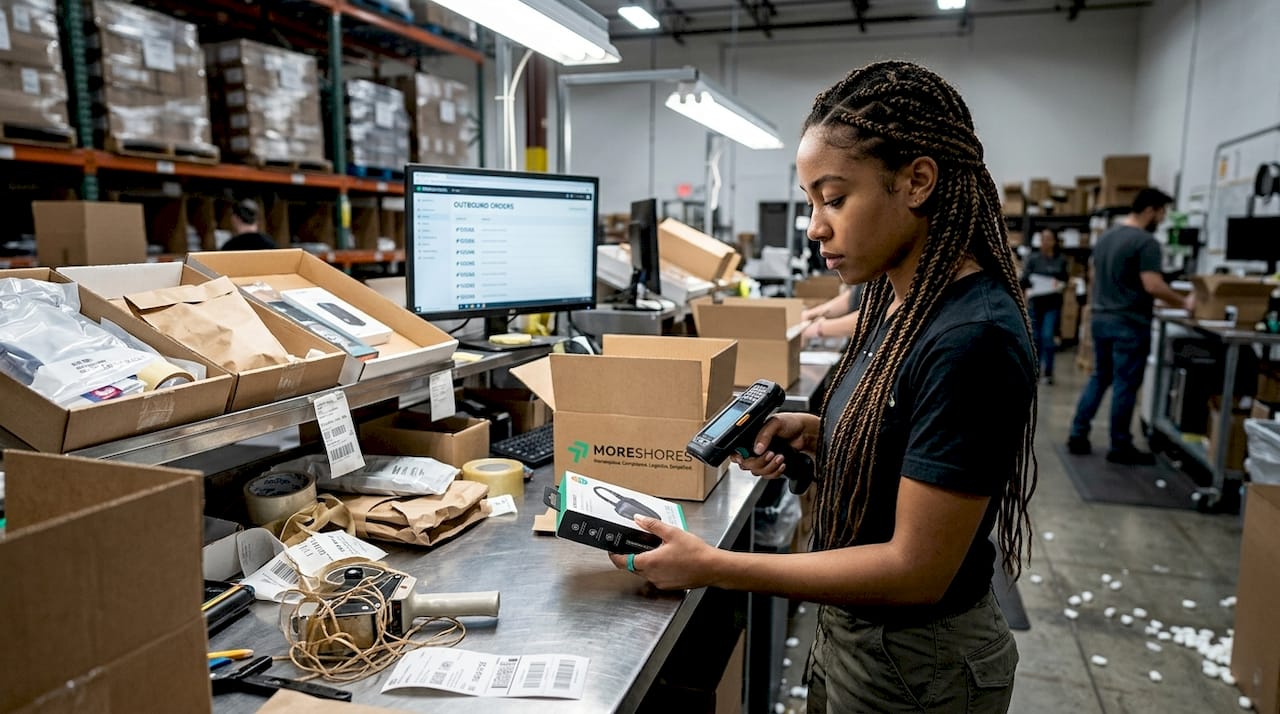
Learn more about how warehousing works end-to-end, and explore how integrated fulfillment and logistics can reduce your operational burden while improving customer experience.
Comparing in-house storage vs. third-party warehousing
But how does outsourcing warehousing stack up against running your own storage? Let’s break down the differences.
Many merchants start with in-house storage because it feels like the cheaper, more controllable option. In practice, the hidden costs and operational risks of DIY storage often outweigh the perceived savings, especially as you scale.
| Factor | In-house storage | Third-party warehousing |
|---|---|---|
| Upfront cost | High (lease, fit-out, equipment) | Low (pay-as-you-go) |
| Scalability | Limited by physical space | Flexible, scales with demand |
| Compliance support | Your responsibility | Managed by provider |
| Security | Varies, often manual | Monitored, insured facilities |
| Power backup | Self-funded | Included in service level |
| Technology access | Self-funded | Included (WMS, RFID, automation) |
| Staff training | Ongoing cost | Provider’s responsibility |
The compliance dimension is particularly important. Third-party warehousing is crucial for cross-border logistics under AfCFTA (the African Continental Free Trade Area), which could boost intra-African trade by up to 52%. Navigating customs documentation, duties, and VAT across multiple African markets is complex. A professional warehousing partner typically has compliance expertise built into their service.
When in-house storage makes sense:
- You sell exclusively in one local market with stable, predictable demand.
- You have existing owned property that is already fit for purpose.
- Your product range requires highly specialized handling that third-party providers cannot accommodate.
When to outsource warehousing:
- You are selling across multiple cities, regions, or countries.
- Your order volumes fluctuate significantly by season.
- You lack the capital to invest in warehouse technology and backup power.
- You need compliance support for cross-border shipments.
Pro Tip: Match your warehousing model to your growth stage. Early-stage merchants benefit most from flexible third-party arrangements. As you grow, you can negotiate dedicated space within a third-party facility, giving you the control of in-house storage without the capital risk. Explore cross-border enablement options that bundle warehousing with compliance support.
Warehousing as Africa’s key to scaling international trade
Now, let’s see how warehousing does more than store goods. It’s central to seizing Africa’s new cross-border opportunities.
AfCFTA represents one of the most significant trade opportunities in Africa’s history. AfCFTA could boost intra-African trade by 28% to 52%, but capturing that opportunity requires scalable warehousing for consolidation, compliance, and rapid fulfillment across borders.
Warehousing is not just a storage solution in this context. It’s the operational backbone that makes cross-border trade physically possible at scale. Here’s how it enables international expansion step by step:
- Inventory positioning: Place stock in strategic warehouse locations near key border crossings or major consumer markets to reduce transit times.
- Document preparation: Professional warehouses support the preparation of customs documentation, certificates of origin, and commercial invoices required for cross-border shipments.
- Regulatory compliance: Warehousing providers familiar with AfCFTA frameworks help ensure your goods meet destination-country standards before they leave the facility.
- Consolidation: Combining smaller shipments into larger consolidated loads reduces per-unit shipping costs and simplifies customs processing.
- Returns and reverse logistics: Cross-border returns are complex. A regional warehouse network makes handling them far more manageable.
Consider a practical example. A South African merchant selling into Kenya and Nigeria faces different customs requirements, duty rates, and delivery timelines in each market. Without a warehousing partner that understands these nuances, every shipment becomes a manual compliance exercise. With the right AfCFTA warehousing advantage, that same merchant can pre-position inventory, automate documentation, and fulfill orders in days rather than weeks.
The merchants who will capture the most value from AfCFTA are not necessarily the ones with the best products. They are the ones with the most reliable, scalable, and compliant warehousing infrastructure behind them.
Rethinking warehousing: What most e-commerce leaders overlook
Stepping back, it’s clear the strategies that set top brands apart aren’t just operational. They’re visionary.
Most African e-commerce operators treat warehousing as a cost line. They ask, “How do I minimize this expense?” instead of asking, “How do I use this as a competitive advantage?” That framing is a mistake, and it’s one we see repeatedly.
The real return on investment from smart warehousing comes from three places most merchants don’t initially consider. First, resilience against power instability. A warehouse with backup generators and battery systems keeps your orders moving when competitors’ operations stall during load shedding. Second, cross-border readiness. A warehousing setup built for compliance and consolidation lets you enter new markets faster than rivals who are still figuring out customs paperwork. Third, customer trust. Consistent delivery times build repeat purchase behavior, which is the single most valuable metric in e-commerce.
The merchants we see scaling fastest are building modular warehousing arrangements. They start flexible, then layer in technology upgrades like warehouse management systems (WMS) and RFID as volumes justify the investment. They treat their warehousing provider as a partnership strategy, not a vendor relationship.
Warehousing is not a back-office function. It is a growth lever. The sooner you treat it that way, the faster you will scale.
Unlock seamless e-commerce growth with MoreShores
Ready to upgrade your warehousing strategy and unlock faster growth?
At MoreShores, we provide end-to-end warehousing and fulfillment solutions designed specifically for African merchants and international brands entering African markets. Our infrastructure supports real-time inventory management, multi-courier fulfillment, and full compliance handling so you can focus on selling, not logistics.
Whether you’re pursuing cross-border expansion into new African markets or scaling your existing operations, we have the warehousing backbone to support your growth. Our e-commerce enablement platform connects your inventory to leading marketplaces like Takealot, Jumia, and Amazon SA, with seamless Shopify and WooCommerce integration.
Schedule a discovery call with our team today and find out how MoreShores can turn your warehousing strategy into a genuine growth engine.
Frequently asked questions
What are the top benefits of using a third-party warehouse in Africa?
Third-party warehousing delivers faster delivery, stronger inventory control, lower security risks, and built-in compliance support for cross-border trade across African markets. It also removes the capital burden of building and maintaining your own storage infrastructure.
How does low automation affect e-commerce warehousing in Africa?
With only 15% automated, most African warehouses rely on manual processes that increase picking errors, theft exposure, and fulfillment delays. Choosing a provider with automated systems significantly reduces these operational risks.
What role does warehousing play in leveraging AfCFTA for cross-border trade?
Warehousing enables the inventory consolidation, documentation preparation, and regulatory compliance that AfCFTA-driven trade requires. Without scalable warehousing, merchants cannot efficiently capture the 28% to 52% trade growth the agreement is projected to unlock.
How can e-commerce merchants manage warehousing challenges like load shedding?
Prioritize warehousing providers with backup power systems and flexible service models that allow you to adapt quickly when outages disrupt standard operations. Facilities with generator backup and battery systems maintain fulfillment continuity during power cuts.