How to streamline logistics for cross-border e-commerce

TL;DR:
- African cross-border logistics are costly and complex due to infrastructure challenges and port congestion.
- Proper assessment, automation, and local partnerships are crucial for improving efficiency and reducing costs.
- Continuous KPI monitoring and flexible strategies enable sustainable growth in African e-commerce markets.
Cross-border e-commerce into Africa sounds promising until your shipment sits at a port for three weeks, customs paperwork stalls clearance, and your landed cost is 40% higher than projected. These are not edge cases. They are the everyday reality for logistics managers expanding into African markets. Logistics costs average 13% of GDP across the continent, far above the global norm, and the Africa e-commerce logistics automation market is valued at USD 1.3 billion as businesses race to fix the problem. This guide walks you through four practical steps to assess, automate, optimize, and continuously improve your cross-border logistics operations so you can grow profitably across African markets.
Table of Contents
- Assess and prepare your logistics infrastructure
- Select and implement the right automation tools
- Streamline transportation and last-mile delivery
- Continuously monitor, verify, and refine your process
- Why most e-commerce logistics streamlining efforts fail—and what truly works in Africa
- Unlock seamless cross-border logistics with MoreShores
- Frequently asked questions
Key Takeaways
| Point | Details |
|---|---|
| Infrastructure drives logistics cost | Addressing weak infrastructure and planning for contingencies is essential for reducing logistics costs in Africa. |
| Automation delivers rapid savings | AI-powered optimization can slash fuel and delivery costs by over 25% when tailored to local conditions. |
| Start small, refine continuously | Test automation steps gradually and use real KPIs to verify and improve your logistics process. |
| Blend tools with local insight | Combining open-source solutions and direct partnerships delivers more reliable cross-border outcomes than imported platforms alone. |
Assess and prepare your logistics infrastructure
Now that we have established the high cost and complexity of African cross-border logistics, the first step is evaluating your current setup and identifying core needs. You cannot streamline what you have not mapped.
Start by auditing every node in your supply chain: origin warehouse, freight forwarder, port of entry, inland transport, and final-mile delivery. Write down where delays occur most often and where costs spike unexpectedly. Most businesses find that 70% of their inefficiency concentrates in two or three predictable choke points.
Core infrastructure prerequisites to confirm before scaling:
- Bonded or in-country warehouse capacity in target markets
- Reliable customs broker or Importer of Record (IOR) partnerships
- Multi-carrier transport agreements covering road, rail, and air
- Digital documentation systems for border clearance
- Contingency routing options for port congestion
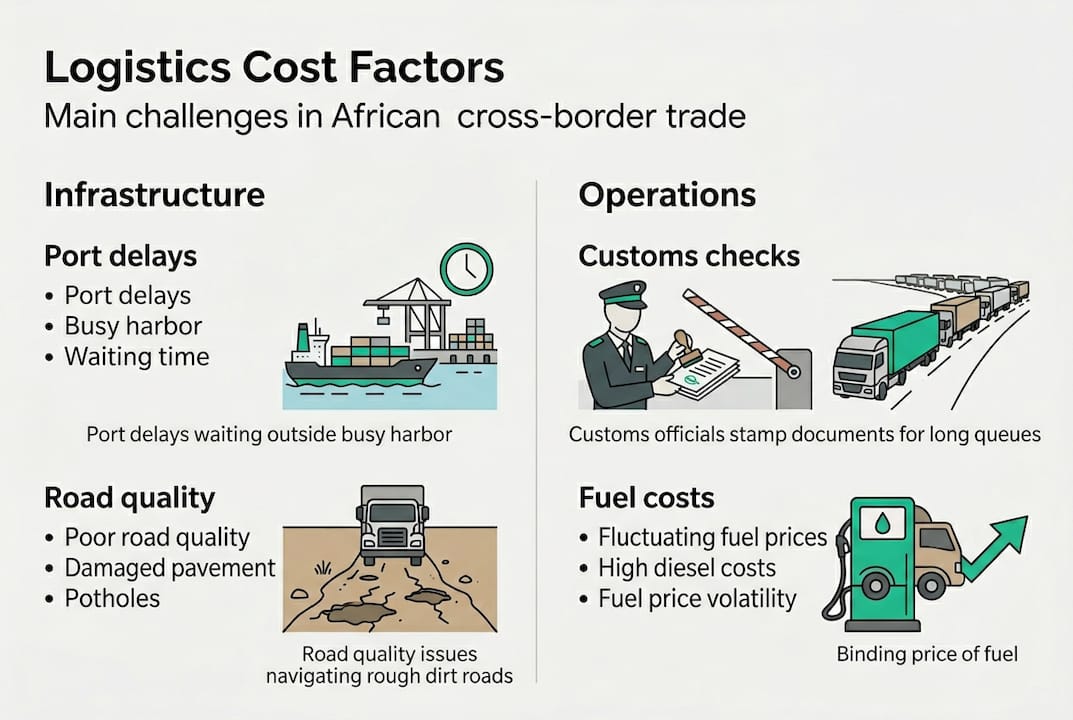
Africa’s infrastructure and port congestion challenges are well documented. Port Durban, for example, regularly experiences vessel queues that add days to transit times. Variable road quality in landlocked corridors compounds the problem. Understanding these realities before you commit to a delivery promise is essential.
Review your African e-commerce logistics requirements against the table below to benchmark where you stand.
| Logistics factor | Typical challenge in Africa | Impact on cost |
|---|---|---|
| Port congestion | Delays of 3 to 10 days at major hubs | High demurrage fees |
| Road infrastructure | Unpaved routes in landlocked corridors | Higher fuel and maintenance costs |
| Customs clearance | Manual documentation, slow processing | Detention charges, spoilage risk |
| Last-mile coverage | Low address formalization | Failed deliveries, re-delivery costs |
| Warehousing availability | Limited bonded storage near borders | Longer dwell times |
Africa’s logistics costs average 13% of GDP, significantly higher than in developed markets where the figure sits closer to 8%. That gap directly eats into your margins.
Pro Tip: Use open-source mapping tools like OSMnx to visualize your delivery corridors and identify road quality risks before committing to a routing plan. Pair this with input from local logistics partners who know seasonal road conditions firsthand.
Once you have a clear picture of your infrastructure gaps, you can make informed decisions about which tools and partnerships will close them. This groundwork also makes it easier to quantify ROI when you invest in automation. Check out MoreShores’ fulfillment and logistics solutions for a practical starting point.
Select and implement the right automation tools
With a clear understanding of your logistics landscape, the next critical step is selecting automation technologies that fit your needs and market conditions. Not every tool built for European or North American supply chains will perform well in Africa.
The core choice is between open-source tools and commercial platforms. Each has a place depending on your business size and budget.
| Tool type | Examples | Best for | Cost |
|---|---|---|---|
| Open-source routing | OR-Tools, OSMnx | SMEs, pilot programs | Free to low cost |
| Commercial TMS | SAP TM, Oracle TMS | Large enterprises | High upfront investment |
| Mid-market platforms | Shipsy, Locus | Growing businesses | Subscription based |
| WMS (warehouse) | Odoo, inFlow | SMEs to mid-market | Free to moderate |
AI route optimization reduces fuel costs by 15 to 25%, and one African case study showed a 28% fuel reduction paired with a 35% improvement in on-time deliveries. Those numbers are achievable, but only if the tool you choose is configured for your actual road network and carrier constraints.
Step-by-step guide to implementing route optimization:
- Export your historical delivery data, including origin points, destinations, delivery times, and failed delivery rates.
- Map your active corridors using multimodal transport and OR-Tools or a comparable open-source platform.
- Define your constraints: vehicle capacity, driver hours, border crossing windows, and road quality ratings.
- Run a pilot on one corridor for 30 days, measuring fuel use, delivery time, and cost per stop.
- Compare pilot results against your baseline and calculate ROI before expanding to additional routes.
- Integrate the routing tool with your warehouse management system (WMS) so dispatch and fulfillment stay synchronized.
Pro Tip: Start with a single high-volume corridor rather than trying to automate everything at once. A focused pilot gives you clean data, builds team confidence, and reduces the risk of a costly rollout failure.
For SMEs, OR-Tools is a strong starting point because it is free, well-documented, and flexible enough to model African road constraints. Larger operations may need a commercial transport management system (TMS) to handle multi-country compliance and carrier integrations. Explore MoreShores’ cross-border enablement solutions to see how technology integrations are layered into a managed service.
Streamline transportation and last-mile delivery
After choosing and implementing the right technologies, your focus should shift to orchestrating real-world movements and overcoming obstacles on the ground. Technology only delivers results when the physical network supports it.
Multimodal transport approaches that work in Africa:
- Combine sea freight into major ports with rail for inland corridors where available (e.g., Dar es Salaam to Zambia via TAZARA)
- Use air freight selectively for high-value, time-sensitive goods rather than as a default
- Partner with regional road carriers who have established relationships at border posts
- Build in buffer days at congestion-prone crossings like Beit Bridge and Chirundu
- Use bonded warehouses near borders to decouple international and domestic legs
Contingency planning is not optional. A single road closure or port strike can cascade across your entire delivery schedule if you have no alternative routing. Build at least one backup carrier and one alternate border crossing into every major corridor plan.
“Reliable last-mile delivery is the final determinant of customer experience. In markets where address systems are informal and road access is inconsistent, the last mile can make or break your entire logistics investment.”
The data supports investing in this area. Dispatch optimization tools improved schedule adherence from 50% to 99% in a Zambian distribution case study. That is not a marginal gain. It is a transformation in service reliability that directly affects customer retention and repeat purchase rates.
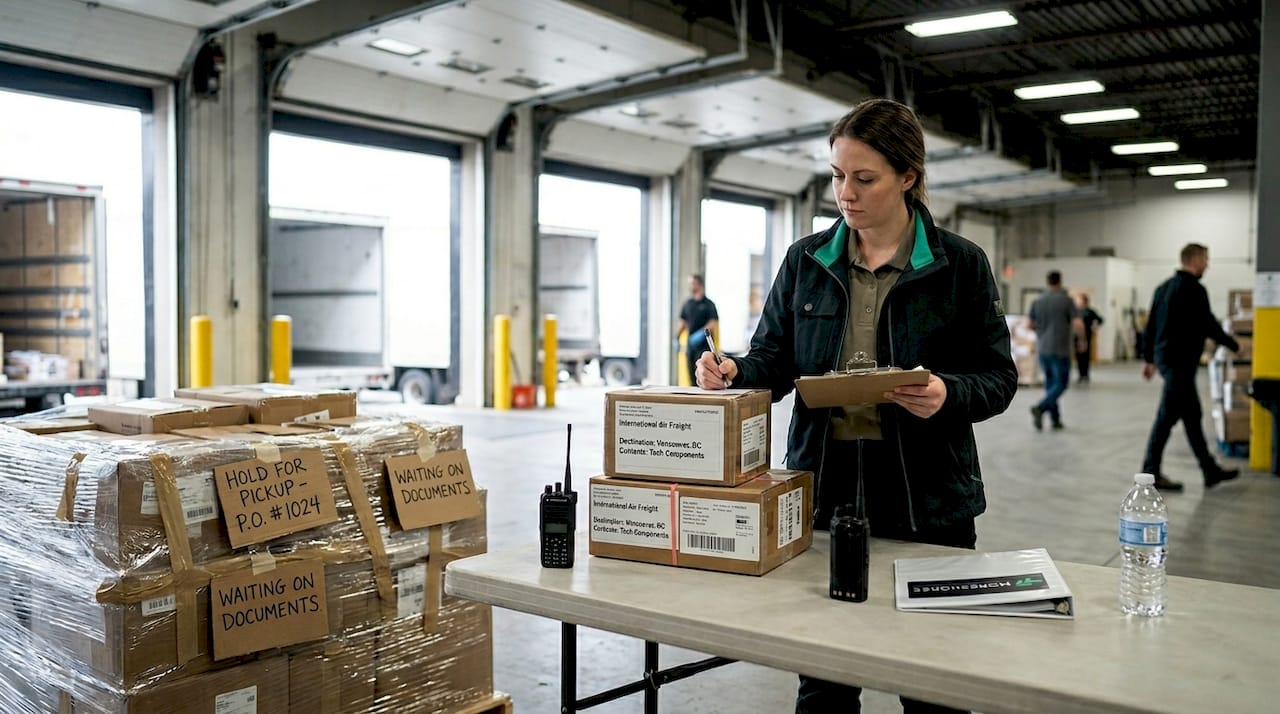
For last-mile fulfillment strategies, consider partnering with local delivery networks that use motorcycles or smaller vehicles suited to urban density and informal settlements. These partners often achieve higher delivery success rates than national couriers in secondary cities.
Building strong local carrier relationships also gives you real-time intelligence on road conditions, border wait times, and seasonal disruptions. No routing algorithm has better data than a driver who runs that corridor every week. Pair technology with human knowledge and your African e-commerce delivery performance will improve faster than either approach alone.
Continuously monitor, verify, and refine your process
Even with top-notch tools and processes, logistics success depends on ongoing measurement and adaptation. Setting up a system once and walking away is how efficiency gains disappear within six months.
Step-by-step KPI setup for cross-border logistics:
- Define your core KPIs before launch: cost per delivery, on-time delivery rate, order accuracy rate, customs clearance time, and return rate.
- Assign ownership for each KPI to a specific team member or partner.
- Set a baseline using your current performance data, even if it is imperfect.
- Choose a reporting cadence: weekly for operational KPIs, monthly for cost and partner performance reviews.
- Build a simple dashboard using tools like Google Looker Studio or Power BI to visualize trends.
- Schedule a quarterly review to assess whether targets are still relevant and whether new automation tools should be tested.
| KPI | Target benchmark | Review frequency | Action if missed |
|---|---|---|---|
| Cost per delivery | Below market average for corridor | Monthly | Renegotiate carrier rates or reroute |
| On-time delivery rate | Above 90% | Weekly | Investigate root cause by corridor |
| Order accuracy rate | Above 98% | Weekly | Audit warehouse pick-and-pack process |
| Customs clearance time | Under 48 hours | Monthly | Review documentation completeness |
| Return rate | Below 5% | Monthly | Improve product descriptions or packaging |
Automation can drive logistics cost savings of up to 30%, but real-world adoption is limited by infrastructure challenges. This means your KPI framework must account for external variables, not just internal performance. Track carrier reliability scores alongside your own metrics.
Review your logistics process optimization guide regularly and update your processes as new tools become available. The African logistics technology landscape is evolving fast, and what was the best option in 2024 may be surpassed by 2026. Stay connected with your e-commerce logistics partners to get early access to emerging solutions.
Why most e-commerce logistics streamlining efforts fail—and what truly works in Africa
Having explored the mechanics, it is important to recognize why standard approaches often underdeliver and where real, sustainable improvements originate.
Most logistics projects in Africa fail for one reason: they import solutions designed for mature infrastructure markets and expect them to perform in a fundamentally different environment. A route optimization tool calibrated for German autobahns will not account for a seasonal road closure in Malawi or a three-day border queue at Kazungula.
What actually works is a blend of local expertise, flexible partnerships, and low-cost tools that can be adapted quickly. While automation promises 30% savings, infrastructure limits adoption, so start with low-cost tools for SMEs and build from there. Test in phases. Spend modestly upfront. Measure ruthlessly. Adjust fast.
The businesses we see succeed are not the ones with the biggest technology budgets. They are the ones who combine a solid local carrier network with a simple but consistent KPI review process and a willingness to change course when data says to. That combination outperforms expensive off-the-shelf platforms every time. Explore how integrated e-commerce logistics can be layered into this approach for faster results.
Unlock seamless cross-border logistics with MoreShores
Ready to put these strategies into practice and avoid common pitfalls? Here is how MoreShores can help you streamline logistics and supercharge your African e-commerce expansion.
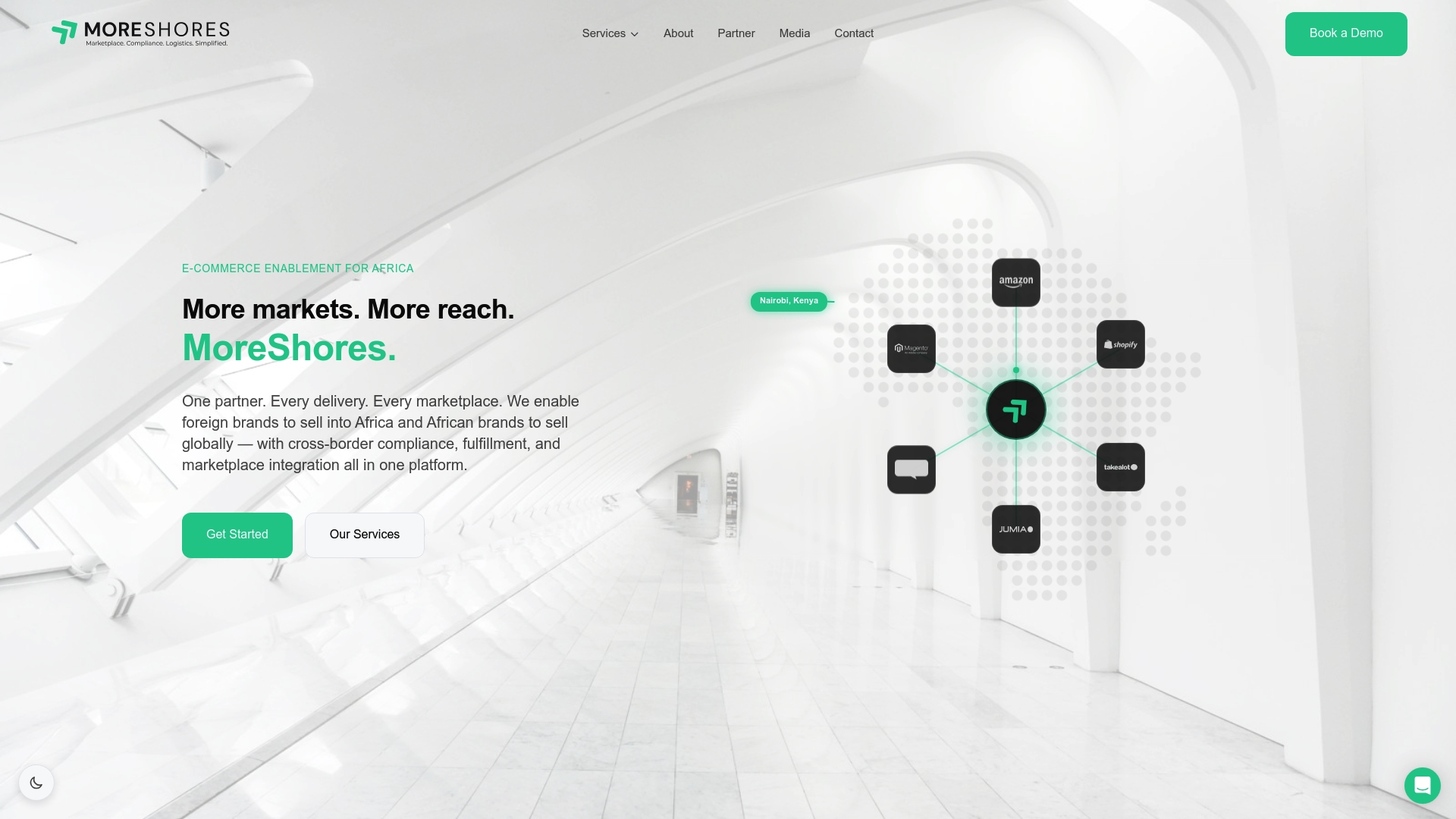
MoreShores provides expert cross-border logistics built specifically for African market entry. From acting as your Importer of Record to managing customs clearance, duties, and VAT compliance, we handle the complexity so you can focus on growth. Our fulfillment network spans multiple couriers, and our platform integrates directly with Shopify, WooCommerce, Takealot, Jumia, and more. Whether you are entering South Africa, Kenya, or Nigeria, our African e-commerce solutions give you the infrastructure and local expertise to move fast and stay compliant. Become a logistics partner and start building a smarter cross-border operation today.
Frequently asked questions
What are the main challenges in streamlining logistics for African e-commerce?
Unreliable infrastructure, high logistics costs, and complex customs procedures are the main challenges. Africa’s logistics costs average 13% of GDP, far above developed market norms, which makes cost control a constant priority.
How effective is AI and automation for logistics in Africa?
AI route optimization has reduced fuel costs by up to 28% and improved on-time deliveries by 35% in real-world cases. AI reduces fuel costs by 15 to 25% on average, with stronger results when tools are configured for local road and carrier conditions.
Can smaller businesses benefit from logistics automation, or is it just for large enterprises?
Smaller businesses can start with open-source tools like OR-Tools and OSMnx for routing at low cost. Low-cost tools for SMEs provide a practical entry point without the capital outlay required for enterprise platforms.
What KPIs should I track when optimizing logistics?
Key KPIs include cost per delivery, on-time delivery rate, and order accuracy, monitored continually for improvement. Dispatch optimization improved schedule adherence from 50% to 99% in Zambia, showing what consistent measurement and the right tools can achieve.