
Managing cross-border shipments to and from Africa just got harder. You juggle multiple couriers, each with unique customs requirements, delivery speeds, and pricing structures. The result? Missed deadlines, unexpected fees, and frustrated customers. This article reveals how integrated multicourier strategies empower African merchants to reduce shipping costs by 25%, accelerate delivery times, and simplify compliance. You’ll discover selection criteria, compare global versus regional couriers, explore marketplace integration, and learn situational recommendations to optimize your cross-border operations.
Table of Contents
- Selection Criteria For Multicourier Shipping Solutions
- Leading Global Courier Services
- Regional Courier Advantages
- Marketplace Integration And Api Capabilities
- Compliance And Regulatory Handling
- Cost Comparison And Optimization
- Situational Recommendations And Use Cases
- Simplify Your Cross-Border Shipping With Moreshores
Key Takeaways
| Point | Details |
|---|---|
| Cost and Speed Gains | Multicourier strategies reduce shipping costs by 25% and delivery times by up to 20%. |
| Courier Strengths | Global couriers excel in speed; regional couriers offer better last-mile coverage and cost advantages. |
| Compliance Support | Importer of Record services are critical for smooth customs clearance and compliance. |
| Integration Benefits | Integration with marketplaces and e-commerce platforms automates order processing and tracking. |
| Hybrid Model | Choosing a hybrid multicourier model tailored to shipment types maximizes efficiency. |
Selection Criteria for Multicourier Shipping Solutions
Choosing the right multicourier setup starts with clear criteria. Your customers expect fast, reliable delivery. Delivery speed and reliability are the most crucial selection criteria for customer satisfaction, directly influencing repeat purchases and brand loyalty. A courier that consistently meets delivery windows strengthens your competitive edge.
Cost transparency matters just as much. Hidden fees, fuel surcharges, and unpredictable customs charges erode margins. Evaluate couriers based on upfront pricing and total landed cost visibility. Your bottom line depends on knowing exactly what each shipment will cost before committing.
Customs clearance and compliance support prevent shipment delays and regulatory penalties. African cross-border trade involves complex import regulations, duties, and VAT requirements. Couriers or partners offering Importer of Record services handle legal responsibilities, reducing your administrative burden and ensuring shipments clear customs smoothly.
Marketplace and storefront integration automates order processing, label generation, and tracking updates. Manual data entry wastes time and introduces errors. Cross-border enablement services that integrate with Amazon, Jumia, Shopify, and WooCommerce let you scale without hiring additional staff.
Courier network coverage and scalability ensure you reach customers wherever they are. As your business grows, your logistics partner must expand with you. Prioritize couriers with strong African presence and the ability to add routes as your sales footprint increases.
Pro Tip: Start by mapping your current shipment volume by destination and urgency. This data reveals which courier strengths you need most, guiding smarter selection decisions.
Leading Global Courier Services
Global couriers bring established infrastructure and extensive route networks. DHL, FedEx, and UPS dominate international shipping with proven reliability and speed. These carriers excel at handling large, high-value, or time-sensitive shipments. When you need a premium product delivered to Lagos or Nairobi within 48 hours, global couriers often deliver.
However, global couriers offer approximately 90% route coverage but come with higher costs due to fuel surcharges and customs fees. Their pricing reflects premium service levels, including advanced tracking, insurance options, and dedicated customer support. For merchants shipping luxury goods or urgent replacements, the extra expense may justify the speed and security.
Global couriers also provide robust documentation and compliance tools. Their systems generate detailed customs paperwork, reducing clearance delays. This feature is valuable when shipping into countries with strict import regulations.
Yet, global couriers sometimes struggle with last-mile delivery in remote African regions. Their networks prioritize major urban centers, leaving rural or emerging markets underserved. This gap creates opportunities for regional partners to complement global capabilities.
Consider global couriers for urgent or high-value international shipments where speed and brand reputation matter most. Balance their strengths with ecommerce shipping solutions that blend multiple courier types for cost-effective coverage.
- Broad global coverage: Reach over 200 countries with established networks.
- Premium service levels: Fast delivery, advanced tracking, and insurance options.
- Higher costs: Fuel surcharges and customs fees increase total landed costs.
- Urban focus: Strong performance in major cities, weaker in rural African areas.
Regional Courier Advantages
Regional African couriers offer distinct advantages that global carriers cannot match. Aramex, EMS, and local networks understand African logistics challenges intimately. They navigate infrastructure limitations, cultural nuances, and regulatory environments with expertise built over years of operating on the continent.
Regional couriers improve delivery success rates by 15% compared to global courier-only models. Their last-mile networks penetrate remote and emerging markets where global couriers hesitate. This coverage expands your addressable customer base, opening sales channels in underserved regions.
Cost savings represent another compelling benefit. Regional couriers charge lower fees for intra-African and last-mile deliveries. Their pricing structures account for local economic conditions, making affordable shipping accessible to price-sensitive customers. Lower costs improve your margins while keeping products competitively priced.
Regional partnerships also enhance delivery reliability. Local couriers maintain relationships with customs officials, understand regional holidays, and anticipate seasonal logistics challenges. This knowledge reduces delays and improves customer satisfaction.
Balancing regional and global couriers in a hybrid model maximizes performance. Use regional carriers for cost-sensitive shipments to emerging markets and global couriers for urgent, high-value deliveries. Partner with MoreShores for regional logistics to access integrated networks tailored for African e-commerce.
- Local expertise: Deep understanding of African infrastructure and regulatory environments.
- Cost efficiency: Lower fees for intra-African and last-mile deliveries.
- Expanded reach: Access to remote and emerging markets underserved by global couriers.
- Improved reliability: Regional partnerships reduce delays and enhance customer satisfaction.
Pro Tip: Map your shipment destinations by region. Use regional couriers for high-volume, cost-sensitive routes and reserve global couriers for urgent or premium shipments.
Marketplace Integration and API Capabilities
Technology integration transforms multicourier management from a manual nightmare into a streamlined operation. APIs connect your e-commerce platform directly to courier systems, automating order import, label generation, and shipment tracking. This automation eliminates repetitive data entry, reduces errors, and frees your team to focus on growth.
Integration with marketplaces reduces manual order processing by 40%, significantly decreasing operational workload. When a customer places an order on Amazon SA or Jumia, the system automatically selects the optimal courier based on destination, urgency, and cost. Labels generate instantly, and tracking updates post to the marketplace without human intervention.
Shopify and WooCommerce integrations provide similar benefits for direct-to-consumer brands. You manage inventory, orders, and shipments from a single dashboard. Real-time visibility into courier performance lets you identify bottlenecks and optimize routing decisions.
Automated tracking updates improve customer experience. Buyers receive timely notifications at every shipment milestone, reducing support inquiries. Transparency builds trust and encourages repeat purchases.
Scalability becomes achievable without proportional increases in operational staff. As your order volume grows, integrated systems handle the additional workload seamlessly. Marketplace integration solutions enable merchants to expand into multiple sales channels without drowning in logistics complexity.
“Integration with marketplaces and couriers reduces manual order processing by 40%, freeing your team to focus on customer acquisition and product development rather than repetitive logistics tasks.”
Explore brand onboarding process to see how integrated platforms simplify multicourier management from day one.
- Seamless order import: Automatically pull orders from Amazon, Jumia, Shopify, and WooCommerce.
- Automated label generation: Generate shipping labels instantly based on optimal courier selection.
- Real-time tracking: Post shipment updates to marketplaces and customers without manual intervention.
- Scalable operations: Handle growing order volumes without increasing staff proportionally.
Compliance and Regulatory Handling
Cross-border shipping involves complex customs regulations, import duties, and VAT requirements. A single compliance mistake can delay shipments for weeks, trigger penalties, or result in confiscated goods. Effective compliance management is non-negotiable for African merchants engaged in international trade.
Importer of Record services pre-clear shipments, minimizing customs delays and ensuring correct VAT and duties handling. An IOR provider assumes legal responsibility for import taxes and regulatory compliance. This service protects you from unexpected liabilities and ensures shipments clear customs smoothly.
Customs clearance expertise prevents costly hold-ups. Experienced IOR providers understand documentation requirements, tariff classifications, and country-specific regulations. They prepare accurate paperwork, reducing the risk of shipment rejection or delays at border checkpoints.
Compliance support also helps you avoid regulatory penalties. Incorrect VAT calculations or missing import licenses can result in fines and reputational damage. IOR services ensure every shipment meets legal standards, safeguarding your business from compliance risks.
Combining IOR services with multicourier management creates a seamless delivery flow. Your logistics partner handles both the courier selection and the regulatory paperwork, eliminating coordination headaches. Cross-border compliance solutions integrate these functions, simplifying international expansion.
- Customs expertise: Prevent shipment hold-ups with accurate documentation and tariff classification.
- Legal responsibility: IOR services assume liability for import taxes and duties.
- Penalty avoidance: Ensure compliance with regulations to avoid fines and reputational damage.
- Seamless integration: Combine courier management with compliance for end-to-end logistics solutions.
Cost Comparison and Optimization
Data reveals the financial impact of multicourier strategies. Merchants using single-courier models often overpay for speed when cost-sensitive shipping would suffice. Conversely, relying solely on budget couriers risks delays that damage customer satisfaction. A hybrid approach balances these trade-offs, maximizing value.
Using multicourier networks reduces shipping costs by an average of 25% and delivery times by up to 18%. This performance gain comes from matching each shipment to the courier best suited for its profile. High-value, urgent orders go to global carriers. Cost-sensitive shipments to remote areas leverage regional networks.
| Courier Type | Average Cost per kg | Delivery Time (Urban) | Delivery Time (Rural) | Best Use Case |
|---|---|---|---|---|
| Global (DHL, FedEx) | $45 | 2-3 days | 4-6 days | Urgent, high-value shipments |
| Regional (Aramex, EMS) | $28 | 3-5 days | 5-8 days | Cost-sensitive, intra-African routes |
| Hybrid Model | $30 | 3-4 days | 5-7 days | Balanced cost, speed, and coverage |
Route optimization and competitive partnerships lower fees further. Multicourier platforms negotiate volume discounts with regional carriers, passing savings to merchants. You gain access to preferential rates without maintaining individual courier contracts.
Implement these cost optimization strategies to maximize efficiency:
- Segment shipments by urgency: Reserve global couriers for time-sensitive orders; use regional carriers for standard deliveries.
- Negotiate volume discounts: Partner with platforms that secure preferential rates across multiple couriers.
- Automate courier selection: Use algorithms that choose the lowest-cost option meeting delivery requirements.
- Monitor performance metrics: Track cost per shipment and delivery times to identify optimization opportunities.
- Leverage regional strengths: Use local couriers for last-mile delivery to reduce costs and improve reliability.
Ecommerce shipping cost optimization empowers you to implement these strategies without building complex logistics infrastructure in-house.
Situational Recommendations and Use Cases
Applying multicourier insights requires tailoring strategies to specific shipment contexts. Different scenarios demand different courier strengths. Here’s how to match couriers to your operational needs.
Merchants should use global couriers for urgent premium shipments and regional couriers for cost-sensitive deliveries to emerging African markets. For example, a luxury fashion brand shipping a replacement item to a VIP customer in Johannesburg should prioritize DHL or FedEx for guaranteed 48-hour delivery. Speed and reliability outweigh cost in this scenario.
Conversely, a consumer electronics merchant fulfilling bulk orders to rural Nigeria benefits from regional couriers. Lower fees and better last-mile coverage improve margins while maintaining acceptable delivery windows. Customers in emerging markets often prioritize affordability over speed.
Integrated platforms reduce complexity by combining logistics, compliance, and marketplace listing. Merchants expanding into multiple African countries face steep learning curves. MoreShores integrated platform provides a single dashboard to manage couriers, clear customs, and list products across Amazon SA, Jumia, and Takealot.
Tailor your multicourier choices based on these factors:
- Shipment urgency: Urgent orders justify global courier premiums; standard deliveries benefit from regional cost savings.
- Product value: High-value goods require secure, insured shipping; lower-value items can use budget-friendly options.
- Destination type: Urban centers support both global and regional couriers; rural areas depend on regional last-mile networks.
- Customer expectations: Premium brands maintain global couriers for brand consistency; value brands optimize for cost efficiency.
Simplify Your Cross-Border Shipping with MoreShores
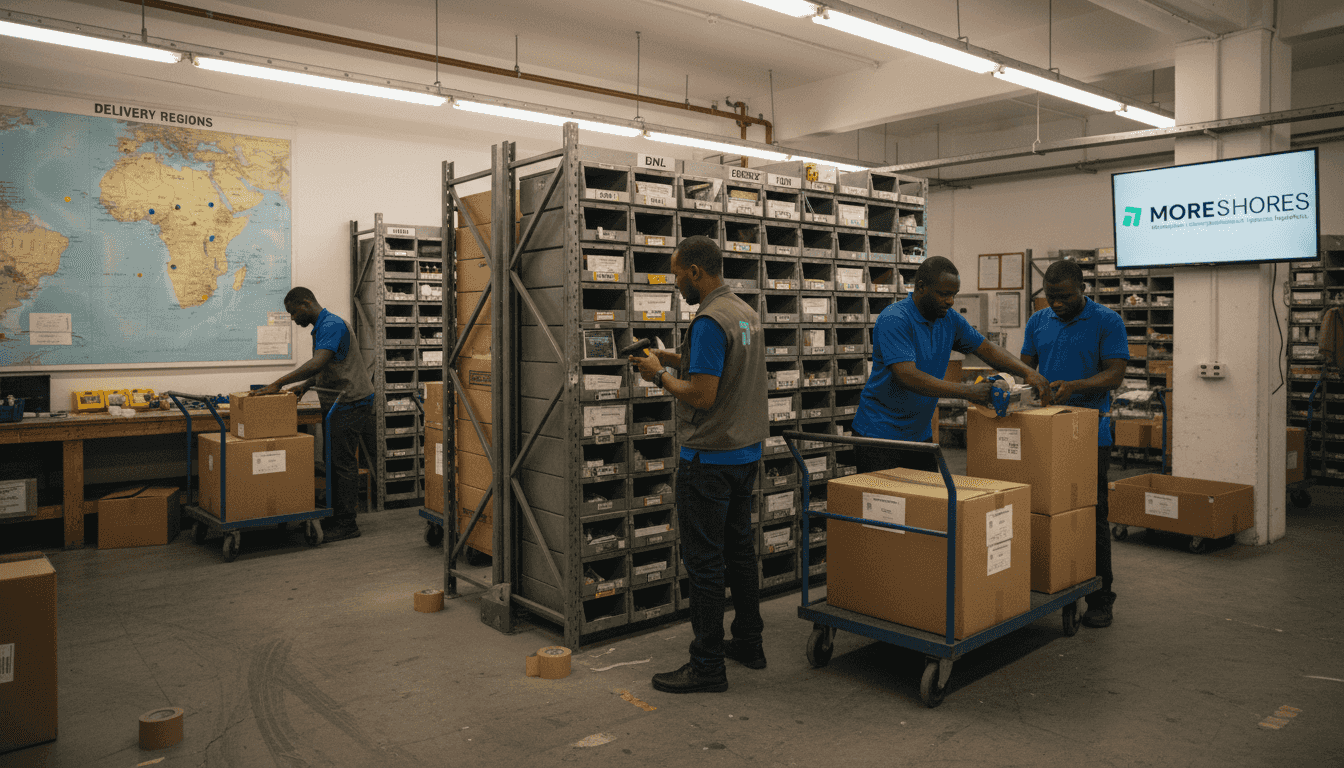
Managing multicourier networks, compliance, and marketplace integration demands expertise and resources most merchants lack. MoreShores offers a single platform uniting multicourier fulfillment, Importer of Record compliance, and marketplace integration. You gain access to global and regional couriers, automated customs clearance, and seamless listing across Takealot, Amazon SA, Jumia, and Kilimall.
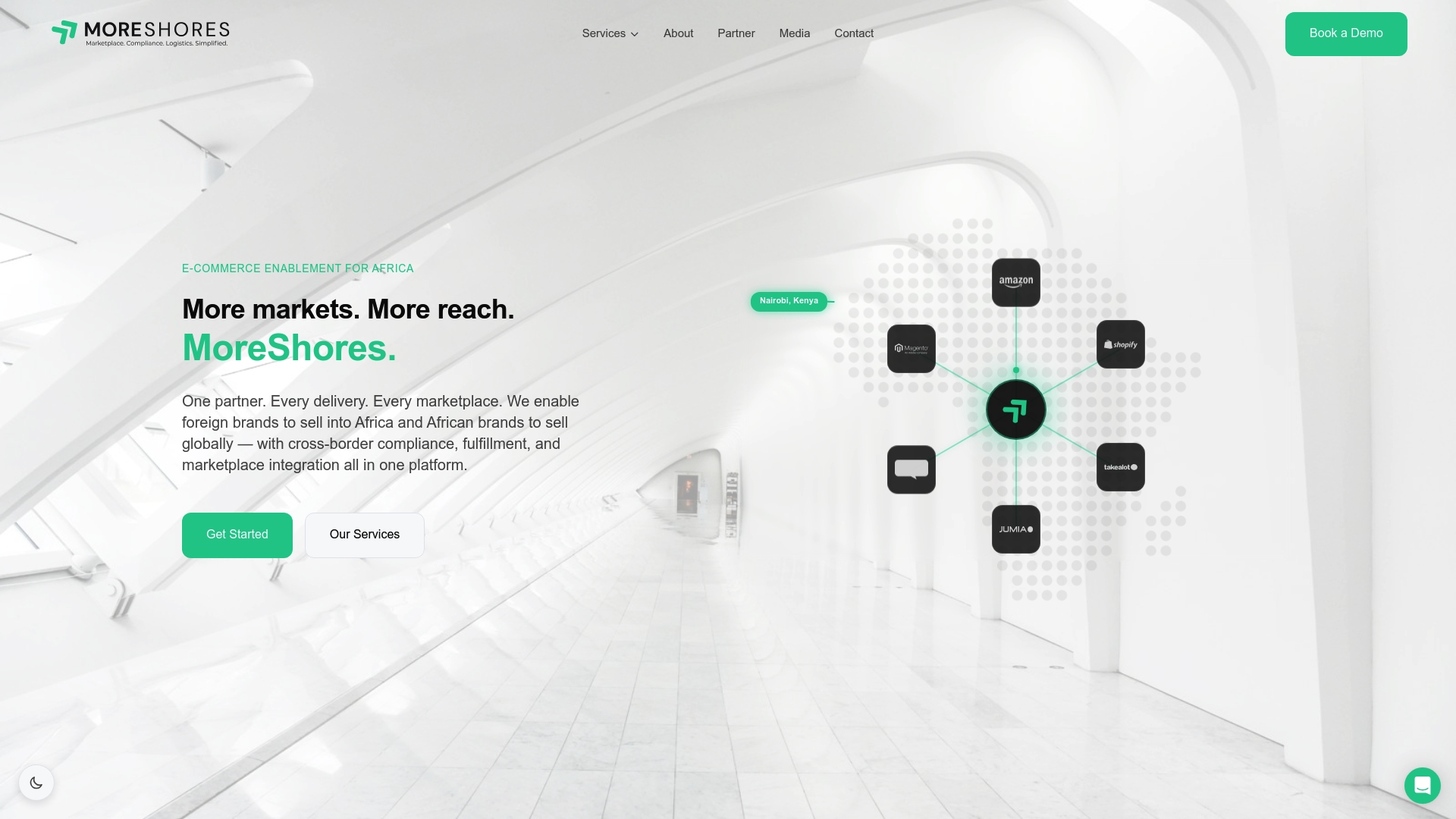
Simplify complex cross-border operations and accelerate international sales. Our cross-border enablement services handle logistics, compliance, and fulfillment, letting you focus on growth. Partner with MoreShores today to leverage expert logistics tailored for African e-commerce. Explore marketplace integration to automate order processing and expand your sales channels effortlessly.
Frequently Asked Questions
What is a multicourier shipping solution and why is it important for African merchants?
A multicourier shipping solution uses multiple courier services instead of relying on a single carrier. This approach reduces costs by matching each shipment to the courier best suited for its destination, urgency, and value. African merchants benefit from combining global couriers for speed with regional carriers for cost-effective last-mile delivery, improving both margins and customer satisfaction.
How does Importer of Record service help reduce customs delays?
Importer of Record services assume legal responsibility for customs clearance, duties, and VAT compliance. They prepare accurate documentation, classify tariffs correctly, and navigate country-specific regulations. This expertise prevents shipment hold-ups, reduces the risk of penalties, and ensures goods clear customs smoothly without burdening the merchant with complex regulatory requirements.
Can I use one platform to manage multiple couriers and marketplaces?
Yes, integrated platforms like MoreShores consolidate multicourier management, customs compliance, and marketplace integration into a single dashboard. You can automate order import from Amazon, Jumia, Shopify, and WooCommerce, generate shipping labels, and track shipments in real time. This consolidation reduces manual workload, eliminates errors, and scales operations without increasing staff.
What are common cost-saving strategies when shipping internationally from Africa?
Segment shipments by urgency and use global couriers only for time-sensitive orders. Leverage regional carriers for cost-sensitive deliveries to maximize margins. Automate courier selection algorithms to choose the lowest-cost option meeting delivery requirements. Negotiate volume discounts through platforms that aggregate shipments across multiple merchants. Monitor performance metrics to identify further optimization opportunities.
Which courier should I use for urgent versus cost-sensitive shipments?
Use global couriers like DHL, FedEx, or UPS for urgent, high-value shipments requiring fast delivery and advanced tracking. These carriers excel at speed and reliability but charge premium rates. For cost-sensitive shipments to remote or emerging markets, regional couriers like Aramex or EMS offer lower fees and better last-mile coverage. A hybrid approach balances both scenarios, optimizing cost and performance.