How to Expand Globally: A B2B E-Commerce Step-by-Step Guide

TL;DR:
- Successful international expansion requires thorough internal readiness assessment and data-driven market selection.
- Building resilient supply chains and local partnerships is crucial to managing tariffs, compliance, and disruptions.
- Tailoring strategies to specific regional markets, especially in Africa, ensures sustainable growth and competitive advantage.
Expanding into new international markets can feel like standing at the edge of a complex maze. You know growth is on the other side, but regulatory hurdles, unfamiliar logistics networks, and cultural gaps can stop even well-resourced B2B e-commerce brands cold. The good news is that successful global expansion rewards those who prepare methodically, choose markets based on real data, and build patient, trust-based partnerships. This guide walks you through every critical stage, from assessing your internal readiness to executing region-specific strategies, so you can move forward with clarity and confidence.
Table of Contents
- Assessing readiness and market selection
- Building a resilient global expansion strategy
- Establishing local logistics, payments, and partnerships
- Customizing your approach: Africa and beyond
- A smarter way to expand: Lessons most guides miss
- Empower your global B2B expansion with MoreShores
- Frequently asked questions
Key Takeaways
| Point | Details |
|---|---|
| Start with market readiness | Evaluate your internal capabilities and use data to choose the right market before expanding. |
| Build resilient operations | Plan for tariffs, trade barriers, and disruptions to ensure smoother cross-border success. |
| Localize for logistics and payments | Work with regional partners, use preferred local payment systems, and adapt logistics for each market. |
| Customize for each region | Tailor your strategy to match the unique traits of every region, especially across Africa. |
| Focus on relationships and patience | Develop local partnerships thoughtfully and allow time for cultural and regulatory adaptation. |
Assessing readiness and market selection
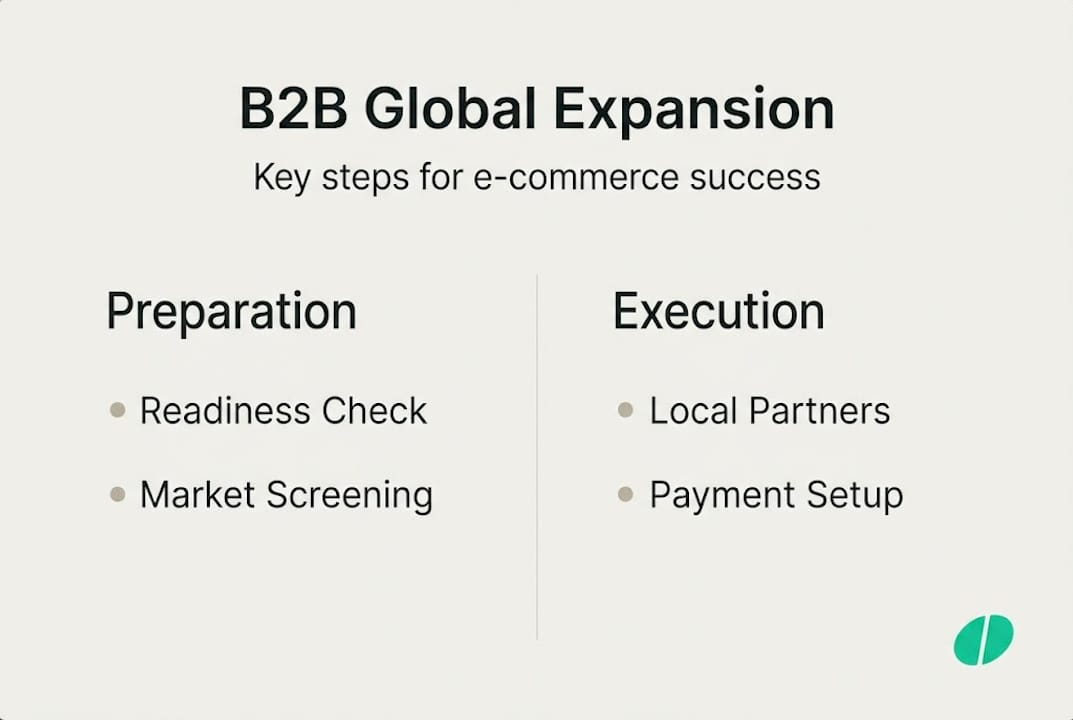
Before you commit budget or personnel to a new geography, you need an honest look inward. Many brands rush to market selection before confirming they have the financial reserves, operational bandwidth, and compliance infrastructure to sustain a multi-market launch. Start with this internal readiness checklist:
- Financial capacity: Do you have 12 to 18 months of runway to fund a new market entry, including unexpected costs?
- Operational scalability: Can your current fulfillment and customer service teams handle cross-border volume spikes?
- Compliance readiness: Do you have legal counsel or a compliance partner who understands import duties, VAT, and product certification requirements in target markets?
- Technology stack: Are your Shopify or WooCommerce storefronts integrated with local marketplace platforms?
Once you confirm internal readiness, move to market screening. Data-driven selection, like the modeling Databricks applied when prioritizing Japan, consistently outperforms gut-feel decisions. Screen markets across four dimensions: consumer demand signals, supply chain accessibility, regulatory complexity, and dominant payment habits.
Here is how four major African markets compare at a glance:
| Market | Demand strength | Regulatory complexity | Key payment method | E-commerce maturity |
|---|---|---|---|---|
| Nigeria | Very high | High | Mobile money, COD | Growing fast |
| South Africa | High | Moderate | Card, EFT | Most mature |
| Egypt | High | Moderate to high | Cash, digital wallets | Rapidly expanding |
| Kenya | Moderate to high | Low to moderate | M-Pesa mobile money | Digitally advanced |
South Africa’s relatively mature infrastructure makes it a common first entry point. Kenya’s M-Pesa ecosystem gives digital-first brands a clear advantage. Nigeria’s sheer consumer volume is compelling, but compliance demands require dedicated support.
Review the brand onboarding steps on the MoreShores platform to understand how fast you can realistically operationalize once a market is selected.
Pro Tip: Assign at least one team member or external partner with prior market entry experience in your target region. Their on-the-ground knowledge will save you months of trial and error.
Building a resilient global expansion strategy
With promising markets identified, your next challenge is building a strategy that can survive real-world disruptions. In 2026, tariffs persist and protectionist policies continue to reshape trade lanes globally. Brands that build resilience into their operating model from day one are far better positioned than those who optimize only for cost.
Here are the essential steps for setting up compliance and risk management systems:
- Map your tariff exposure: Identify which product categories face the highest import duties in each target market and model the landed cost impact before committing to pricing strategies.
- Register compliance obligations early: Product certifications, VAT registration, and Importer of Record (IOR) arrangements need to be in place before the first shipment, not after.
- Build redundancy into your supplier network: Depending on a single supplier creates a single point of failure. Identify at least two qualified suppliers per product category.
- Create a disruption response playbook: Document what you will do if a key shipping lane closes, a supplier defaults, or a currency devalues significantly.
- Review cross-border compliance requirements quarterly: Regulations change faster than most brands expect.
Here is a simplified view of trade barriers across key regions:
| Region | Average import tariff | Key non-tariff barrier | Risk level |
|---|---|---|---|
| Africa (general) | 10 to 25% | Customs delays, documentation | Medium to high |
| EU | 0 to 12% | Product safety standards | Low to medium |
| Southeast Asia | 5 to 20% | Licensing requirements | Medium |
Diversifying your logistics partners before launch is equally important. Relying on a single courier network in an unfamiliar market leaves you exposed to service failures at the worst possible moments.
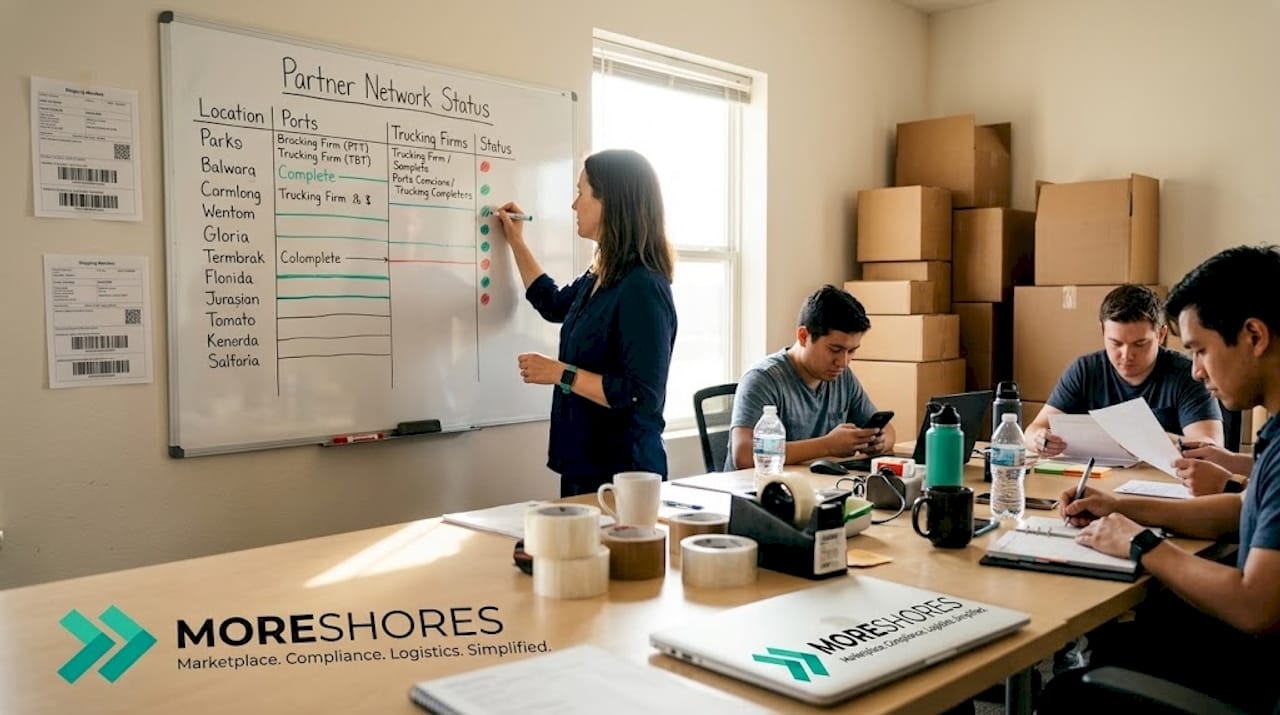
Pro Tip: Diversify suppliers and logistics partners before your first commercial shipment, not after your first disruption. The cost of redundancy is far lower than the cost of a delayed launch.
Establishing local logistics, payments, and partnerships
A strong strategy on paper means very little if you cannot execute it in-market. Getting goods and payments flowing requires local operational infrastructure and relationships you simply cannot build remotely.
Follow these steps to establish your in-market operational foundation:
- Select regional 3PL partners: Identify third-party logistics (3PL) providers with proven track records in your target country. Local 3PLs understand customs clearance timelines and last-mile delivery realities that global couriers often underestimate.
- Integrate logistics fulfillment solutions: Confirm your platform can connect with regional warehouse management systems and provide real-time inventory visibility.
- Map payment preferences by country: In Africa, mobile money, COD, and BNPL are the dominant methods. Forcing international card-only checkouts will kill your conversion rate.
- Onboard marketplace integration services: List products on locally trusted platforms like Jumia, Kilimall, and Takealot alongside your direct storefront.
- Hire or contract culture-smart advisors: These are individuals who understand the business norms, negotiation styles, and communication expectations of your target market.
On the China-Africa trade corridor specifically, digitalization improvements are accelerating logistics performance and creating new opportunities for brands willing to invest in the relationship.
One principle consistently holds across high-context cultures:
“Patience is not a weakness in markets like Japan, China, or many African regions. It is the price of entry. Relationships built slowly generate loyalty that transactional partnerships never achieve.”
Best practices for structuring local partnerships include:
- Always formalize agreements with locally enforceable contracts
- Set clear KPIs for logistics partners with monthly review checkpoints
- Co-invest in training where needed to bring partners up to your operational standards
- Build personal rapport with key contacts, not just business-level agreements
Customizing your approach: Africa and beyond
Africa is not a single market. Treating it as one is one of the most common and costly mistakes B2B e-commerce brands make. Each region has distinct industry strengths, regulatory environments, and consumer behaviors that demand a tailored approach.
African regions differ significantly, requiring entry strategies shaped by local realities:
- North Africa: Strong manufacturing base, growing middle class, proximity to EU trade corridors. Ideal for industrial and consumer goods.
- South Africa: Most digitally mature, highest card payment adoption, well-developed logistics infrastructure. Best first entry point for most brands.
- East Africa: Kenya leads with M-Pesa penetration and strong digital adoption. Great fit for tech-enabled or digital-first products.
- West Africa: Nigeria dominates with massive consumer market volume. High regulatory complexity requires dedicated compliance support.
- Central Africa: Rich in natural resources but lower digital infrastructure. More suited to B2B commodity trade than consumer e-commerce.
Here is how Africa’s regions compare against other major global targets:
| Region | Digital readiness | Preferred payment | Primary opportunity | Entry complexity |
|---|---|---|---|---|
| East Africa | High | Mobile money | Digital goods, FMCG | Low to moderate |
| West Africa | Moderate | COD, mobile money | Consumer goods | High |
| South Africa | High | Card, EFT | All categories | Moderate |
| EU | Very high | Card, digital wallet | Premium goods | Moderate |
| Southeast Asia | High | Digital wallet, COD | Consumer electronics | Moderate to high |
Your action checklist for adapting to local realities:
- Translate product listings into locally dominant languages where applicable
- Adjust pricing to reflect local purchasing power and landed cost structures
- Partner with local influencers or B2B resellers who already hold market trust
- Use African e-commerce solutions built for regional marketplace nuances, not generic global tools
- Monitor regulatory changes specific to each country, not just the continent level
A smarter way to expand: Lessons most guides miss
Most global expansion guides stop at frameworks and checklists. But after working with brands across multiple markets, we have seen where the real failures happen, and they rarely come from picking the wrong logistics carrier.
The biggest mistake is chasing the most talked-about markets while ignoring high-growth, lower-competition regions. Brands that entered East Africa early, for example, built market share before larger competitors arrived. Overlooked markets often offer better unit economics and less price pressure.
Rushing partnerships is the second major failure mode. Signing agreements quickly feels productive, but trusted logistics partners and distributor relationships that are built over time consistently outperform transactional arrangements that collapse under operational stress.
Finally, do not let your data obsession crowd out cultural intelligence. Spreadsheets cannot tell you that a key decision-maker in a West African market needs three meetings before committing, or that a product packaging choice carries unintended meaning in a specific region. The brands that build genuine regional intelligence alongside their data models are the ones that sustain growth past year one.
Patience is a competitive advantage in Africa and Asia. Treat it as a strategy, not a delay.
Empower your global B2B expansion with MoreShores
Expanding internationally does not have to mean managing a dozen disconnected vendors, compliance headaches, and unpredictable logistics. MoreShores brings together cross-border enablement, warehousing, fulfillment, and marketplace integration into one platform purpose-built for Africa-focused and global trade.
Whether you are a foreign brand entering African markets or an African brand going global, MoreShores handles Importer of Record duties, VAT compliance, and multi-marketplace listing across Takealot, Jumia, Amazon SA, and more. You focus on growth. We handle the operational complexity. Visit MoreShores e-commerce solutions to explore how we can support your next market entry with confidence and speed.
Frequently asked questions
What is the most important first step when expanding globally?
Assess your internal readiness across finance, operations, and compliance, then use data-driven market selection to identify the best-fit target market before committing significant resources.
How do tariffs and trade barriers affect B2B expansion?
Tariffs raise landed costs and complexity, which is why resilient supply chains with diversified suppliers and logistics partners are essential before you enter any new market.
What payment methods are best for cross-border e-commerce in Africa?
Mobile money, COD, and BNPL are the most effective methods across African markets, and failing to support them will significantly reduce your conversion rates.
How should strategies differ between African regions?
Each African region has different industry strengths, digital infrastructure, and consumer behavior, so tailored entry strategies per region consistently outperform a single continental approach.