
Expanding e-commerce from Africa to global markets or bringing international brands into African regions presents complex challenges. Many merchants underestimate customs clearance, VAT obligations, and logistics coordination, leading to expensive delays and failed launches. This guide walks you through a proven step-by-step process to streamline your cross-border expansion, reduce risk, and reach new customers efficiently across African and global marketplaces.
Table of Contents
- Prerequisites And Setup For Expansion
- Setting Up Compliance And Customs Clearance
- Logistics And Fulfillment Infrastructure
- Marketplace Integration And Listing Optimization
- Step-By-Step Global E-Commerce Expansion Process
- Common Mistakes And How To Avoid Them
- Expected Outcomes And Success Metrics
- Expand Globally With Moreshores’ Cross-Border Solutions
- Frequently Asked Questions
Key takeaways
| Point | Details |
|---|---|
| Preparation reduces risk | Comprehensive preparation reduces failure risk by 40% through market research and compliance audits. |
| Importer of Record speeds customs | Importer of Record handling reduces clearance times by 30% by managing duties and VAT efficiently. |
| Multi-courier logistics cut costs | Multi-courier networks reduce fulfillment costs by 20% while improving delivery reliability. |
| Marketplace integration boosts reach | Multichannel integration increases market reach by 40% across African and global platforms. |
| Launch timeline averages months | Typical sales launch timeline is 3 to 6 months with proper planning and execution. |
Prerequisites and setup for expansion
Before moving inventory or listing products, you need a solid foundation. Market research is your first priority. Identify target regions in Africa or globally where your products have demand, understanding local consumer behavior, pricing expectations, and competitive landscapes.
Next, conduct legal and tax compliance audits. Legal compliance audits are critical for African customs and VAT obligations, which vary significantly across countries. Understanding import duties, VAT rates, and regulatory requirements upfront prevents costly surprises later. Many merchants skip this step and face shipment holds or penalties that derail their expansion.
Digitally map your supply chain and fulfillment partners. Visualize how products move from origin to warehouses to customers. This mapping reveals bottlenecks, helps you choose optimal fulfillment locations, and clarifies partner responsibilities. Your brand onboarding guide should include this supply chain visualization.
Prepare your e-commerce platforms with multichannel capabilities. Ensure your Shopify or WooCommerce store can sync inventory and orders across multiple marketplaces. Test integration tools before committing to large-scale listing.
Budget for initial costs including inventory purchases, import duties, warehousing setup, and technology integration. Underfunding is a common expansion killer. Allocate reserves for unexpected customs fees or marketplace listing requirements.
Key preparation steps:
- Complete market research on target African and global regions to validate demand
- Perform legal audits covering import duties, VAT, and regulatory compliance
- Map supply chains digitally to identify fulfillment partners and logistics flows
- Set up e-commerce platforms with multichannel sync capabilities
- Budget comprehensively for inventory, import, warehousing, and integration costs
Pro Tip: Spend extra time on compliance research. VAT rules differ dramatically between South African markets, East African Community countries, and West African regions. Getting this wrong causes the longest delays.
Setting up compliance and customs clearance
Compliance is where most cross-border expansions stumble. An Importer of Record is your legal representative who assumes responsibility for customs clearance, duties, and VAT payments in the destination country. This role is essential because Importer of Record handling reduces customs clearance times by 30% compared to managing it yourself.
Understanding VAT and duty calculations directly impacts your landed costs and pricing strategy. VAT and duties add up to 25% to landed costs in many African markets. These fees vary by product category, country of origin, and trade agreements. Miscalculating them leads to shipments stuck at borders or surprise fees that destroy your profit margins.
VAT non-compliance triggers penalties, shipment holds, and even blacklisting from importing into certain countries. Some African nations require VAT registration before your first shipment arrives. Others allow deferred VAT payments through specific programs. Missing these requirements can delay shipments by weeks.
Best practices for managing regulatory compliance include partnering with local customs brokers who understand regional nuances, using digital tools to track changing regulations, and maintaining detailed documentation for every shipment. Keep records of all import declarations, VAT payments, and compliance certificates for at least five years.
Digital tools and services for accurate duties administration include automated customs declaration software, VAT calculation engines that update with regulatory changes, and compliance dashboards that alert you to new requirements. These tools integrate with your e-commerce solutions to reduce manual errors.
Compliance essentials:
- Engage an Importer of Record to manage legal import responsibilities and customs clearance
- Calculate VAT and duties accurately to set realistic pricing and avoid shipment delays
- Understand penalties for non-compliance including holds, fines, and import restrictions
- Use digital compliance tools to track regulatory changes across multiple African countries
- Maintain comprehensive documentation for audits and compliance verification
Pro Tip: Register for VAT in your target country before shipping inventory. Retroactive VAT registration is painful and expensive. Plan this 60 to 90 days before your first shipment.
Logistics and fulfillment infrastructure
Reliable logistics separate successful expansions from failed ones. Securing warehousing and inventory management integration is foundational. Your warehouse should connect directly to your sales channels, updating stock levels in real time across all marketplaces. Warehousing integration reduces stock-outs by 25%, protecting revenue consistency.
Multi-courier partnerships improve reliability and reduce costs. Relying on a single courier in African markets is risky due to infrastructure challenges, regional coverage gaps, and carrier-specific delays. Multi-courier networks reduce fulfillment costs by 20% while providing backup options when one carrier faces disruptions.

Last-mile delivery challenges in Africa include poor address systems, limited courier reach in rural areas, and inconsistent delivery windows. B2B fulfillment networks mitigate these through local partnerships, alternative pickup points, and customer communication systems that confirm delivery details before dispatch.
Better logistics lead to fewer stock-outs and improved revenue consistency. When customers can rely on timely delivery, repeat purchase rates increase significantly. Predictable fulfillment also enables you to run promotions confidently without fearing inventory gaps.
Scalable infrastructure suitable for African cross-border trade includes regional warehouses strategically located near major markets, technology platforms that route orders to the optimal fulfillment location, and partnerships with carriers who specialize in cross-border African logistics. Your fulfillment and logistics services should offer this scalability.
Logistics setup priorities:
- Secure warehousing with real-time inventory management integration across all sales channels
- Establish multi-courier partnerships to improve reliability and reduce dependency risk
- Plan for last-mile challenges using B2B fulfillment networks and alternative delivery options
- Build scalable infrastructure that grows with your market expansion
- Monitor fulfillment performance metrics to identify and fix bottlenecks quickly
Pro Tip: Test your fulfillment process with small pilot shipments before full-scale launch. This reveals hidden issues with customs, carrier handoffs, or warehouse systems without risking large inventory investments.
Marketplace integration and listing optimization
Multichannel marketplace integration amplifies your reach across African and global platforms. Multichannel integration boosts market reach by 40% by listing your products on Takealot, Amazon SA, Jumia, Kilimall, and other regional marketplaces simultaneously. This diversification reduces dependence on any single platform.
Accurate product mapping prevents sales losses. Each marketplace has unique data requirements for titles, descriptions, images, and attributes. Mapping errors cause listings to be rejected, hidden in search results, or miscategorized. Shopify and WooCommerce integration reduces listing errors by 15% through automated data validation and format translation.
Marketplace versus direct storefront approaches each offer distinct advantages:
| Approach | Advantages | Challenges |
|---|---|---|
| Marketplace Listing | Instant access to established traffic, built-in payment processing, marketplace credibility | Higher fees, less brand control, competition visibility |
| Direct Storefront | Full brand control, lower fees, customer data ownership | Requires traffic generation, payment setup, trust building |
| Hybrid Strategy | Maximizes reach and control, diversifies revenue streams | Complex inventory sync, higher operational overhead |
Technology tools for syncing Shopify and WooCommerce stores include multichannel inventory management platforms, automated listing software, and real-time order routing systems. These tools ensure your stock levels stay accurate across all channels, preventing overselling and customer disappointment.
Ongoing listing optimization sustains sales growth. Regularly update product titles with high-performing keywords, refresh images to match seasonal trends, adjust pricing based on competitive analysis, and respond to customer reviews to improve ratings. Your marketplace integration services should include these optimization capabilities.
Marketplace integration steps:
- Choose marketplaces based on target audience presence and product category fit
- Map product data accurately to each marketplace’s format and requirements
- Implement technology tools to sync inventory and orders across all channels
- Test listings on each marketplace before scaling to full catalog
- Monitor performance metrics and optimize titles, images, and pricing continuously
Pro Tip: Start with two to three marketplaces rather than launching everywhere at once. Master each platform’s requirements and optimize performance before expanding to additional channels.
Step-by-step global e-commerce expansion process
Follow this proven workflow to launch your cross-border expansion efficiently. Each step builds on the previous one, creating a logical path from preparation to sales.
- Conduct comprehensive market research to identify target regions, validate demand, and understand competitive landscapes.
- Complete legal and tax compliance audits, including VAT registration and import duty calculations for each target country.
- Engage an Importer of Record to manage customs clearance, duties, and regulatory compliance on your behalf.
- Secure warehousing and establish inventory management integration with real-time sync across sales channels.
- Set up multi-courier fulfillment partnerships to ensure reliable delivery and cost optimization.
- Integrate product listings across selected marketplaces using automated tools to reduce errors and save time.
- Launch pilot shipments to test the entire workflow from order to delivery before scaling.
- Monitor performance metrics including customs clearance times, fulfillment costs, and sales conversion rates.
- Optimize listings, logistics, and compliance processes based on pilot results and customer feedback.
- Scale operations gradually, adding new marketplaces and regions as you validate each expansion phase.
Typical launch timeline spans 3 to 6 months from initial preparation to first sales. Months one and two focus on research, compliance, and partner setup. Months three and four involve warehousing, integration, and pilot testing. Months five and six see full-scale launch and optimization.
Comparing coordinated integrated approaches versus fragmented processes reveals significant efficiency gains:
| Approach | Time to Market | Customs Delays | Fulfillment Costs | Marketplace Reach |
|---|---|---|---|---|
| Fragmented (DIY) | 8-12 months | Frequent holds | 30-40% higher | Limited to 1-2 platforms |
| Integrated Platform | 3-6 months | 30% reduction | 20% lower | 4-6+ platforms |
Completing compliance before listing is critical. Listing products before securing import approvals, VAT registration, or customs clearance processes leads to orders you cannot fulfill. This damages marketplace ratings and customer trust.
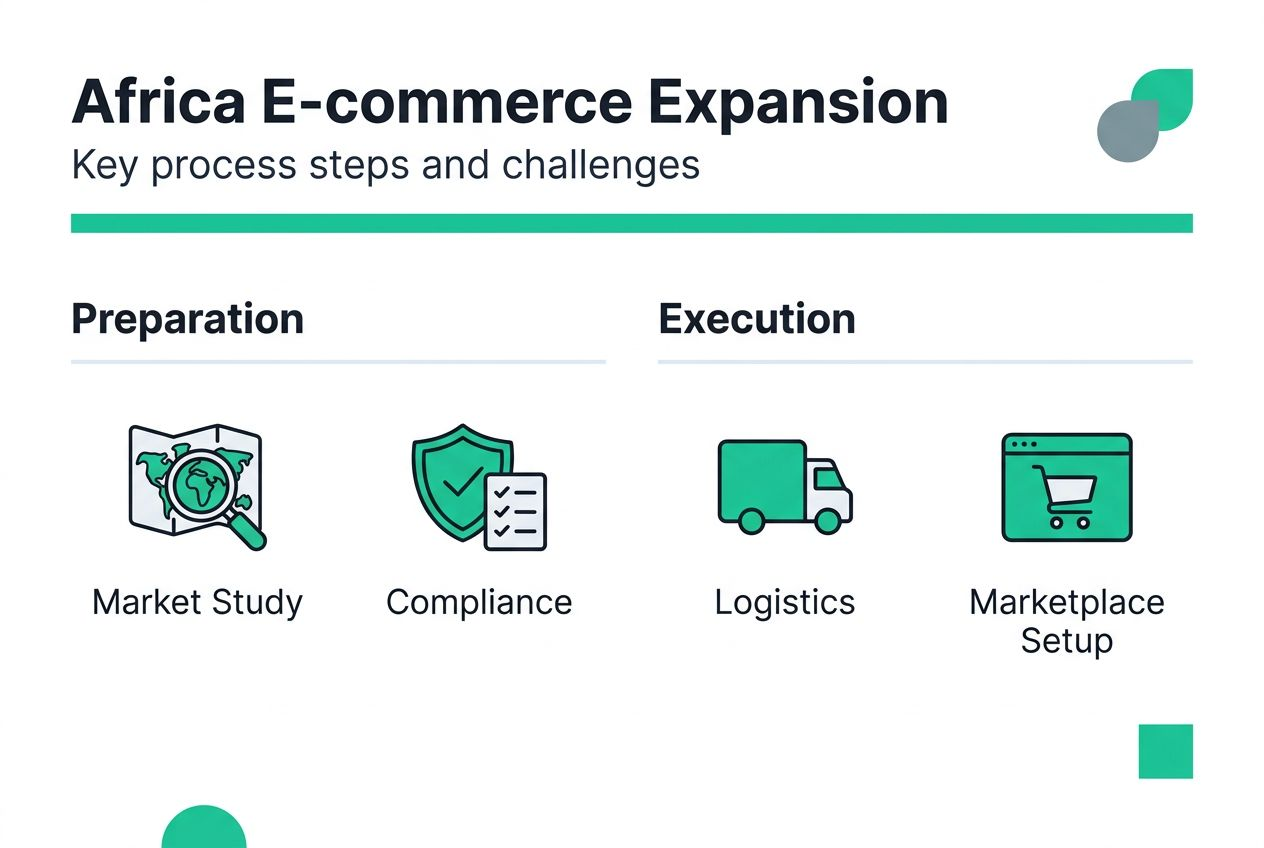
Your actionable roadmap should include specific milestones, responsible parties, and success criteria for each step. Assign clear ownership for compliance, logistics, and marketplace tasks. Use your brand onboarding steps as a template for tracking progress.
Common mistakes and how to avoid them
Underestimating customs and VAT complexities is the top expansion killer. 35% of market expansions fail due to customs or VAT errors, causing shipment delays, unexpected fees, and regulatory penalties. Mitigate this by engaging an Importer of Record early and conducting thorough compliance audits before shipping inventory.
Ignoring product data standards across marketplaces causes listing rejections and poor search visibility. Marketplace listing errors reduce sales by 20% because customers cannot find your products. Use automated listing tools that validate data formats and enforce marketplace requirements before submission.
Relying on a single courier creates vulnerability to carrier-specific disruptions. Infrastructure challenges in African markets mean any single courier faces periodic delays. Establish multi-courier networks to ensure backup options and maintain consistent delivery performance.
Delaying warehousing setup until after listing products leads to fulfillment chaos. Orders arrive before you have inventory positioned for quick shipment, forcing long delivery times that anger customers and damage ratings. Secure warehousing and stock inventory before activating marketplace listings.
VAT mismanagement causes shipment delays up to four weeks while customs holds products pending proper documentation and payments. This destroys customer satisfaction and forces you to refund orders. Register for VAT and understand payment schedules before importing goods.
Mistake mitigation tactics:
- Use an Importer of Record to handle customs and VAT complexities professionally
- Implement automated listing tools that validate product data against marketplace standards
- Build multi-courier partnerships to reduce fulfillment risk and improve reliability
- Complete warehousing setup and stock inventory before launching marketplace listings
- Conduct continuous compliance audits to catch regulatory changes before they impact operations
Check your marketplace listing errors guide regularly to stay updated on common pitfalls and solutions.
Pro Tip: Verify all regulatory and marketplace requirements before launch. Create a checklist covering VAT registration, import licenses, marketplace seller agreements, and courier contracts. Check off each item with supporting documentation to avoid last-minute surprises.
Expected outcomes and success metrics
Measuring your expansion success requires clear benchmarks. Time to first sales typically ranges from 3 to 6 months post-preparation for well-executed expansions. If you exceed six months, revisit your compliance, logistics, or marketplace integration processes to identify bottlenecks.
Customs delay reduction is quantifiable. Track average clearance times before and after engaging an Importer of Record. Most merchants see 30% faster customs processing, translating to quicker inventory availability and reduced holding costs.
Fulfillment cost savings using multi-courier networks reach up to 20% compared to single-carrier approaches. Cost savings using multi-courier fulfillment average 20% through competitive rate negotiation and reduced dependency on premium express services.
Stock-out reduction improves revenue consistency. Real-time inventory integration prevents overselling and ensures products remain available when customers want to buy. This drives repeat purchases and positive marketplace ratings.
Multichannel listing increases sales reach substantially. Increase sales reach by 40% through multichannel listing by accessing diverse customer bases across multiple platforms. Each marketplace attracts different demographics and shopping behaviors.
Comparing before and after metrics illustrates expansion impact:
| Metric | Before Expansion | After Expansion | Improvement |
|---|---|---|---|
| Time to Market | 8-12 months | 3-6 months | 50% faster |
| Customs Clearance | 10-14 days | 7-10 days | 30% reduction |
| Fulfillment Costs | Baseline | Optimized | 20% lower |
| Market Reach | 1-2 platforms | 4-6 platforms | 40% increase |
| Stock-out Rate | 15-20% | 3-5% | 75% improvement |
Track compliance completion and fulfillment network efficiency regularly. Monthly reviews of customs clearance times, carrier performance, VAT payment status, and marketplace listing health help you spot issues early and maintain operational excellence.
Expand globally with MoreShores’ cross-border solutions
Ready to launch your African cross-border expansion without the complexity? MoreShores offers comprehensive e-commerce enablement designed specifically for Africa to global trade. We handle your Importer of Record responsibilities, manage customs and VAT, provide warehousing and multi-courier fulfillment, and integrate your products across major marketplaces.
Partner with our cross-border enablement services to streamline compliance and reduce clearance times. Leverage our fulfillment and logistics services to cut costs and improve delivery reliability. Use our marketplace integration services to maximize reach across Takealot, Amazon SA, Jumia, Kilimall, and your direct storefronts. We minimize your operational burden so you can focus on growing sales.
Frequently asked questions
What are the key prerequisites before starting cross-border e-commerce expansion between Africa and global markets?
Market research, legal compliance audits, supply chain digital mapping, and platform readiness are crucial prerequisites. Proper budgeting for inventory, import costs, and integration expenses is equally important to avoid underfunding your expansion.
How does engaging an Importer of Record benefit e-commerce merchants expanding into African markets?
An Importer of Record manages legal import responsibilities, reducing clearance delays by up to 30% through expert handling of customs processes. They handle VAT and duties accurately, helping you avoid penalties, shipment holds, and regulatory complications that derail expansions.
What are common mistakes brands make during African cross-border e-commerce expansion and how can they be avoided?
Ignoring customs and VAT complexities often causes costly shipment delays and regulatory penalties. Using multiple couriers, validating marketplace data standards, and completing warehousing setup before listing products help mitigate these expansion risks effectively.
How long does it typically take to launch sales after starting the global e-commerce expansion process?
Most merchants launch sales within 3 to 6 months post-preparation, depending on compliance complexity and marketplace integration scope. Integrated platforms and compliance readiness accelerate time to market compared to fragmented DIY approaches that can take 8 to 12 months.