
Expanding your African e-commerce brand into international markets brings exciting opportunities, but cross-border logistics can quickly become overwhelming. You’re juggling customs regulations, currency exchanges, language barriers, and time zones while trying to maintain cost control and fast delivery. Without a clear checklist and understanding of your logistics options, delays, compliance issues, and hidden costs can derail your growth. This guide provides a structured roadmap to help you evaluate essential criteria, compare logistics solutions, and choose the right approach for seamless cross-border trade in 2026.
Table of Contents
- Logistics Criteria For Cross-Border E-Commerce Success
- Top Logistics Options For African Cross-Border E-Commerce
- Comparing Cross-Border Logistics Providers: A Detailed Comparison
- Choosing The Right Logistics Solution For Your E-Commerce Brand
- Streamline Your Cross-Border E-Commerce With Moreshores
- Frequently Asked Questions
Key takeaways
| Point | Details |
|---|---|
| Critical selection criteria | Regulatory compliance, currency risks, and delivery speed control your cross-border success. |
| Logistics options overview | Choose between direct shipping, third-party logistics, fulfillment centers, and integrated digital platforms. |
| Provider comparison | Evaluate cost, geographic coverage, technology capabilities, and customs expertise across solutions. |
| Strategic decision factors | Your budget, product type, business size, and target markets determine the best logistics fit. |
Logistics criteria for cross-border e-commerce success
Before selecting a logistics partner, you need to understand what makes or breaks cross-border operations. International logistics involves juggling different regulations, languages, currencies, and time zones while maintaining cost control and delivery speed. Each criterion impacts your bottom line and customer satisfaction.
Regulatory compliance sits at the top of your checklist. Every country has unique import requirements, product restrictions, and documentation standards. Missing a single form or certificate can strand your shipment at customs for weeks. You need a logistics solution that understands African export regulations and destination market import rules.
Currency exchange risks directly affect your pricing and profitability. Fluctuating exchange rates can erode margins if you’re not hedging properly. Your logistics provider should offer transparent pricing in stable currencies and help you manage payment methods that minimize conversion fees. Consider whether they support local payment options in your target markets.
Language and documentation requirements create hidden complexity. Shipping documents, customs declarations, and product labels often need translation and localization. Time zone differences complicate real-time tracking and customer service. You want a partner with multilingual support and systems that work across time zones without manual intervention.
Balancing cost efficiency with delivery speed requires strategic thinking. Air freight costs more but satisfies customers expecting quick delivery. Sea freight saves money but ties up inventory longer. Your product type matters here. Perishables and high-value electronics demand speed, while durable goods can tolerate slower transit.
Pro Tip: Create a weighted scoring system for each criterion based on your business priorities. If compliance is critical, assign it 30% weight. If speed matters most, give delivery time 40%. This helps you compare logistics options objectively.
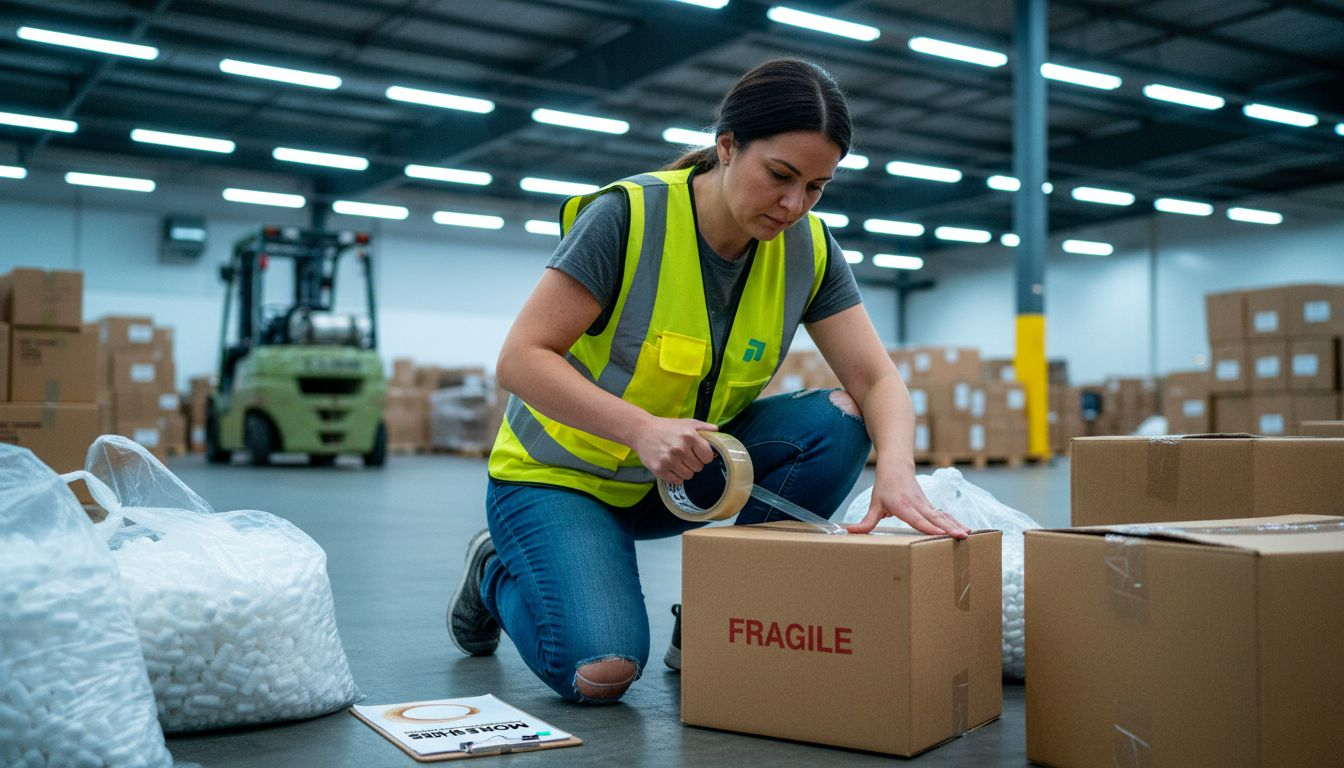
Product characteristics shape your logistics needs. Fragile items require specialized handling. Large or heavy products increase shipping costs exponentially. Consider volume projections too. A solution that works for 50 orders monthly might collapse under 500. Your cross-border enablement strategy must scale with your growth.
Top logistics options for African cross-border e-commerce
African e-commerce brands have several logistics pathways, each with distinct advantages and trade-offs. Understanding these options helps you match solutions to your operational reality.
Direct shipping means you handle everything from your location. You pack, label, and ship orders yourself using international couriers. This gives maximum control but demands significant time and expertise. You’re responsible for customs paperwork, tracking issues, and handling returns across borders. Small businesses often start here but quickly hit capacity limits.
Third-party logistics providers (3PLs) take operational burden off your shoulders. They warehouse inventory, pick and pack orders, and manage shipping through established courier networks. Quality 3PLs specialize in specific regions and understand local compliance requirements. The downside is less control and potential communication delays. You’re trusting another company with your customer experience.
Fulfillment centers and local warehousing offer strategic advantages for high-volume sellers. Storing inventory closer to customers reduces shipping times and costs. You can offer same-day or next-day delivery in major markets. However, this requires upfront inventory investment and managing stock across multiple locations. It works best when you have predictable demand and sufficient capital.
Courier networks specialized in African routes understand the unique challenges of the continent. They have relationships with customs officials, know which border crossings move faster, and can navigate infrastructure limitations. These partners cost more than generic international couriers but deliver higher reliability.
Digital platforms integrating inventory, shipping, and payments represent the modern approach. These e-commerce solutions connect your store to multiple marketplaces, automate order routing, and provide unified tracking. You manage everything from one dashboard instead of juggling separate systems for each sales channel.
The African Continental Free Trade Area (AfCFTA) is reshaping cross-border logistics. This guide serves as a comprehensive roadmap for Nigerian businesses looking to successfully export their products under the AfCFTA. Reduced tariffs and simplified procedures lower costs and speed up customs clearance between African nations. Smart brands align their logistics strategy with AfCFTA advantages.
Pro Tip: Test multiple logistics options with small shipment batches before committing. Send 10 orders through different providers to the same destination and track delivery times, condition on arrival, and total costs including hidden fees.
Risks exist across all options. Delays happen due to weather, political instability, or infrastructure failures. Customs clearance can stall unexpectedly. Hidden fees for storage, handling, or documentation add up. Choose partners with transparent pricing and proven track records in your target markets.
Comparing cross-border logistics providers: a detailed comparison
Evaluating logistics providers requires looking beyond advertised rates. This comparison highlights factors that actually impact your operations.
| Provider Type | Cost Level | Geographic Coverage | Technology Integration | Customs Expertise | Best For |
|---|---|---|---|---|---|
| Direct Shipping | Low upfront, high per-unit | Limited by courier choice | Manual processes | Self-managed | Startups testing markets |
| Regional 3PL | Medium | Strong in 2-3 countries | Basic tracking | Moderate | Focused market expansion |
| Global 3PL | High | Worldwide | Advanced platforms | Comprehensive | Multi-market brands |
| Integrated Platform | Variable, often mid-range | Depends on partnerships | Excellent | Managed service | Scaling e-commerce businesses |
| Specialized African Courier | Medium to high | Africa-focused | Moderate | Strong regional knowledge | Africa-to-Africa trade |
Cost comparison reveals hidden differences. Direct shipping appears cheap until you factor in your time, error rates, and lack of bulk discounts. Global 3PLs charge premium rates but include insurance, compliance support, and technology. Integrated platforms often offer tiered pricing that scales with volume, making them cost-effective as you grow.
Geographic coverage and network strength determine where you can sell profitably. A provider with warehouses in South Africa, Kenya, and Nigeria covers major African markets. For international expansion, you need partners with presence in North America, Europe, or Asia. Network strength means backup routes when primary paths fail.
Technology capabilities separate modern providers from legacy operators. Real-time tracking, automated customs documentation, and API integrations with marketplaces eliminate manual work. International logistics involves juggling different regulations, languages, currencies, and time zones, and technology reduces that complexity. Look for providers offering mobile apps, automated notifications, and analytics dashboards.
Customs handling expertise prevents the most expensive delays. Experienced providers know exactly which documents each country requires, how to classify products for optimal duty rates, and how to resolve issues quickly. They act as your importer of record, taking legal responsibility for compliance. This expertise is worth premium pricing when it prevents shipments sitting in customs for weeks.
Customer service quality and reliability indicators matter when problems arise. Check provider response times, availability across time zones, and whether you get a dedicated account manager. Read reviews from businesses similar to yours. A provider might excel for large enterprises but ignore small sellers.
Integration with marketplaces and payment systems streamlines operations. The best fulfillment and logistics solutions connect directly to platforms like Shopify, WooCommerce, Takealot, and Jumia. Orders flow automatically from sale to shipment without manual data entry. This reduces errors and frees your team for strategic work.
Choosing the right logistics solution for your e-commerce brand
Your logistics decision should align with your business fundamentals, not just what competitors are doing. Strategic thinking here prevents costly mistakes.
-
Assess your product’s logistics sensitivity and shelf life. Fresh food, cosmetics with expiration dates, and electronics requiring climate control need premium logistics with speed and specialized handling. Durable goods like clothing or home decor tolerate standard shipping and longer transit times. Match your logistics investment to product requirements.
-
Evaluate your budget versus expected volume and delivery speed expectations. Calculate total landed cost per order including shipping, duties, insurance, and handling fees. If your average order value is $50 and logistics cost $30, you need volume to make it work or must raise prices. Some markets will pay premium for fast delivery, others prioritize low prices.
-
Consider your team capacity for managing complex logistics operations. If you have one person handling everything, direct shipping will overwhelm them quickly. Outsourcing to a 3PL or integrated platform makes sense. Larger teams with dedicated logistics staff can manage more complexity in-house and negotiate better rates.
-
Leverage marketplaces and integrated platforms where possible. Selling through established marketplaces gives you access to their fulfillment networks and customer trust. This guide serves as a comprehensive roadmap for Nigerian businesses looking to successfully export products, and marketplace integration is a key strategy. You sacrifice some margin but gain operational simplicity.
-
Monitor ongoing performance and update logistics partners as needed. Track key metrics like on-time delivery rate, damage rate, customs clearance time, and total cost per order. Review quarterly and be willing to switch providers if performance declines. Logistics is too critical to stick with underperforming partners out of convenience.
-
Use AfCFTA benefits to reduce trade barriers between African countries. The agreement eliminates or reduces tariffs on 90% of goods traded between member states. Structure your supply chain to take advantage of preferential treatment. This might mean sourcing materials from AfCFTA countries or routing shipments through member nations.
Pro Tip: Build relationships with multiple logistics providers instead of relying on one. Having backup options prevents disasters when your primary provider faces strikes, capacity constraints, or service disruptions. Split your volume 70/30 or 80/20 to maintain alternatives.
Your brand onboarding guide should include logistics planning from day one. Don’t treat it as an afterthought once you start getting orders. The right logistics foundation supports sustainable growth and customer satisfaction.
Streamline your cross-border e-commerce with MoreShores
Managing cross-border logistics doesn’t have to drain your resources or slow your growth. MoreShores offers end-to-end cross-border enablement services designed specifically for African e-commerce brands expanding globally and international brands entering African markets.
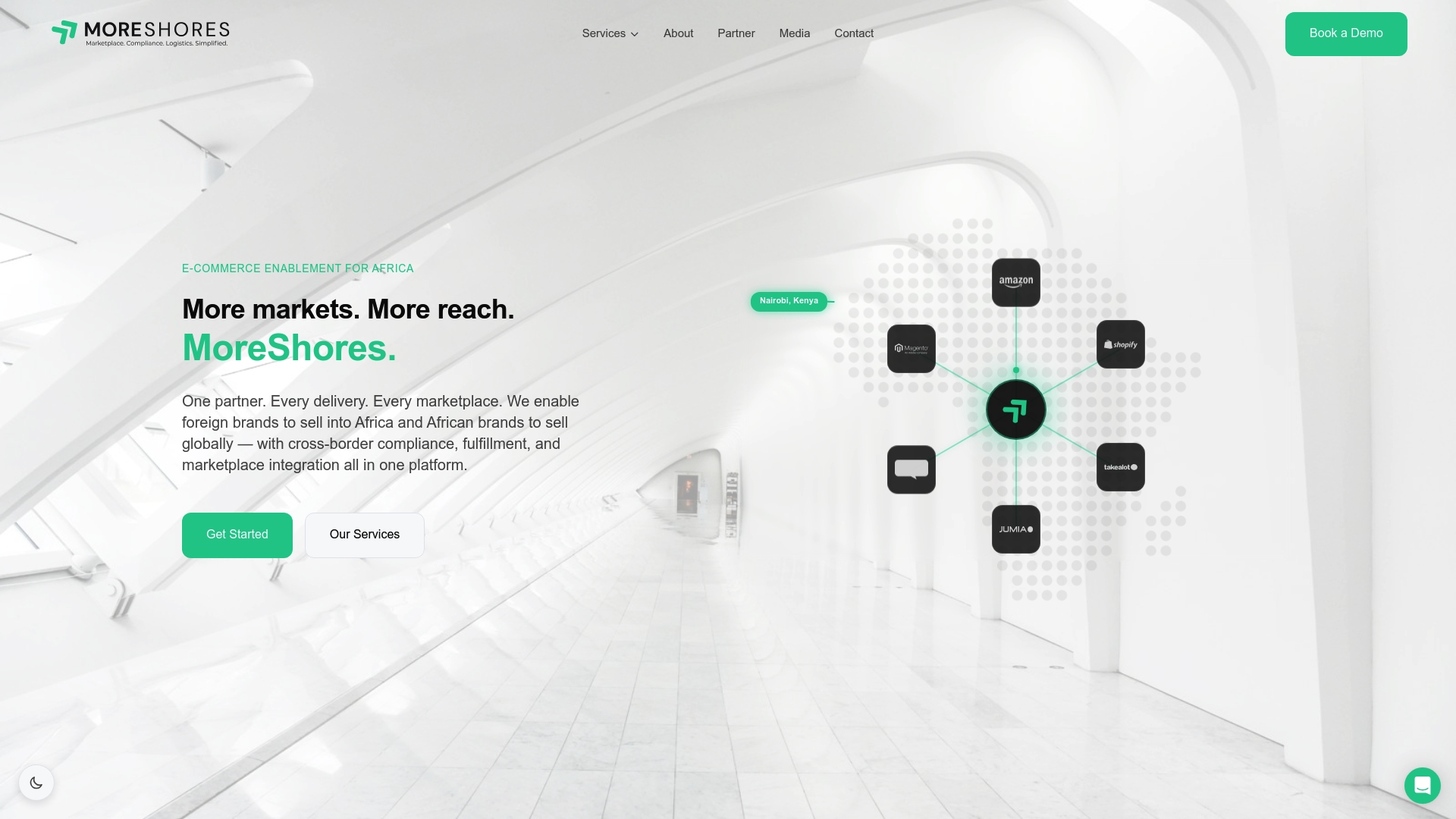
Our platform handles the complexity you just read about. We act as your importer of record, managing customs clearance, duties, VAT, and regulatory compliance across markets. Our warehousing and fulfillment network gets your products closer to customers, reducing delivery times and costs. Integration with major marketplaces like Takealot, Amazon SA, Jumia, and Kilimall means orders flow automatically from sale to shipment.
When you partner with MoreShores, you get expertise in African trade compliance that prevents costly delays. Our multi-courier network ensures reliable delivery even in challenging markets. We provide the technology integration and tracking visibility that modern e-commerce demands. You focus on growing your brand while we handle the logistics infrastructure.
Pro Tip: Start with our fulfillment and logistics solutions for your highest-volume markets, then expand to additional regions as you validate demand. This phased approach minimizes risk while building operational excellence.
Frequently asked questions
What is the biggest challenge in cross-border e-commerce logistics?
Customs compliance creates the most frequent and expensive problems for African e-commerce brands. Each country has unique documentation requirements, product restrictions, and duty calculation methods. Missing paperwork or incorrect classifications cause shipments to sit in customs for weeks, frustrating customers and tying up inventory. The second major challenge is balancing cost with delivery speed expectations, especially when customers compare you to local sellers offering next-day delivery.
How can brands leverage AfCFTA to improve logistics?
AfCFTA reduces or eliminates tariffs on 90% of goods traded between member states, significantly lowering costs for intra-African commerce. Brands should align their logistics planning with AfCFTA regulations to gain competitive advantages. This means understanding rules of origin requirements, using AfCFTA certificates when shipping between member countries, and potentially restructuring supply chains to source materials from member states. The agreement also simplifies customs procedures, reducing clearance times at borders. Working with logistics partners who understand AfCFTA protocols ensures you capture these benefits instead of paying unnecessary duties.
What logistics solutions suit small African e-commerce businesses?
Third-party logistics providers and marketplace-integrated fulfillment offer the best value for small businesses. These solutions provide professional logistics capabilities without requiring large upfront investments in warehouses or courier contracts. You pay variable costs that scale with your order volume, preserving cash flow during slower periods. Digital platforms reduce complexity by automating order routing, tracking, and customer notifications. Many small brands find success partnering with platforms that bundle logistics with marketplace access, getting both distribution and fulfillment in one relationship.
How important is technology integration in e-commerce logistics?
Technology integration is critical for scaling beyond manual order processing. Real-time tracking gives you and customers visibility into shipment status, reducing support inquiries and anxiety. Automated customs documentation eliminates errors that cause clearance delays. Integration with marketplaces and payment systems means orders flow from sale to shipment without manual data entry, preventing mistakes and freeing your team for higher-value work. As your volume grows, technology becomes the difference between manageable operations and chaos. Choose technology-enabled logistics solutions that connect your entire e-commerce ecosystem.
What are common pitfalls in international e-commerce logistics to avoid?
Ignoring customs regulations leads to shipments stuck at borders, fines, and destroyed inventory. Many brands underestimate the complexity of compliance and try to handle it themselves without expertise. Underestimating delivery times damages customer satisfaction when orders arrive late. Be conservative with delivery promises and build buffer time for customs clearance. Choosing unreliable logistics partners based solely on low prices backfires when shipments get lost, damaged, or delayed. Vet partners thoroughly, checking references from businesses similar to yours. Finally, failing to track detailed logistics metrics prevents you from identifying problems and optimizing costs over time.