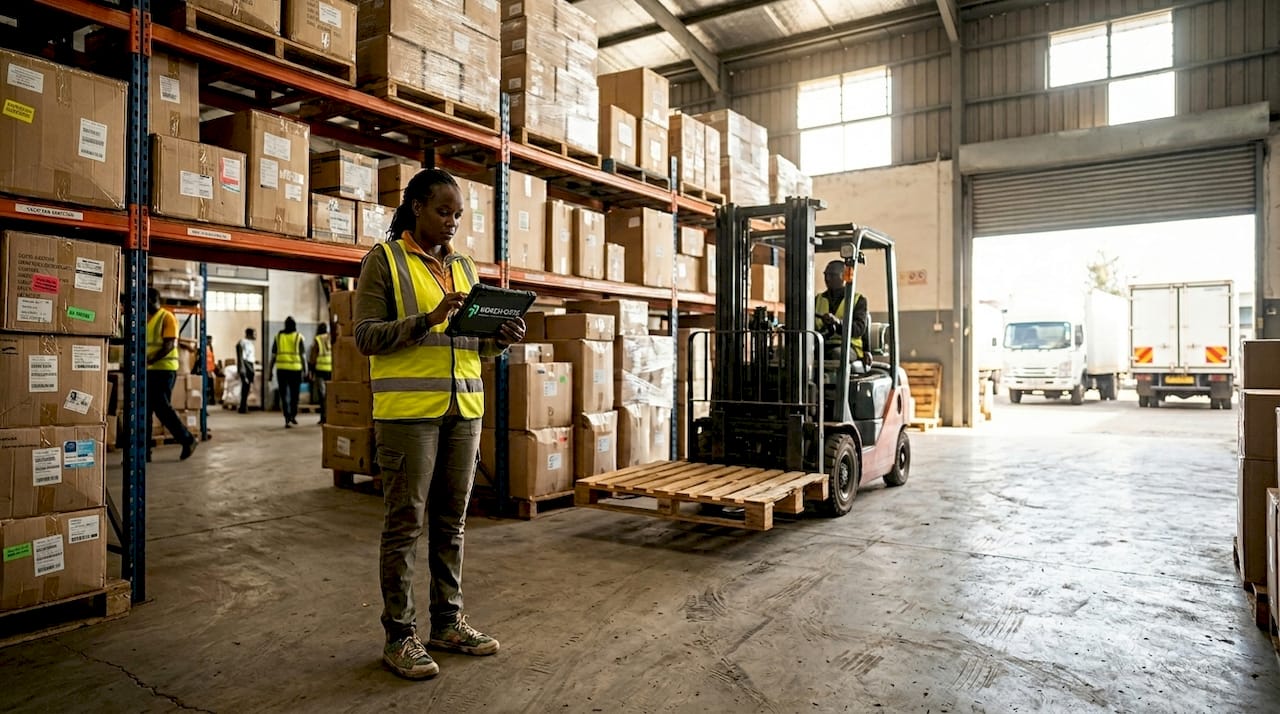
International brands eyeing Africa’s $75 billion e-commerce opportunity often underestimate the logistics complexity. While digital adoption surges across the continent, e-commerce logistics manages goods, information, and services flow including warehousing to returns through infrastructure vastly different from Western markets. This guide unpacks the unique challenges, emerging solutions, and compliance requirements that determine success or failure when entering African e-commerce markets.
Table of Contents
- Key takeaways
- What is e-commerce logistics and why it matters in Africa
- Key challenges in African cross-border e-commerce logistics
- Emerging solutions and technologies enabling efficient cross-border logistics
- Navigating regulatory and compliance requirements for cross-border e-commerce in Africa
- Partner with MoreShores for seamless cross-border e-commerce logistics
- FAQ
Key Takeaways
| Point | Details |
|---|---|
| Ecommerce logistics basics | It covers warehousing, inventory management, order fulfillment, transportation, last mile delivery, and returns as the operational backbone moving products from manufacturers to customers. |
| Africa logistics challenges | Africa faces varied infrastructure, unreliable power, rural addressing challenges, and border inefficiencies that raise costs and complicate delivery. |
| Local warehousing advantage | Starting with country level warehousing rather than cross border shipping reduces delivery times and simplifies customs. |
| Outsourcing models in logistics | Choosing between 3PL and 4PL models helps brands decide how to manage partnerships and overall supply chain functions. |
What is e-commerce logistics and why it matters in Africa
E-commerce logistics represents the complete operational backbone that moves products from manufacturers to customers’ doorsteps. The system integrates warehousing facilities that store inventory, sophisticated inventory management systems tracking stock levels in real time, order fulfillment processes that pick and pack items, transportation networks moving goods between facilities, last-mile delivery reaching end customers, and reverse logistics handling returns. Each component must function seamlessly to deliver the customer experience that drives repeat purchases and positive reviews.
African markets introduce distinct complexity layers that transform standard logistics into specialized operations. Geographic diversity spans 54 countries with varying infrastructure quality, from South Africa’s relatively developed road networks to rural areas accessible only by unpaved paths. Power reliability fluctuates dramatically, impacting cold chain management for perishable goods and technology-dependent tracking systems. The informal economy dominates many regions, creating addressing challenges where street names and building numbers don’t exist in standardized formats.
Logistics performance directly determines whether your brand succeeds or struggles in African e-commerce. Fast, reliable delivery builds customer trust in markets where cash-on-delivery remains prevalent due to limited banking access. Damaged goods from poor handling or extended transit times generate negative reviews that spread quickly through social media networks. Inventory stockouts from inadequate warehousing lose sales to competitors, while excess inventory ties up capital in markets with already thin margins.
Pro Tip: Start with e-commerce solutions that include local warehousing in your target country rather than cross-border shipping for every order, dramatically reducing delivery times and customs complications.
Understanding logistics terminology helps you evaluate partners and solutions effectively. Third-party logistics providers (3PLs) handle operations on your behalf, while fourth-party logistics (4PLs) manage multiple 3PLs and your entire supply chain. Fulfillment centers differ from distribution centers: fulfillment handles individual customer orders with picking and packing, while distribution moves bulk inventory between facilities. Last-mile delivery, the final leg from local facility to customer, typically represents 40-50% of total logistics costs and poses the greatest challenge in African markets with difficult addressing systems.
Key challenges in African cross-border e-commerce logistics
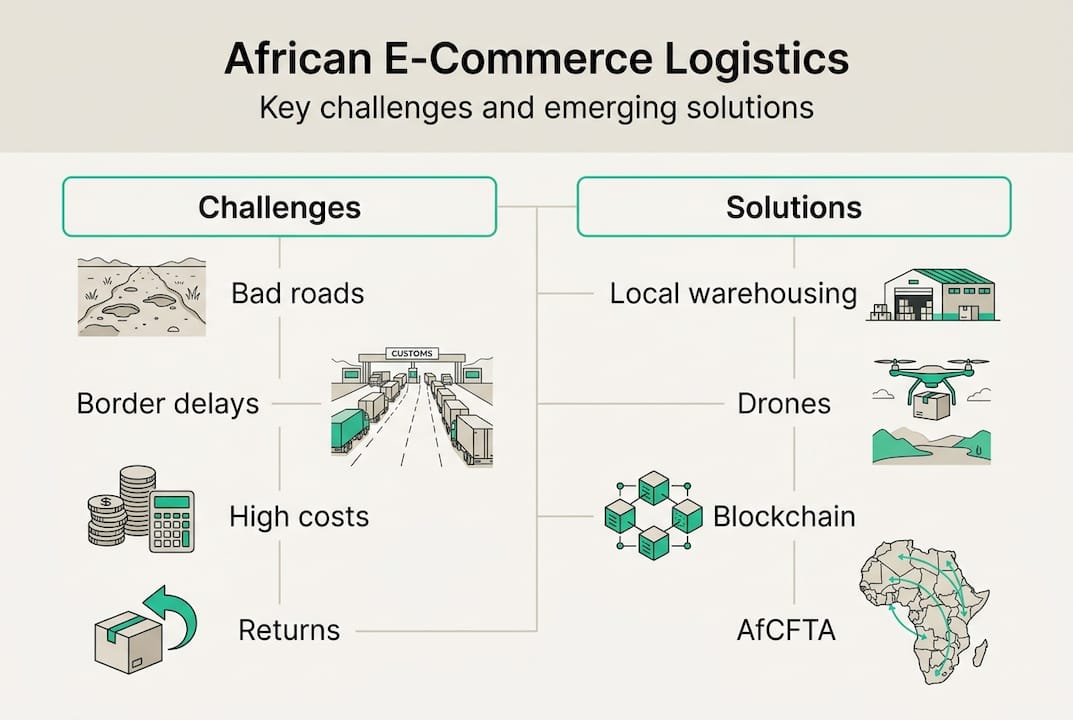
Poor road infrastructure, border delays, high logistics costs burden Africa cross-border e-commerce in ways that fundamentally reshape operational strategies. Only 34% of roads across sub-Saharan Africa are paved, compared to over 90% in developed markets. Unpaved routes become impassable during rainy seasons, creating predictable but unavoidable delays. Power outages occur multiple times weekly in many regions, disrupting refrigerated storage for beauty products, pharmaceuticals, and food items that require temperature control.
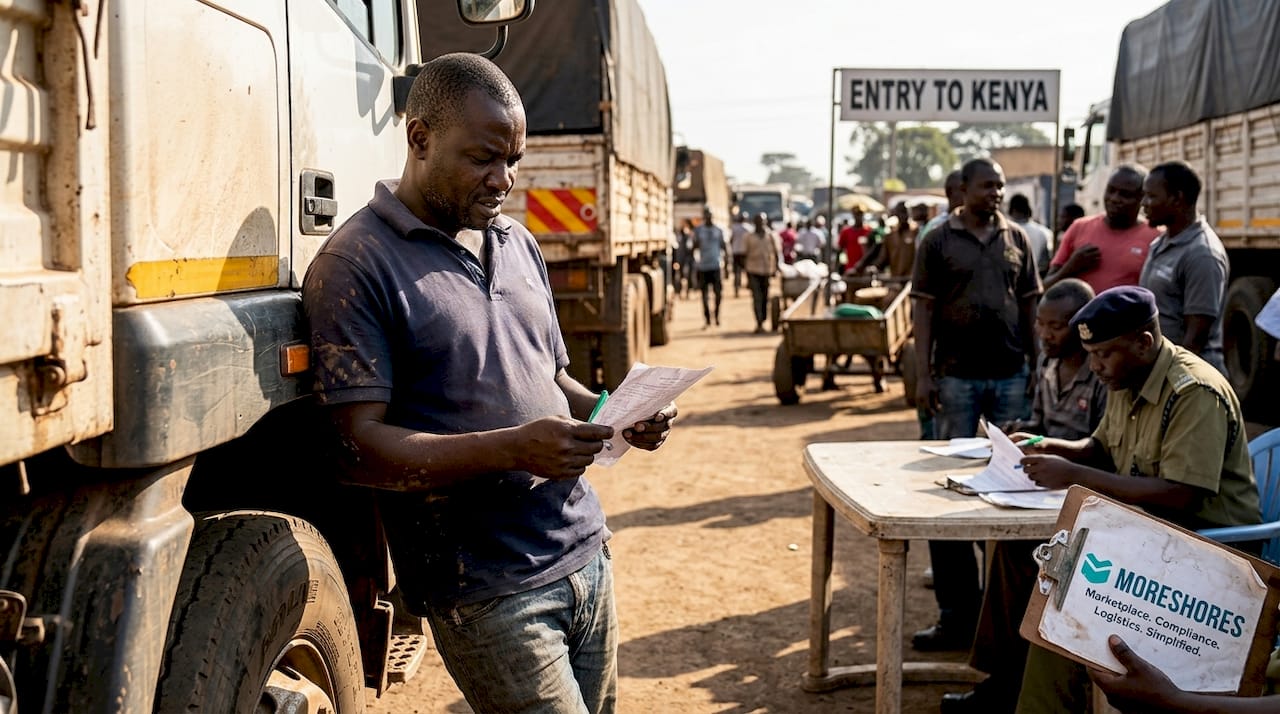
Border crossing delays average 10-15 days for goods moving between African countries, with each delay day adding 1-1.5% to total logistics costs. Multiple inspections by different agencies, paper-based documentation systems prone to errors, and limited operating hours at border posts create bottlenecks. Informal payments sometimes expedite clearance, putting ethical brands at a disadvantage against competitors willing to engage in corruption. Documentation errors trigger cargo holds that extend delays by weeks, not days.
Challenges compound at the last-mile delivery stage where addressing systems break down completely:
- Informal settlements lack street names, building numbers, or postal codes
- GPS coordinates place delivery drivers in general vicinities but not specific buildings
- Security concerns in certain areas require alternative pickup arrangements
- Customer availability during business hours remains unpredictable
- Cash-on-delivery requires drivers to collect and secure payment, adding time and risk
African logistics costs about 13% of GDP, higher than global average of 8%, directly impacting your pricing competitiveness and profit margins. The cost differential stems from infrastructure gaps requiring more labor-intensive workarounds, fuel expenses on longer routes avoiding poor roads, security measures protecting inventory and cash, and smaller shipment volumes that prevent economies of scale.
| Challenge Category | Specific Impact | Typical Cost Increase |
|---|---|---|
| Infrastructure gaps | Longer routes, vehicle damage, power backup systems | 15-25% higher transport costs |
| Border delays | Storage fees, inventory carrying costs, expediting charges | 10-15% per delay incident |
| Last-mile complexity | Manual address verification, multiple delivery attempts, security | 40-50% of total logistics spend |
| Returns processing | Reverse logistics infrastructure, fraud risk with COD | 3-5% of order value |
Returns rates in African e-commerce range from 15-25%, higher than the global 10-15% average, driven by sizing uncertainties when customers can’t try products first, quality concerns about authenticity in markets with counterfeit problems, and cash-on-delivery allowing customers to refuse delivery without financial commitment. Processing returns costs significantly more when reverse logistics infrastructure remains underdeveloped and items must move back across borders through the same delayed customs processes.
Pro Tip: Partner with brand onboarding guide services that establish local presence and compliance before your first shipment, avoiding the costly trial-and-error phase that derails many market entries. Experienced fulfillment & logistics partners navigate addressing challenges through relationships with local delivery personnel who know informal settlement layouts.
Emerging solutions and technologies enabling efficient cross-border logistics
The African Continental Free Trade Area (AfCFTA) launched in 2021 represents the world’s largest free trade area by country count, creating a single market of 1.3 billion people with combined GDP of $3.4 trillion. AfCFTA tariff reductions, digital single-windows, one-stop borders, regional carrier partnerships improve logistics by eliminating 90% of tariffs on goods traded between member states and establishing common rules of origin. Economic modeling projects AfCFTA could boost Africa’s income by $450 billion by 2035, with intra-African trade increasing 33% simply by reducing trade barriers.
Digital platforms transform the paperwork nightmare that previously paralyzed cross-border shipments. Single-window systems allow traders to submit all required documentation electronically to one portal rather than visiting multiple government agencies with paper forms. Kenya’s integrated system reduced customs clearance time from 7 days to under 24 hours for compliant shipments. One-stop border posts consolidate inspections from both countries at a single location, cutting crossing times in half by eliminating redundant checks on each side.
Regional carrier alliances address the fragmented logistics landscape where no single provider covers the entire continent effectively:
- Hub-and-spoke networks concentrate shipments at central facilities for sorting before distribution
- Cross-border partnerships between national carriers enable seamless handoffs without renegotiating agreements
- Hybrid models combine formal carriers for intercity transport with informal motorcycle taxis for last-mile delivery in congested urban areas
- Crowdsourced delivery platforms connect independent drivers to e-commerce shipments, expanding capacity without capital investment
Use of drones and solar-powered warehouses help address infrastructure gaps through technology leapfrogging similar to how mobile phones bypassed landline infrastructure. Rwanda’s drone delivery network transports medical supplies to remote health clinics, proving viability for high-value, time-sensitive e-commerce shipments. Solar installations on warehouse roofs provide reliable power for refrigeration and technology systems independent of unreliable grid electricity, with battery storage maintaining operations during nighttime hours.
| Logistics Aspect | Traditional Approach | Emerging Solution | Efficiency Gain |
|---|---|---|---|
| Customs clearance | Paper forms, multiple agency visits | Digital single-window platforms | 70-85% time reduction |
| Border crossing | Separate inspections each side | One-stop border posts | 50% time reduction |
| Last-mile delivery | Formal carriers only | Hybrid with motorcycle taxis | 30-40% cost reduction |
| Warehouse power | Grid electricity with generators | Solar with battery storage | 60% cost reduction, 100% uptime |
| Rural delivery | Road transport only | Drone delivery for high-value items | 80% time reduction |
Blockchain technology creates immutable records of goods movement and documentation, reducing fraud and disputes that delay shipments. Smart contracts automatically release payments when delivery confirmation occurs, improving cash flow for carriers and reducing administrative overhead. Real-time tracking systems using GPS and cellular networks provide visibility previously impossible, allowing proactive problem solving when delays occur rather than reactive explanations after customers complain.
Pro Tip: Leverage cross-border enablement expertise to navigate AfCFTA rules of origin requirements that unlock duty-free status, potentially saving 10-25% on shipment costs. Consider partner with moreShores to access established carrier networks and technology platforms without building infrastructure from scratch.
Navigating regulatory and compliance requirements for cross-border e-commerce in Africa
Business licenses, rules of origin certificates, data privacy and customs docs are crucial for compliance that prevents shipment holds costing thousands in storage fees and lost sales. Each African country maintains distinct registration requirements for foreign companies conducting e-commerce operations. Nigeria requires Corporate Affairs Commission (CAC) business registration plus Nigerian Information Technology Development Agency (NITDA) data protection compliance. South Africa mandates Companies and Intellectual Property Commission (CIPC) registration and South African Revenue Service (SARS) tax registration before any commercial activity.
Rules of origin certificates prove products qualify for preferential tariff treatment under AfCFTA, Southern African Development Community (SADC), or Common Market for Eastern and Southern Africa (COMESA) trade agreements. Without proper certification, your shipments pay full import duties that eliminate profit margins. Certificate requirements vary by product category: some require 40% local content, others specify manufacturing processes must occur within member states. Maintaining accurate production records and supply chain documentation becomes essential to support certificate applications.
Customs documentation accuracy determines whether your shipment clears in days or sits in storage for weeks accruing fees:
- Commercial invoices must detail exact product descriptions, quantities, values, and country of origin
- Packing lists specify how goods are packaged, weights, dimensions, and container numbers
- Bills of lading or airway bills prove ownership and shipping arrangements
- Import permits for regulated products like electronics, cosmetics, or food items
- Certificates of conformity demonstrating products meet local safety and quality standards
Data privacy regulations increasingly mirror European GDPR requirements, imposing registration obligations and operational constraints on how you collect and process customer information. Kenya’s Data Protection Act requires data controllers and processors to register with the Data Protection Commissioner. South Africa’s Protection of Personal Information Act (POPIA) mandates information officers and security measures for customer data. Non-compliance triggers fines up to 10 million rand or 2% of annual turnover, whichever is higher.
Product-specific regulations add complexity layers requiring specialized knowledge. Electronics need National Communications Authority approvals in many countries. Cosmetics and personal care items require Bureau of Standards certifications proving safety testing. Food and supplements need health ministry approvals and halal certification in Muslim-majority regions. Textiles must display fiber content and care instructions in local languages. Researching requirements before shipping prevents costly product seizures at borders.
Pro Tip: Maintain meticulous documentation with digital backups accessible from anywhere, as border officials may request immediate proof of compliance claims. Small discrepancies between invoice values and declared customs values trigger audits that delay clearance for weeks. Partner with e-commerce compliance solutions that maintain current knowledge of changing regulations across multiple African markets, avoiding the impossible task of tracking updates across 54 countries internally.
Partner with MoreShores for seamless cross-border e-commerce logistics
Navigating African e-commerce logistics requires specialized expertise that takes years to develop through costly trial and error. MoreShores eliminates that learning curve by providing comprehensive cross-border enablement services purpose-built for African market complexities. Our platform acts as your Importer of Record, handling customs clearance, duties, VAT, and regulatory compliance across multiple countries while you focus on marketing and sales.

Our integrated approach combines local warehousing and inventory management with multi-courier fulfillment networks reaching customers in urban centers and rural areas. We manage marketplace integrations across Takealot, Amazon SA, Jumia, and Kilimall, plus seamless Shopify and WooCommerce connections that centralize your operations. Partner with MoreShores platform to access established infrastructure and relationships that would cost millions to replicate independently. Our fulfillment and logistics solutions handle the operational complexity while you capture the $75 billion African e-commerce opportunity with confidence.
FAQ
What are the main components of e-commerce logistics in Africa?
E-commerce logistics encompasses warehousing for inventory storage, order fulfillment including picking and packing, transportation between facilities, last-mile delivery to customers, returns processing, and customs clearance for cross-border shipments. African operations require additional considerations for power reliability, addressing system gaps, and security measures. Each component must account for infrastructure limitations and regulatory variations across countries.
How can international brands minimize delays at African borders?
Use accurate customs documentation including detailed commercial invoices, packing lists, and rules of origin certificates qualifying for AfCFTA preferential treatment. Leverage digital single-window platforms where available to submit documentation electronically and track clearance status in real time. Partner with experienced third-party logistics providers who maintain relationships with customs officials and understand country-specific procedures that prevent common errors triggering cargo holds.
What technologies improve e-commerce logistics visibility in African markets?
AI-powered tracking systems provide real-time shipment location and estimated delivery times, enabling proactive customer communication when delays occur. Blockchain creates immutable documentation records reducing fraud disputes that delay customs clearance. Digital platforms integrating multiple carriers into single dashboards simplify management across fragmented logistics networks. Emerging solutions like drone delivery and solar-powered warehouses address infrastructure gaps in rural areas and unreliable power grids.
What are common pitfalls when setting up cross-border logistics in Africa?
Ignoring local infrastructure realities like unpaved roads, power outages, and informal addressing systems leads to unrealistic delivery promises that damage brand reputation. Neglecting country-specific business licenses, tax registrations, and product certifications triggers shipment seizures and legal complications. Attempting to manage logistics internally without experienced local partners wastes resources on avoidable mistakes. Underestimating the 13% GDP logistics cost burden compared to 8% globally creates unprofitable pricing strategies that fail in competitive markets.