
Marketplaces drive over 70% of cross-border revenue, yet many merchants struggle with the complexity of international expansion. E-commerce enablement integrates logistics, customs compliance, VAT management, and marketplace synchronization into unified platforms. This guide reveals how African and international brands navigate cross-border trade, overcome regulatory barriers, and scale efficiently through comprehensive enablement solutions.
Table of Contents
- Defining E-Commerce Enablement In Cross-Border Trade
- Core Components Of E-Commerce Enablement Platforms
- Regional Challenges For African And International Merchants
- Technology And Marketplace Integration Strategies
- Common Misconceptions About E-Commerce Enablement
- Benefits And Impact Of End-To-End E-Commerce Enablement
- Practical Steps To Choose And Implement An E-Commerce Enablement Platform
- Discover Moreshores: Your Partner For Seamless Cross-Border E-Commerce
Key takeaways
| Point | Details |
|---|---|
| Definition | E-commerce enablement integrates customs, logistics, compliance, and marketplace management for cross-border trade. |
| Critical components | Platforms handle Importer of Record duties, VAT calculations, warehousing, fulfillment, and multi-channel synchronization. |
| Regional challenges | African merchants face diverse tax regimes, logistical delays, and high return costs up to 30% if poorly managed. |
| Technology advantage | API integrations enable real-time inventory and pricing synchronization across marketplaces, reducing errors and stockouts. |
| Business impact | Enablement platforms cut operational costs 15-25%, improve compliance, and accelerate market entry for SMEs and large brands. |
Defining e-commerce enablement in cross-border trade
E-commerce enablement transcends basic online selling by unifying customs clearance, regulatory compliance, logistics coordination, and marketplace channel management. International trade demands merchants navigate complex VAT structures, import duties, and country-specific regulations that vary dramatically across borders.
Cross-border e-commerce requires comprehensive frameworks involving logistics, tax compliance, localization, and customer experience to succeed. Platforms that deliver true enablement coordinate these operational layers simultaneously, ensuring merchants avoid penalties, delays, and revenue loss.
Successful enablement handles three fundamental pillars:
- Regulatory clearance: Managing customs documentation, duty calculations, and VAT obligations across jurisdictions
- Logistics infrastructure: Coordinating warehousing, inventory management, and fulfillment through multi-courier networks
- Channel integration: Synchronizing product listings, pricing, and orders across marketplaces like Amazon, Jumia, Takealot, and storefronts
Merchants entering African markets face additional complexity. Each country maintains unique import duty structures, VAT regimes, and compliance requirements. Without integrated enablement, brands burn resources managing fragmented systems, risking shipment delays and regulatory violations.
“True enablement transforms cross-border complexity into competitive advantage by automating compliance, optimizing fulfillment, and unifying marketplace presence.”
The marketplace dominance statistic reveals why integration matters. Brands selling internationally cannot ignore platforms where consumers actively shop. Yet managing inventory, pricing, and fulfillment across multiple channels manually creates operational chaos. Enablement platforms solve this through centralized control systems.
Core components of e-commerce enablement platforms
E-commerce enablement platforms act as Importers of Record, managing customs clearance, duties, VAT, and regulatory compliance for merchants expanding internationally. This legal role eliminates the burden of understanding every country’s import regulations, allowing brands to focus on growth.

Five essential components define robust enablement platforms:
Importer of Record services
- Legal responsibility for customs declarations and import documentation
- Management of duty payments and regulatory filings
- Liability protection for compliance violations
- Country-specific expertise reducing clearance delays
Dynamic VAT and duty calculation
- Real-time tax computation based on product classification and destination
- Automated updates reflecting regulatory changes
- Transparent cost breakdowns for accurate pricing
- Integration with accounting systems for financial reporting
Warehousing and fulfillment infrastructure
- Strategic regional hubs minimizing international shipping distances
- Inventory management systems tracking stock across locations
- Multi-courier networks optimizing delivery speed and costs
- Fulfillment services handling pick, pack, and ship operations
Multi-channel marketplace integrations
- Centralized product catalog management
- Automated listing synchronization across platforms
- Real-time inventory updates preventing overselling
- Order aggregation from Amazon, Shopify, WooCommerce, Jumia, Kilimall
- Unified returns processing and customer service
Pricing and inventory synchronization
- API connections enabling instant updates across channels
- Currency conversion and localized pricing strategies
- Stock level monitoring with automatic reorder triggers
- Performance analytics identifying high-converting markets
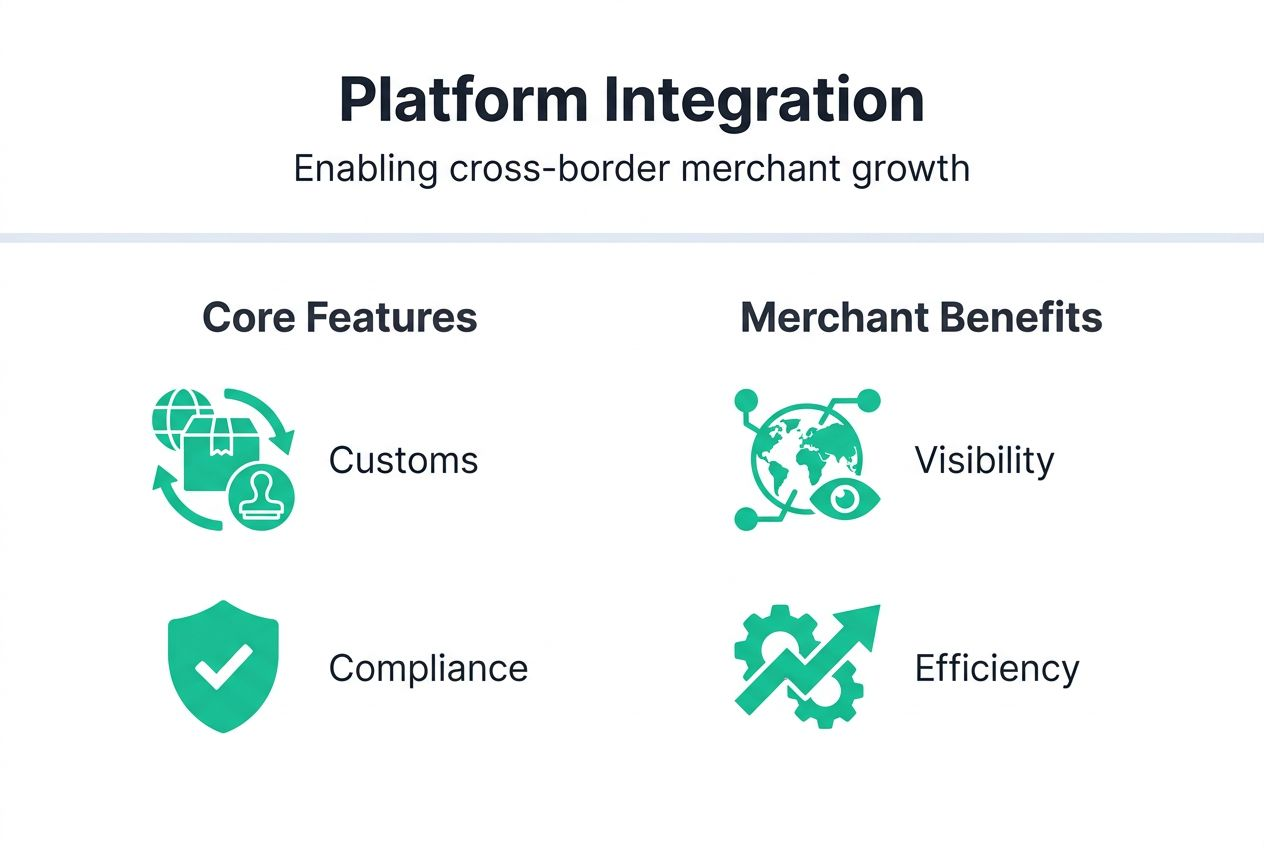
These components work together, creating operational efficiency impossible through manual management. Merchants gain visibility into international operations while platforms handle technical complexity behind the scenes.
Regional challenges for African and international merchants
African VAT regimes and import duties vary significantly country to country, complicating pricing and compliance. A product cleared through South African customs faces different duty rates, documentation requirements, and processing times than the same item entering Kenya or Nigeria.
Four critical obstacles hinder African cross-border growth:
- Fragmented tax structures: Each country maintains independent VAT rates, duty schedules, and exemption criteria requiring specialized knowledge
- Infrastructure gaps: Limited warehousing networks increase delivery times and costs, especially for last-mile fulfillment in rural areas
- Returns complexity: Reverse logistics can consume 30% of operational costs when poorly managed, eroding profit margins
- Compliance risk: Regulatory violations trigger fines, shipment seizures, and reputational damage that small merchants cannot absorb
Enablement platforms mitigate these challenges through regional expertise and physical presence. By maintaining fulfillment centers in strategic African locations, platforms reduce international shipping distances. Local customs knowledge accelerates clearance, cutting delivery times from weeks to days.
Pro Tip: Partner with enablement providers offering established African operations rather than routing shipments through distant international hubs. Regional warehouses dramatically improve delivery speed and customer satisfaction.
International brands entering Africa face the inverse challenge. Understanding local consumer preferences, payment methods, and marketplace dominance requires market intelligence most foreign merchants lack. Cross-border solutions that combine logistics with localization support bridge this knowledge gap.
The cost barrier also blocks many merchants. International shipping, customs duties, and marketplace fees compound quickly. Platforms achieving economies of scale negotiate better courier rates and duty classifications, passing savings to merchants. This levels the playing field, allowing African SMEs to compete with established international brands.
Technology and marketplace integration strategies
Integration with multiple marketplaces drives higher sales velocity; real-time inventory and pricing synchronization reduce errors and stockouts. The technical infrastructure enabling this coordination separates functional enablement platforms from basic logistics providers.
API connections form the backbone of marketplace integration:
- Inventory synchronization: Stock levels update instantly across all channels when units sell, preventing overselling and customer disappointment
- Pricing automation: Currency conversion, tax calculations, and promotional pricing apply consistently across marketplaces
- Order routing: Systems automatically direct orders to optimal fulfillment centers based on inventory location and shipping costs
- Customer data flow: Purchase history, preferences, and support tickets consolidate for unified customer relationship management
Multi-marketplace presence multiplies brand visibility. Consumers shopping on Takealot may not visit Jumia, and vice versa. By maintaining synchronized listings across platforms, merchants capture demand wherever it exists without managing separate inventories.
Implementation requires sophisticated technical architecture:
- Centralized product information management: Master catalogs containing SKUs, descriptions, images, and specifications feed all channels
- Middleware integration layers: Translation systems convert data formats between merchant systems and marketplace APIs
- Real-time event processing: Webhooks and polling mechanisms capture order, inventory, and pricing changes within seconds
- Error handling and reconciliation: Automated systems detect and resolve synchronization failures before they impact sales
- Performance monitoring dashboards: Analytics reveal which marketplaces drive revenue, guiding strategic decisions
Beyond plug-and-play connections, strategic marketplace integration demands understanding each platform’s unique requirements. Amazon’s fulfillment expectations differ from Shopify’s, and African marketplaces like Jumia have distinct compliance needs.
Data insights transform raw integration into competitive advantage. Platforms tracking sales velocity by region, product category, and marketplace reveal where to focus inventory investment. Pricing analytics identify optimal price points balancing conversion rates with margin targets.
E-commerce solutions combining partner networks with proprietary technology deliver both breadth and depth. Merchants access marketplace reach while maintaining operational control through unified dashboards.
Common misconceptions about e-commerce enablement
More than 57% of online shoppers buy from overseas brands; SMEs benefit greatly from enablement platforms that simplify complexity and lower costs. Yet misconceptions prevent many merchants from exploring these solutions.
| Misconception | Reality |
|---|---|
| Enablement platforms serve only large corporations with massive volume | African SMEs effectively compete globally using enablement tools that were previously exclusive to enterprises |
| Cross-border selling requires prohibitive investment and expertise | Integrated services reduce upfront costs and eliminate the need for in-house customs, logistics, and compliance teams |
| Marketplace integration works automatically without technical complexity | True integration demands advanced synchronization of inventory, pricing, fulfillment, and compliance across diverse platform requirements |
| African merchants cannot access international markets profitably | Regional fulfillment networks and negotiated shipping rates make global expansion financially viable for small brands |
| Returns management is too complex for cross-border operations | Enablement platforms handle reverse logistics through established processes, capping return costs at predictable levels |
The corporation myth proves particularly damaging. Small African brands assume enablement platforms target only multinational enterprises, missing opportunities to access the same infrastructure. Modern platforms offer tiered pricing and flexible contracts accommodating businesses at any scale.
Complexity concerns stem from outdated perceptions. Early cross-border selling required merchants to become customs experts, negotiate with multiple couriers, and manually manage marketplace listings. Contemporary enablement platforms abstract this complexity through integrated services.
Pro Tip: Evaluate enablement platforms based on service breadth rather than size requirements. The best providers support merchants from first international sale through enterprise scale with consistent service quality.
The plug-and-play integration misconception creates unrealistic expectations. While modern APIs simplify connections, achieving reliable synchronization across marketplaces demands ongoing monitoring, error handling, and optimization. Platforms investing in robust technical infrastructure deliver the seamless experience merchants expect.
Understanding these realities helps merchants make informed decisions. Enablement platforms democratize international trade, but success still requires strategic planning, market research, and operational discipline.
Benefits and impact of end-to-end e-commerce enablement
Integrated platforms reduce operational costs 15-25%, improve compliance to avoid delays and fines, and accelerate time to market. These measurable impacts transform cross-border trade from risky experiment to sustainable growth strategy.
Cost savings compound across multiple dimensions:
- Consolidated customs management: Single provider handling all import documentation reduces fees compared to per-shipment broker charges
- Negotiated shipping rates: Platform volume enables courier discounts individual merchants cannot access
- Reduced compliance penalties: Expert VAT and duty management prevents costly violations and shipment seizures
- Lower inventory carrying costs: Regional fulfillment centers minimize safety stock requirements across markets
- Streamlined returns processing: Established reverse logistics prevent return costs from spiraling beyond budgeted thresholds
Compliance improvements protect revenue and reputation. Customs violations delay shipments during peak seasons, missing sales windows. Regulatory fines drain capital better invested in growth. Enablement platforms mitigate these risks through systematic compliance monitoring.
Fulfillment speed drives customer satisfaction. Consumers expect delivery within days, not weeks. Platforms maintaining inventory near customers meet these expectations, reducing cart abandonment and negative reviews. Faster delivery also decreases the window for order cancellations.
Operational streamlining frees merchant resources for strategic activities. Instead of managing customs paperwork, logistics coordination, and marketplace listings, teams focus on product development, marketing, and customer acquisition. This strategic focus accelerates growth beyond what operational efficiency alone delivers.
Scalability represents the ultimate benefit. Merchants entering one new market gain infrastructure to expand into additional countries with minimal incremental effort. The platform handles regional complexity, allowing brands to test markets quickly and double down on winners.
Data insights support sustainable growth. Performance analytics reveal which products resonate in specific markets, guiding inventory allocation. Customer behavior patterns inform localization strategies. Financial reporting clarifies true profitability after all cross-border costs.
Practical steps to choose and implement an e-commerce enablement platform
Selecting the right enablement platform determines cross-border success. Merchants should evaluate providers systematically against specific criteria aligned with business goals.
- Assess target market requirements: Research customs regulations, VAT structures, and logistics infrastructure in countries you plan to enter before evaluating platforms
- Verify Importer of Record capabilities: Confirm the platform legally handles customs declarations, duty payments, and regulatory compliance in your target markets
- Evaluate marketplace integrations: Ensure technical connections to priority platforms like Amazon, Shopify, WooCommerce, Jumia, and Takealot with proven synchronization reliability
- Examine fulfillment network coverage: Check warehouse locations relative to target customers, assessing delivery speed and cost projections
- Review compliance track record: Request references from merchants in similar industries and markets, verifying customs clearance success rates
- Analyze pricing transparency: Understand all fees including customs duties, warehousing, fulfillment, and marketplace commissions to calculate true costs
- Test technical integration: Request API documentation and technical support access, evaluating integration complexity for your existing systems
- Monitor performance metrics: After launch, track delivery times, customs clearance speed, stockout rates, and customer satisfaction to optimize operations
Pro Tip: Prioritize platforms offering dedicated account management and responsive technical support. Cross-border complexity demands human expertise when automated systems encounter edge cases.
Regional fulfillment presence matters more than platform scale. A provider with warehouses in your target African markets delivers faster than one routing all shipments through distant international hubs. Evaluate physical infrastructure alongside technical capabilities.
Cross-border enablement services should provide transparent reporting on all operational metrics. Visibility into customs status, inventory levels, and marketplace performance enables proactive management rather than reactive problem solving.
Implementation timelines vary by business complexity. Simple product catalogs with straightforward compliance needs may onboard within weeks. Complex assortments requiring specialized customs classifications take longer. Align expectations with providers during evaluation.
Continuous improvement separates good enablement relationships from great ones. Regular business reviews identifying optimization opportunities, emerging market trends, and new marketplace integrations keep operations competitive. Choose providers invested in partnership, not just transaction processing.
Follow brand onboarding guides carefully, providing complete product data, regulatory documentation, and market preferences upfront. Thorough preparation accelerates launch and prevents operational issues.
Discover MoreShores: your partner for seamless cross-border e-commerce
Navigating cross-border complexity demands specialized expertise and integrated infrastructure. MoreShores delivers end-to-end enablement combining customs compliance, logistics coordination, and marketplace integration specifically designed for African and international merchants.

Our platform handles Importer of Record responsibilities across African markets, managing VAT calculations, duty payments, and regulatory filings that typically overwhelm merchants. Regional fulfillment centers in strategic locations accelerate delivery while reducing shipping costs. Cross-border enablement services integrate seamlessly with major marketplaces including Takealot, Amazon SA, Jumia, and Kilimall, plus Shopify and WooCommerce storefronts.
Whether you’re an international brand entering African markets or an African merchant expanding globally, MoreShores marketplace integration and fulfillment services provide the infrastructure transforming cross-border ambitions into sustainable revenue. Our technology synchronizes inventory and pricing in real time while our compliance expertise keeps shipments moving smoothly through customs.
Frequently asked questions
What is the Importer of Record and why is it important?
The Importer of Record assumes legal responsibility for customs declarations, duty payments, and regulatory compliance when goods cross international borders. This role proves critical because it shields merchants from liability for import violations while ensuring proper documentation speeds customs clearance. Without an Importer of Record, shipments face delays, penalties, or seizure.
How do e-commerce enablement platforms help African merchants overcome cross-border challenges?
Platforms manage diverse VAT regimes and import duty structures that vary dramatically across African countries, ensuring accurate pricing and regulatory compliance. Regional fulfillment networks reduce delivery times from weeks to days while cutting shipping costs through optimized routing. Platform operations handle returns processing, minimizing the cost burden that otherwise consumes up to 30% of revenue.
What factors should merchants consider when selecting an enablement platform?
Prioritize providers offering comprehensive Importer of Record services covering all target markets with proven compliance track records. Verify technical integration capabilities with priority marketplaces and storefronts, ensuring real-time synchronization reliability. Assess fulfillment network coverage relative to customer locations, confirming warehouses position inventory for fast, affordable delivery. Cross-border enablement criteria should include transparent pricing, responsive support, and scalable infrastructure accommodating business growth.