
Breaking into new markets sounds exciting until you face customs delays, confusing regulations, and payment integration headaches. International brands eyeing African markets and African merchants looking to expand globally encounter unique challenges in logistics, compliance, and marketplace integration. This guide walks you through proven strategies to navigate cross-border e-commerce successfully, from understanding market dynamics to executing sales and managing operational risks. You’ll learn how to leverage regional trade agreements, optimize logistics costs, localize payment systems, and build sustainable growth in one of the world’s fastest-growing e-commerce regions.
Table of Contents
- Key takeaways
- Understanding cross-border e-commerce markets and challenges
- Preparing for cross-border operations: logistics and regulatory compliance
- Executing cross-border sales: marketplace integration and payment localization
- Verifying success: addressing returns, fraud, and operational risks
- How MoreShores supports your cross-border e-commerce success
- Frequently asked questions
Key Takeaways
| Point | Details |
|---|---|
| Africa growth potential | Africa’s crossborder ecommerce is growing rapidly at about 25 percent annually and remains underrepresented in global trade. |
| Logistics cost challenge | Logistics costs in Africa range from forty to sixty percent of product cost, far higher than in developed markets, squeezing margins. |
| Regional hubs benefits | Establishing regional distribution hubs in Lagos, Nairobi, and Johannesburg reduces costs and speeds delivery. |
| AfCFTA compliance | Regulatory compliance becomes manageable when you understand AfCFTA and the required documentation. |
Understanding cross-border e-commerce markets and challenges
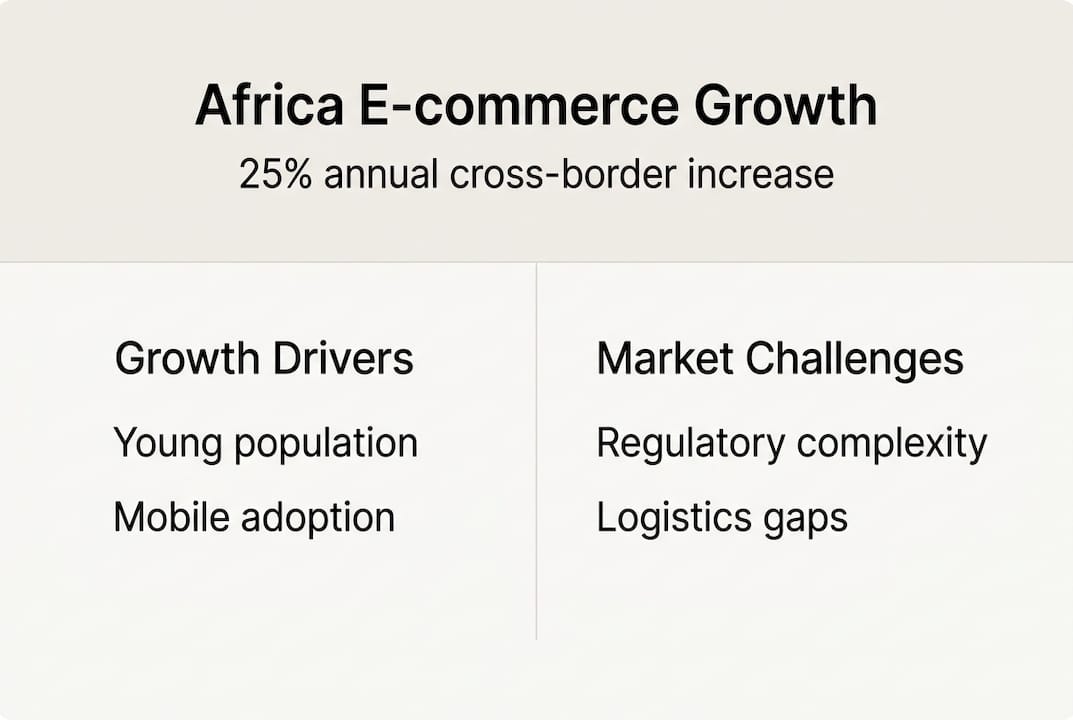
The global cross-border e-commerce market reaches $4.81 trillion by 2032, growing at 18.4% annually. This explosive growth creates massive opportunities for brands willing to navigate international expansion complexities. Africa’s cross-border e-commerce segment grows even faster at 25% per year, yet the continent remains significantly underrepresented in global trade.
Sub-Saharan Africa holds less than 3% of global trade share despite representing 17% of the world’s population. Trade costs average 31.2% of transaction value in the region, creating substantial barriers to entry. These high costs stem from infrastructure gaps, complex customs procedures, and fragmented regulatory environments across countries.
Several factors contribute to Africa’s limited participation in global e-commerce:
- Inadequate transportation networks increase delivery times and costs
- Multiple currency zones complicate pricing and payment processing
- Varying customs requirements across borders slow shipment clearance
- Limited digital payment infrastructure in rural areas restricts market reach
- Inconsistent regulatory frameworks create compliance challenges
Yet these challenges also represent opportunities for brands that develop effective strategies. The continent’s young, mobile-first population drives digital adoption rapidly. Smartphone penetration increases access to online shopping, while improving payment systems expand transaction capabilities. Understanding these market dynamics helps you identify where to focus resources and which obstacles require priority attention.
The gap between Africa’s population size and trade participation reveals untapped potential. Brands entering now position themselves ahead of competitors as infrastructure improves and consumer purchasing power grows. Your e-commerce solutions strategy must account for both current limitations and future growth trajectories to capture sustainable market share.
Pro Tip: Start with countries showing strong digital infrastructure and growing middle-class populations like Nigeria, Kenya, and South Africa before expanding to emerging markets with higher operational complexity.
Preparing for cross-border operations: logistics and regulatory compliance
Logistics represents your biggest cost challenge when entering African markets. Logistics costs range from 40-60% of product cost in Africa compared to just 6-8% in developed markets. This dramatic difference directly impacts your pricing strategy and profit margins. Partnering with third-party logistics providers and establishing regional distribution hubs in cities like Lagos, Nairobi, and Johannesburg reduces costs significantly while improving delivery speed.
Three logistics optimization strategies deliver immediate cost benefits:
- Consolidate shipments to achieve better freight rates and reduce per-unit costs
- Use regional fulfillment centers to minimize last-mile delivery distances
- Implement delivery duty paid models to provide transparent pricing and avoid surprise fees
Regulatory compliance becomes manageable when you understand the African Continental Free Trade Area framework. AfCFTA covers 54 countries with 1.4 billion people, eliminates 90% of tariffs, and simplifies customs processes. This trade agreement creates the world’s largest free trade area by country count, offering unprecedented access to diverse markets under unified rules. Tariff elimination reduces your cost base while simplified customs procedures accelerate delivery timelines.

Cross-border shipments require extensive documentation that varies by destination country. Managing 40+ documents per transaction includes commercial invoices, packing lists, certificates of origin, and product compliance certificates. Each document must contain accurate Harmonized System codes for proper classification and duty calculation. Errors cause shipment delays, additional fees, and customer dissatisfaction.
| Document type | Purpose | Critical details |
|---|---|---|
| Commercial invoice | Customs valuation | Accurate HS codes, item values, quantities |
| Certificate of origin | Tariff qualification | Manufacturer location, production details |
| Packing list | Shipment verification | Weight, dimensions, packaging specifications |
| Import license | Regulatory approval | Product category permissions, validity dates |
Automated compliance tools and Merchant of Record services simplify VAT management and documentation generation. These solutions maintain updated regulatory databases, generate required certificates automatically, and handle tax registration across multiple jurisdictions. Your fulfillment and logistics partner should provide integrated compliance support to reduce your administrative burden.
Value-added tax handling differs significantly across African countries. Some nations require foreign merchants to register for VAT collection, while others allow Merchant of Record providers to handle obligations. Understanding each country’s VAT threshold, registration process, and filing requirements prevents compliance issues that could halt your operations.
Pro Tip: Maintain detailed records of all customs declarations and payments for at least three years to support audits and resolve disputes quickly when they arise.
Your cross-border enablement strategy must integrate logistics optimization with compliance automation. This dual focus reduces costs while ensuring regulatory adherence, creating sustainable operations that scale efficiently as you expand into additional markets.
Executing cross-border sales: marketplace integration and payment localization
Integrating with established marketplaces accelerates your market entry by leveraging existing customer bases and trusted platforms. Platforms like Shopify, Amazon, and regional marketplaces support cross-border sales with built-in tools for currency conversion, tax calculation, and multi-language support. Each platform offers different advantages depending on your target markets and product categories.
Payment localization drives conversion rates more than any other single factor. Localizing currency and payment options boosts conversion by 24% because customers trust familiar payment methods and transparent pricing. African consumers show strong preferences for specific payment types that differ from Western markets.
Mobile money and cash on delivery remain vital payment methods across African markets. Mobile money services like M-Pesa in Kenya and MTN Mobile Money in West Africa process billions in transactions monthly. Cash on delivery addresses trust concerns for first-time online shoppers but requires verification systems to minimize fraud risk.
Your marketplace integration should follow this stepwise approach:
- Select primary marketplaces based on target country preferences and product fit
- Configure localized storefronts with translated content and local currency pricing
- Integrate preferred payment methods including mobile money and regional cards
- Set up automated inventory synchronization across all sales channels
- Establish customer service capabilities in local languages and time zones
| Marketplace | Primary markets | Key advantages | Payment options |
|---|---|---|---|
| Jumia | Nigeria, Kenya, Egypt | Largest African reach | Mobile money, COD, cards |
| Takealot | South Africa | Dominant local player | Cards, EFT, credit |
| Kilimall | Kenya, Uganda, Nigeria | Mobile-first platform | M-Pesa, Airtel Money, COD |
| Amazon SA | South Africa | International brand trust | Cards, Amazon Pay |
Social commerce channels provide effective alternatives to traditional marketplaces. TikTok Shop and WhatsApp Business enable direct sales through social platforms where African consumers already spend significant time. These channels require different content strategies but offer lower entry barriers and direct customer relationships.
Language localization extends beyond simple translation. Cultural adaptation of product descriptions, images, and marketing messages increases relevance and trust. Consider local holidays, cultural references, and communication styles when adapting content for specific markets.
Your marketplace integration strategy should prioritize markets where you can offer competitive advantages through unique products, superior service, or better pricing. Avoid spreading resources too thin by launching in too many markets simultaneously. Master two or three key markets before expanding further.
Pro Tip: Test payment preferences through small pilot campaigns before full launch to identify which methods your specific target customers prefer in each market.
Currency management requires careful attention to exchange rate fluctuations and conversion fees. Display prices in local currencies to eliminate confusion, but monitor exchange rates regularly to protect margins. Some platforms offer dynamic pricing tools that adjust automatically based on rate changes.
Your e-commerce solutions must balance marketplace diversity with operational efficiency. Each additional platform increases complexity, so focus on channels that deliver the highest return on investment for your specific products and target markets.
Verifying success: addressing returns, fraud, and operational risks
Returns management directly impacts your profitability and customer satisfaction. Returns typically occur within 7-14 days of delivery, with rates varying significantly by product category. Electronics and fashion see higher return rates than consumables or personal care items. Your returns policy must balance customer expectations with cost control, especially given Africa’s high logistics expenses.
Cash on delivery fraud represents a significant operational risk. Global COD fraud rates reach 23%, with customers refusing delivery after inspection or providing false information. Mitigation strategies include:
- Implementing escrow accounts that hold funds until delivery confirmation
- Requiring phone verification and callback confirmation before dispatch
- Setting order value limits for first-time COD customers
- Using delivery partners with strong verification processes
- Analyzing order patterns to identify suspicious behavior
In South Africa, 64% of cross-border trade faces duties and 61% experiences returns that impact margins. These statistics highlight the importance of accurate product classification, transparent pricing, and quality control. Unexpected duties frustrate customers and damage your brand reputation, while high return rates erode profitability quickly.
Rural delivery remains a persistent challenge affecting market reach. Last-mile delivery to remote areas costs significantly more than urban delivery, yet these regions represent substantial untapped demand. Some brands address this through:
- Partnering with local delivery networks that understand rural logistics
- Offering pickup points in regional towns to reduce delivery distances
- Setting minimum order values for rural delivery to maintain profitability
- Using hybrid models combining traditional carriers with motorcycle couriers
Currency volatility creates ongoing financial risk in cross-border operations. Exchange rate fluctuations between order and fulfillment can eliminate margins on thin-margin products. Hedging strategies, dynamic pricing, and regular rate reviews protect against adverse movements.
Intellectual property and data privacy regulations vary widely across African countries. Some nations have comprehensive data protection laws similar to GDPR, while others lack formal frameworks. Your compliance approach must address the most stringent requirements to ensure protection across all markets.
“Proactive risk management in cross-border e-commerce isn’t about eliminating all risks, but about understanding which risks you can control, which you must mitigate, and which you choose to accept as part of doing business in high-growth markets.”
Operational sustainability requires continuous monitoring of key metrics including delivery success rates, return percentages, fraud incidents, and customer satisfaction scores. These indicators reveal problems early, allowing corrective action before they significantly impact business performance.
Your e-commerce logistics partnerships should include clear service level agreements covering delivery times, fraud prevention support, and returns handling. Strong partners provide data transparency, enabling you to track performance and identify improvement opportunities.
Building customer trust through consistent delivery, responsive support, and fair policies creates competitive advantage in markets where many consumers remain skeptical about online shopping. Your reputation becomes your most valuable asset as you scale operations.
How MoreShores supports your cross-border e-commerce success
Navigating the complexities of cross-border e-commerce requires more than just understanding the challenges. You need an experienced partner who provides integrated solutions covering every aspect of international expansion. MoreShores specializes in cross-border enablement that simplifies logistics, compliance, and marketplace integration for brands entering African markets and African merchants expanding globally.
Our platform leverages regional fulfillment hubs strategically located in major African commercial centers, reducing your logistics costs from the typical 40-60% down to competitive rates that protect your margins. We handle customs clearance as your Importer of Record, managing all documentation, duty payments, and VAT compliance automatically. This eliminates the administrative burden that slows many cross-border operations.
Our fulfillment and logistics services include warehousing, inventory management, and multi-courier delivery networks optimized for African markets. We provide real-time tracking, delivery verification, and returns management that gives you complete visibility into your supply chain. Our marketplace integration connects your products to Takealot, Amazon SA, Jumia, Kilimall, and major platforms, while seamlessly syncing with your Shopify or WooCommerce storefront.
With MoreShores, you gain a strategic partner who understands both the opportunities and challenges of African e-commerce, providing the infrastructure and expertise you need to scale efficiently and sustainably.
Frequently asked questions
What are the main benefits of the African Continental Free Trade Area for e-commerce?
AfCFTA eliminates 90% of tariffs across 54 African countries, making cross-border sales significantly more affordable and competitive. The agreement also simplifies customs processes and harmonizes trade rules, reducing clearance times from weeks to days in many corridors. These benefits lower your market entry costs and accelerate expansion timelines across the continent.
How can international brands reduce logistics costs when selling into Africa?
Partner with experienced third-party logistics providers who operate regional hubs in cities like Lagos, Nairobi, and Johannesburg for cost-efficient distribution. Implement delivery duty paid models that consolidate shipments and provide transparent all-inclusive pricing to customers. Using local fulfillment centers instead of shipping individual orders internationally can cut your logistics costs by 50% or more.
What payment methods are most effective for African cross-border e-commerce?
Mobile money and cash on delivery remain the most popular payment methods across African markets, though preferences vary by country. Offer localized currency pricing and integrate regional mobile money services like M-Pesa, MTN Mobile Money, and Airtel Money to maximize conversion. For COD orders, implement verification processes including phone callbacks and escrow accounts to reduce the 23% fraud rate typical of this payment method.
How can e-commerce merchants handle returns and fraud risks?
Set clear return policies aligned with product categories, typically 7-14 days for most items, and communicate them transparently at checkout. Use escrow services that hold payment until delivery confirmation, and verify COD orders through phone callbacks before dispatch. Implement order value limits for first-time customers and analyze purchasing patterns to identify suspicious behavior early. Strong delivery partners with verification processes significantly reduce fraud incidents while maintaining customer satisfaction.