African warehousing: The key to e-commerce growth
TL;DR:
- Africa’s warehousing occupancy has reached 83%, highlighting urgent capacity constraints and rising costs. Strategic, quality storage solutions are essential for brands aiming to succeed in the continent’s rapidly expanding e-commerce and trade markets. Early investment in flexible, sustainable, and tech-enabled warehousing provides a competitive advantage and operational resilience.
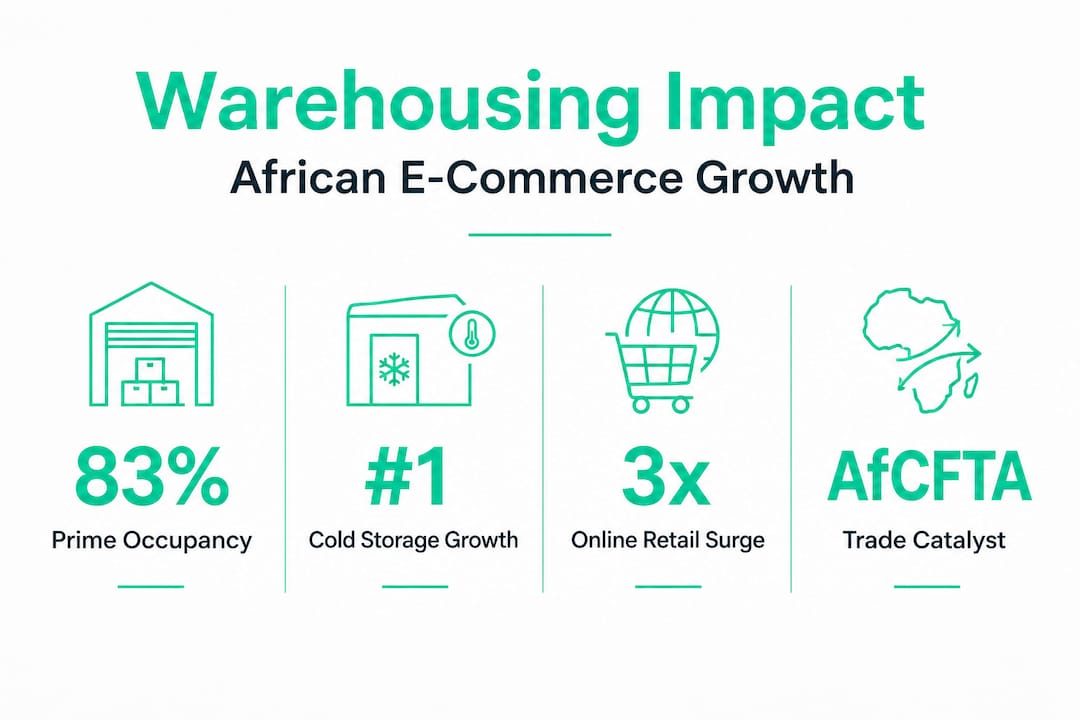
Warehousing occupancy rates reached 83% in H1 2025 across Africa, up from 75% the year before, and that single number tells you everything about where the continent’s logistics sector is heading. Quality warehouse space is becoming harder to secure, costs are rising, and international brands that delay their market entry decisions are increasingly finding themselves locked out of prime facilities. If you are planning to enter or expand across African markets, warehousing is not a back-office detail. It is a strategic decision that shapes your fulfillment speed, your compliance posture, and ultimately your ability to compete. This article gives you the data, frameworks, and practical steps you need to make smart warehousing choices across Africa.
Table of Contents
- Why African warehousing matters for international brands
- Key types of warehousing and provider landscape
- Modern trends and tech: Efficiency, sustainability, and flexibility
- Choosing and optimizing warehousing for e-commerce expansion
- What most brands miss about warehousing in Africa
- Take the next step: Warehousing solutions built for Africa
- Frequently asked questions
Key Takeaways
| Point | Details |
|---|---|
| Warehousing drives e-commerce | Quality logistics facilities are essential for scaling international e-commerce across Africa. |
| Supply constraints favor early movers | Brands who secure grade-A space early avoid rising costs and gain competitive advantage. |
| Modern tech and ESG save costs | AI-driven warehouse management and green facilities substantially reduce operational expenses. |
| Choose providers strategically | Partnering with top-tier 3PLs and understanding facility types optimizes regional distribution. |
| Applied strategies win | International brands must adopt evidence-backed, flexible warehousing approaches to thrive in Africa’s market. |
Why African warehousing matters for international brands
Africa’s e-commerce sector is not a future prospect. It is moving fast right now, and the logistics infrastructure is scrambling to keep pace. Grade-A warehousing has become essential for e-commerce, FMCG, and regional distribution across the continent, and the forces pushing that demand forward are structural, not cyclical.
Two of the biggest catalysts are the African Continental Free Trade Area (AfCFTA) and the surge in online retail. AfCFTA, which covers 54 countries and over 1.3 billion consumers, is actively reducing trade barriers between African nations. As cross-border trade volumes grow, brands need strategically positioned distribution nodes to serve multiple markets from a single location. That means warehousing is no longer just about storage. It is about regional reach.
The numbers back this up. E-commerce and AfCFTA are projected to drive a 28% increase in freight demand by 2030, alongside a boom in agro-processing that is reducing post-harvest losses and generating new cold-chain requirements. For international brands, especially those selling food products, pharmaceuticals, or temperature-sensitive goods, cold storage is a fast-growing and increasingly necessary component of African warehousing strategy.
Here is what this means practically for your brand:
- Market access: A strategically located warehouse in Nairobi, Lagos, or Johannesburg lets you serve regional customers without re-importing inventory for every order.
- Fulfillment speed: Local stock dramatically shortens delivery times and reduces the cost of last-mile logistics.
- Compliance readiness: Goods stored locally can be inspected, relabeled, and prepared to meet local regulatory standards before dispatch.
- Inventory reliability: On-ground stock protects you from the variability of international shipping delays and port congestion.
“Warehousing has evolved from a passive storage function to an active strategic lever. Brands that treat it as infrastructure from day one outperform those that bolt it on later.” — MoreShores logistics team
You can explore African e-commerce solutions that tie warehousing to your broader market entry strategy, including customs clearance, marketplace listing, and fulfillment.
Key types of warehousing and provider landscape
Understanding the types of warehousing available across Africa helps you match facility capability to your specific operational needs. Not all warehouses are equal, and the gap between facility grades can significantly affect your inventory integrity, fulfillment accuracy, and cost per order.
Kenya’s prime occupancy exceeded 80% in Q1 2026, South Africa’s cold storage segment is the fastest growing in the region, and Africa’s e-commerce market is expected to grow from $317 billion in 2024 to $1 trillion by 2033 at a CAGR of 13.8%. These are not soft projections. They represent real demand that is already straining physical supply.
Here is a comparison of the main facility types you will encounter:
| Facility type | Key features | Best suited for | Typical trade-off |
|---|---|---|---|
| Grade-A warehousing | High ceilings, dock levelers, advanced WMS, fire suppression | E-commerce, FMCG, pharma | Higher rent, but lower losses |
| Traditional warehousing | Basic storage, minimal tech, lower spec | Low-volume, non-perishable goods | Lower cost, but operational friction |
| Cold storage | Temperature-controlled zones, specialist equipment | Food, beverages, pharmaceuticals | Specialized pricing, limited availability |
| Green/ESG facilities | Solar power, rainwater harvesting, energy-efficient design | Multinationals with ESG mandates | 3-5% rental premium |
The provider landscape includes both global 3PLs and Africa-focused specialists. Imperial Logistics operates across 26 countries, Bolloré/CEVA covers 46 countries, and Africa Logistics Properties (ALP) is one of the leading developers of purpose-built grade-A facilities. Each brings different coverage, service depth, and pricing models.
Key considerations when evaluating providers:
- Geographic coverage: Does the provider operate in your priority markets, and can they scale into adjacent countries as you grow?
- Technology stack: Do they use a warehouse management system that integrates with your storefront or order management system?
- Value-added services: Can they handle relabeling, kitting, returns processing, or quality checks on-site?
- Contract flexibility: Do they offer short-term or scalable agreements, or are you locked into long-term leases from day one?
For international brands new to Africa, working with established logistics providers in Africa through a managed fulfillment platform reduces the complexity of evaluating and negotiating with multiple facility operators independently.
Modern trends and tech: Efficiency, sustainability, and flexibility
The warehousing sector across Africa is not standing still. International investment, technology adoption, and growing ESG pressure from global supply chains are reshaping what a modern African warehouse looks like and what it can do for your brand.
The most impactful trends right now are sustainability, AI-driven management systems, and flexible space models.
Sustainability and ESG compliance
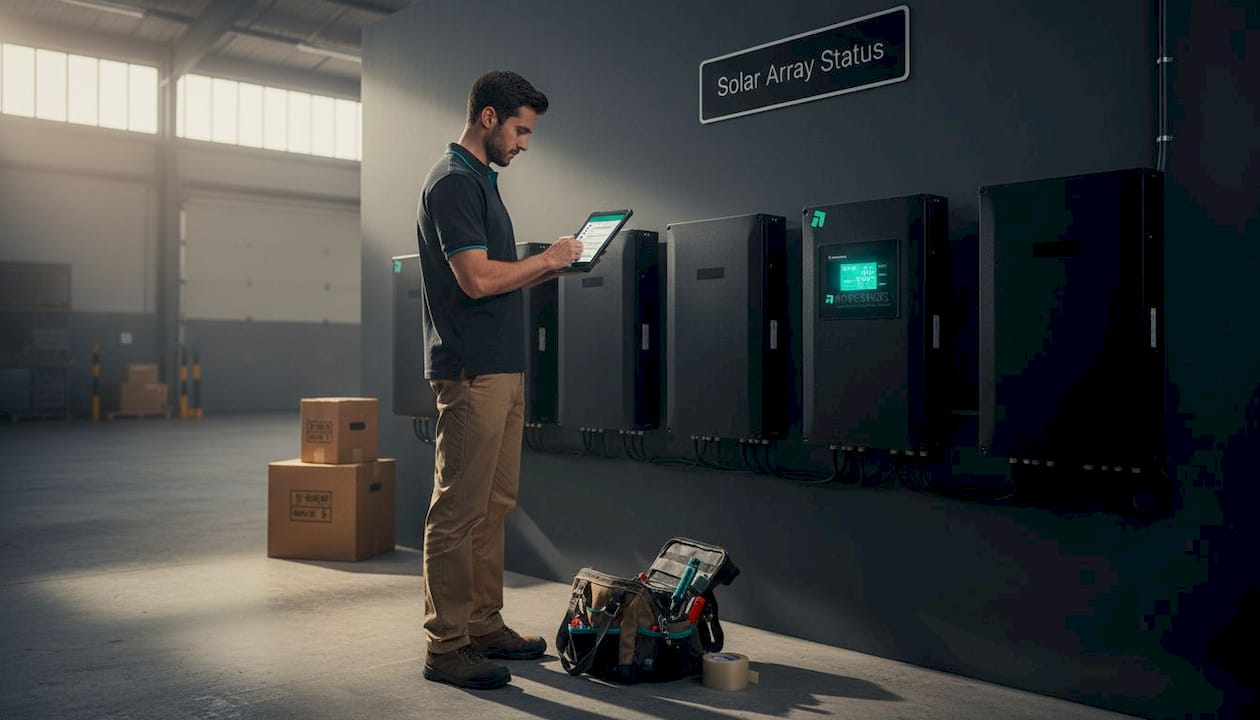
Green warehousing is growing faster than many brands expect. Facilities designed with solar panels, rainwater harvesting, LED lighting, and energy-efficient insulation are no longer niche. They are becoming a competitive standard. The trade-off is real but manageable: green/ESG warehousing carries a 3-5% rental premium compared to conventional facilities, but delivers approximately 40% savings on utility costs over time. For larger brands with multi-year inventory commitments, that math works in your favor.
AI-powered warehouse management systems
AI-driven WMS technology is increasingly available through major 3PLs operating in Africa. These systems manage real-time inventory visibility, predictive restocking, pick-path optimization, and returns automation. The operational impact is significant: AI WMS implementations have been shown to reduce warehousing costs by 30-40% compared to manual or legacy systems. For international brands managing high SKU counts across multiple storefronts, this level of operational control is not a luxury. It is a requirement.
Flexible and on-demand warehousing
Not every brand entering Africa is ready to commit to a full warehouse lease from day one. Flexible warehousing models, where you pay for the space and throughput you actually use, are now available through several providers. This approach works particularly well for brands in a testing phase, seasonal product categories, or those scaling gradually across markets.
| Warehousing model | Upfront commitment | Scalability | Cost structure |
|---|---|---|---|
| Dedicated lease | High | Fixed | Predictable, but inflexible |
| Shared 3PL facility | Low | Moderate | Per-pallet or per-order pricing |
| On-demand warehousing | None | High | Variable, usage-based |
| Hybrid model | Medium | High | Combination of fixed and variable |
Pro Tip: If you are entering Africa for the first time, start with a shared or on-demand facility to test velocity and demand patterns before committing to a dedicated space. You will avoid overpaying for idle space while you build local sales momentum.
“The shift toward AI-enabled, ESG-compliant facilities represents a structural upgrade in African logistics. Brands that align with this direction early will find their supply chains are more resilient and easier to scale.” — MoreShores logistics team
Understanding how warehousing connects to your brand onboarding in Africa process helps you sequence your logistics decisions in the right order. Warehousing should be considered alongside customs setup, compliance registration, and marketplace integration from the start.
Choosing and optimizing warehousing for e-commerce expansion
Making the right warehousing decision requires more than finding available space. It means aligning facility capability, location, technology, and cost with your specific product category, order volume, and growth trajectory.
Legacy low-cost space carries real operational risks: inventory damage, slower pick-and-pack processes, and limited technology integration all translate to higher cost per order and lower customer satisfaction. Grade-A facilities command higher rents but deliver lower losses, faster throughput, and better compliance support. For international brands where product quality and brand reputation are non-negotiable, that trade-off is straightforward.
Here is a step-by-step process for selecting and optimizing your African warehousing setup:
-
Define your distribution geography. Identify which markets you are targeting first and which you plan to expand into within 12 to 24 months. This determines the optimal location for your primary node.
-
Assess your product requirements. Identify whether your products require temperature control, specialized handling, or specific security conditions. This immediately narrows your facility options.
-
Calculate your minimum viable volume. Estimate your expected monthly SKU count, order volume, and inventory turnover. This shapes whether a shared facility, on-demand model, or dedicated lease is the right starting point.
-
Evaluate technology compatibility. Confirm that any provider’s WMS can connect to your Shopify or WooCommerce storefront, or your existing order management system. Disconnected systems create fulfillment errors and reconciliation headaches.
-
Negotiate contract flexibility. Push for milestone-based scaling terms rather than rigid annual commitments. African markets can grow faster than expected, and you want the ability to increase capacity without renegotiating from scratch.
-
Plan for returns. Returns management is often overlooked in initial warehousing setups. Confirm that your provider can receive, inspect, restock, or dispose of returned goods according to your product category requirements.
-
Review compliance support. Verify whether your warehousing partner can assist with local labeling, regulatory inspections, or Importer of Record coordination, particularly for first-time market entrants.
Additional factors to watch:
- Rental cost trends: High occupancy rates across Africa are pushing rents upward, particularly in Nairobi and Johannesburg. Locking in favorable terms now, before vacancy rates drop further, is a practical advantage.
- Early mover positioning: Brands that secure quality warehouse space ahead of peak demand cycles gain a fulfillment speed advantage that is difficult for later entrants to close.
- SME affordability: Green premium facilities may be out of reach for smaller brands initially. Start with quality grade-B or shared grade-A space and migrate as volume grows.
Pro Tip: When negotiating with a 3PL or facility operator, ask specifically about their process for managing stockouts, overflow capacity, and peak season surges. A provider that cannot answer clearly is likely to create operational disruptions at exactly the wrong moment.
Connecting your warehousing setup to a broader e-commerce logistics platform that handles customs, duties, and marketplace listing from a single interface saves significant operational complexity as you scale across multiple African markets.
What most brands miss about warehousing in Africa
Most brands approach African warehousing as a cost line item. They look for the cheapest available space and assume they can upgrade later. That assumption is costly, and here is why.
Africa’s logistics infrastructure is not uniformly underdeveloped. In markets like Kenya, South Africa, and Nigeria, grade-A facilities managed by experienced 3PLs deliver performance that is fully comparable to what international brands expect in Southeast Asia or Eastern Europe. The problem is not the quality of available facilities. It is the speed at which occupancy rates are climbing, which means the best facilities are being absorbed quickly.
When a brand opts for a low-cost, low-spec warehouse to save on initial operating costs, the hidden costs accumulate in ways that rarely appear in a simple comparison. Damaged inventory due to inadequate storage conditions. Fulfillment errors from manual pick-and-pack processes. Customer complaints from delayed or inaccurate orders. And perhaps most critically, a brand reputation that takes damage in a market where you were only just establishing trust.
The brands we see succeed in African markets tend to make one important decision early: they treat logistics infrastructure the same way they treat product quality. They do not compromise on it to save a short-term dollar. They recognize that in a market where consumers are increasingly sophisticated and competition is intensifying, the operational edge that comes from reliable, tech-enabled warehousing is a real competitive advantage.
There is also a timing dimension that matters more than most brands realize. The occupancy crunch is real. Brands that wait 12 to 18 months to sort out their African warehousing strategy may find that the facilities they wanted are no longer available at the terms they assumed. Early decisions in logistics translate directly into better positioning when your African e-commerce solutions start generating sales volume.
Take the next step: Warehousing solutions built for Africa
Navigating African warehousing effectively requires more than market research. It requires a partner with on-the-ground relationships, regulatory knowledge, and the operational infrastructure to connect warehousing to customs clearance, marketplace listing, and customer fulfillment in a single workflow.
MoreShores provides cross-border enablement built specifically for international brands entering African markets. From acting as your Importer of Record to managing inventory across regional facilities and integrating your product listings on platforms like Takealot, Jumia, and Amazon SA, we handle the operational complexity so you can focus on growing your brand. Explore our African e-commerce solutions and fulfillment solutions to see how we can support your expansion from day one.
Frequently asked questions
Why is grade-A warehousing important for e-commerce expansion in Africa?
Grade-A warehousing ensures efficient storage, reduces losses, and supports rapid fulfillment for international brands entering or scaling in Africa, making it a strategic requirement rather than an optional upgrade.
How are supply shortages impacting warehousing decisions?
Occupancy rates reaching 83% across Africa have strained quality space availability, meaning brands that act early can secure better facilities at more favorable terms before scarcity pushes costs higher.
What technologies are transforming warehousing in Africa?
AI-powered WMS platforms and ESG-focused facilities are the two most impactful technology shifts, cutting warehousing costs by up to 40% while improving inventory accuracy and fulfillment speed.
Who are the leading 3PL warehousing providers across Africa?
Imperial Logistics, Bolloré/CEVA, and Africa Logistics Properties are among the most established, covering between 26 and 46 countries with varying facility grades and service capabilities.