
Choosing the right e-commerce marketplace can make or break your cross-border expansion into African markets. With Africa’s e-commerce sector projected to reach unprecedented growth in 2026, brands face a critical decision: which platforms will deliver the best return on investment while navigating complex logistics, regulatory requirements, and diverse customer bases? This article walks you through strategic evaluation criteria, profiles leading marketplaces connecting Africa with global markets, and provides actionable recommendations to help you select platforms that align with your business goals and product categories.
Table of Contents
- Criteria For Selecting An E-Commerce Marketplace For Africa Cross-Border Trade
- Top E-Commerce Marketplaces With Strong African And Global Connectivity In 2026
- Comparing Key Features Of Leading E-Commerce Marketplaces For African Cross-Border Trade
- Situational Recommendations: Choosing The Right Marketplace Based On Your Brand And Product
- Grow Your Cross-Border E-Commerce With Moreshores
Key takeaways
| Point | Details |
|---|---|
| Strategic criteria matter | Evaluate marketplaces based on product fit, regional reach, fee structures, and logistics capabilities before committing resources. |
| Platform diversity exists | Leading marketplaces vary significantly in their African market focus, fulfillment options, and seller support services. |
| Comparison simplifies decisions | Side-by-side feature analysis reveals which platforms best match your brand’s specific cross-border trade objectives. |
| Right choice reduces friction | Selecting aligned marketplaces streamlines expansion efforts and minimizes common cross-border challenges like customs delays. |
Criteria for selecting an e-commerce marketplace for Africa cross-border trade
Before committing to any platform, evaluate six critical dimensions that determine marketplace success for cross-border operations.
Product category alignment stands as your first filter. Each marketplace cultivates specific product strengths, from electronics and fashion to agricultural supplies and industrial equipment. Listing beauty products on a platform dominated by wholesale machinery buyers wastes marketing spend and confuses potential customers. Research each marketplace’s top-performing categories and buyer demographics to ensure your offerings match existing demand patterns.
Market reach and customer demographics directly impact sales potential. Some platforms dominate single countries like Nigeria or South Africa, while others span multiple African nations or connect African sellers with international buyers. Consider where your ideal customers shop and whether the marketplace’s geographic footprint aligns with your expansion strategy. A platform with 10 million users in your target region outperforms one with 50 million users scattered across irrelevant markets.
Fee structures vary dramatically and directly affect your bottom line. Compare listing fees, transaction percentages, payment processing costs, and any subscription requirements. A marketplace charging 15% commission with free listings may cost less than one with 8% commission plus monthly fees, depending on your sales volume. Calculate total costs across realistic sales scenarios before deciding.
Logistics and fulfillment capabilities separate smooth operations from nightmare scenarios. Cross-border e-commerce success depends on matching marketplaces with logistics capabilities and regulatory compliance. Platforms offering integrated warehousing, multi-carrier shipping options, and local fulfillment centers reduce delivery times and costs significantly. Those requiring you to manage all logistics independently add operational complexity that can overwhelm smaller teams.
Compliance with cross-border regulations and customs requirements protects you from legal issues and shipment delays. Marketplaces that handle import documentation, VAT registration, and customs clearance as part of their seller services remove major barriers to international trade. Platforms lacking these features leave you navigating complex regulatory landscapes alone, often resulting in held shipments and frustrated customers.
Integration capabilities with your existing systems enable efficient multichannel management. Look for marketplaces offering API access, inventory synchronization with your e-commerce platform, and automated order processing. Seamless cross-border enablement through technical integration prevents overselling, reduces manual data entry, and allows you to manage multiple marketplaces from a single dashboard.
Pro Tip: Create a weighted scoring matrix with these six criteria, assigning higher weights to factors most critical for your business model. Score each potential marketplace objectively to identify the best fit rather than relying on brand recognition alone.
Top e-commerce marketplaces with strong African and global connectivity in 2026
Five platforms stand out for facilitating trade between African markets and international buyers, each offering distinct advantages for different seller profiles.
Jumia operates as Africa’s largest homegrown e-commerce marketplace, with presence across 11 countries including Nigeria, Kenya, Egypt, and Morocco. The platform specializes in consumer electronics, fashion, home goods, and beauty products, offering localized payment options including cash on delivery that resonates with African consumers. Jumia provides seller training programs and marketing support specifically designed for African market conditions. However, commission rates range from 10% to 20% depending on category, and fulfillment services remain limited in some regions, requiring sellers to manage their own logistics in certain markets.
Amazon’s global infrastructure and brand recognition make it powerful for African sellers targeting international buyers and diaspora communities. MoreShores provides marketplace integration services that help brands sell into or from Africa effectively. The platform offers Fulfillment by Amazon (FBA) services that handle storage, packing, and shipping, plus access to Amazon Prime’s massive customer base. Challenges include strict seller requirements, competitive fee structures averaging 15% plus fulfillment costs, and complex international shipping logistics for African-based sellers without established import/export infrastructure.

Konga dominates Nigeria’s e-commerce landscape with simplified seller onboarding and strong local market knowledge. The platform focuses on electronics, appliances, and consumer goods, offering KongaPay for secure transactions and Konga Express for logistics. Seller fees remain competitive at 8% to 15%, and the platform provides dedicated account management for larger sellers. Geographic limitations restrict Konga primarily to Nigerian markets, and international shipping capabilities lag behind global competitors.
Takealot leads South Africa’s online retail sector with sophisticated logistics networks and growing cross-border capabilities. The platform excels in electronics, books, media, and lifestyle products, offering TFG (The Foschini Group) backing that ensures financial stability. Takealot’s fulfillment services include warehousing and delivery across South Africa, with expanding reach into neighboring countries. Commission rates typically fall between 10% and 18%, but strict quality standards and approval processes can challenge new sellers entering the platform.
Alibaba enables bulk B2B transactions connecting international suppliers with African buyers seeking wholesale quantities. The platform specializes in manufacturing, industrial equipment, and bulk consumer goods with competitive pricing structures favoring large orders. Alibaba offers trade assurance programs, verified supplier badges, and extensive product catalogs across virtually every category. Challenges include minimum order quantities that exclude small retailers, complex import logistics requiring customs expertise, and quality verification difficulties when sourcing from unfamiliar suppliers. Consider e-commerce solutions from MoreShores to navigate these complexities effectively.
Comparing key features of leading e-commerce marketplaces for African cross-border trade
Understanding how these platforms stack up across critical dimensions helps you make informed selection decisions.
| Marketplace | Primary Market Focus | Commission Range | Fulfillment Options | Product Categories | Cross-Border Strength |
|---|---|---|---|---|---|
| Jumia | 11 African countries | 10% to 20% | Limited integrated, mostly self-fulfillment | Consumer electronics, fashion, home goods | Strong intra-Africa, limited outbound |
| Amazon | Global with African seller access | 15% plus FBA fees | Comprehensive FBA network | All categories | Excellent for African sellers reaching global buyers |
| Konga | Nigeria focused | 8% to 15% | Konga Express available | Electronics, appliances, consumer goods | Limited, primarily domestic Nigerian |
| Takealot | South Africa, expanding regionally | 10% to 18% | Integrated warehousing and delivery | Electronics, books, lifestyle | Growing Southern Africa reach |
| Alibaba | Global B2B wholesale | Varies by transaction | Seller managed, logistics partners available | Manufacturing, industrial, bulk goods | Strong for imports into Africa |
Fulfillment and logistics integration reduces shipping times and improves customer satisfaction in African cross-border e-commerce. This comparison reveals that no single marketplace dominates every dimension. Jumia offers the broadest African footprint but charges higher commissions and provides limited fulfillment support. Amazon delivers unmatched global reach and logistics infrastructure but imposes strict requirements and higher costs. Konga and Takealot excel in their home markets with competitive fees but lack extensive cross-border capabilities. Alibaba serves B2B needs effectively but requires sellers to manage complex import logistics independently.
Fee structures deserve careful analysis beyond headline commission rates. Factor in payment processing fees, currency conversion costs, advertising expenses to gain visibility, and any monthly subscription requirements. A marketplace advertising 8% commission may actually cost 12% to 15% after accounting for these additional charges. Request detailed fee schedules and calculate total costs based on your projected sales volume and average order value.
Fulfillment capabilities directly impact customer satisfaction and operational efficiency. Platforms offering integrated warehousing allow you to ship inventory in bulk to their facilities, then fulfill individual orders automatically as they arrive. This model reduces per-unit shipping costs and delivery times compared to shipping each order individually from your location. Evaluate each marketplace’s fulfillment coverage in your target regions and compare costs against managing logistics yourself or partnering with third-party providers offering fulfillment and logistics services.
Pro Tip: Test multiple marketplaces simultaneously with a limited product selection before committing your full catalog. This approach provides real-world data on conversion rates, customer service requirements, and actual costs that inform your long-term marketplace strategy.
Situational recommendations: choosing the right marketplace based on your brand and product
Your specific business profile should drive marketplace selection rather than following generic best practices that ignore your unique circumstances.
For startups and small brands entering African markets for the first time, prioritize marketplaces with low entry barriers and localized payment options. Jumia and Konga fit this profile well, offering accessible onboarding processes, acceptance of local payment methods including mobile money and cash on delivery, and lower initial investment requirements. These platforms understand African market dynamics and provide seller support tailored to common challenges faced by new entrants. Start with one marketplace, establish operational processes, then expand to additional platforms as you gain experience and resources.
Established brands with existing international operations should leverage marketplaces offering strong logistics partnerships and global reach. Amazon provides the infrastructure to scale quickly across multiple markets while maintaining consistent customer experience through FBA services. The platform’s brand recognition and Prime membership base deliver immediate credibility and access to high-intent buyers. Different e-commerce marketplace models (B2B vs B2C) cater to varying seller goals and customer bases in Africa. Investment in Amazon’s requirements and fees pays dividends through volume and reduced operational complexity.
B2B sellers targeting wholesale buyers and bulk orders benefit most from Alibaba’s specialized infrastructure and buyer base. The platform connects you with verified business buyers seeking consistent supply relationships rather than one-time consumer purchases. Focus on competitive pricing for volume orders, detailed product specifications, and building supplier ratings through successful transactions. Complement Alibaba presence with direct outreach to potential buyers identified through the platform to establish long-term partnerships beyond marketplace transactions.
Consider these product-specific recommendations when evaluating marketplace fit:
- Consumer electronics and accessories perform well on Jumia and Takealot due to established buyer trust in these categories and platform investments in quality control.
- Fashion and beauty products suit Jumia’s strength in these segments and its marketing capabilities targeting style-conscious African consumers.
- Industrial equipment and bulk supplies align with Alibaba’s B2B focus and buyer expectations for wholesale transactions.
- Books, media, and lifestyle products match Takealot’s core competencies and loyal South African customer base.
- General merchandise with broad appeal works across multiple platforms, making multichannel strategies particularly effective.
Fee structures matter more for low-margin products than premium offerings. If your products carry thin profit margins, even small commission differences significantly impact profitability. Calculate break-even sales volumes for each marketplace and prioritize platforms where you can achieve profitability at realistic sales levels. Premium products with healthy margins can absorb higher marketplace fees in exchange for better logistics, brand positioning, or customer reach.
Leverage marketplace integration platforms and services to manage multichannel selling efficiently. Manually updating inventory, processing orders, and tracking performance across multiple marketplaces quickly becomes unsustainable as you scale. E-commerce solutions that synchronize inventory, automate order routing, and consolidate reporting across platforms reduce errors and free your team to focus on growth rather than administrative tasks. Consider partnering with MoreShores for integrated marketplace management that scales with your business.
Grow your cross-border e-commerce with MoreShores
Navigating multiple marketplaces, managing cross-border logistics, and ensuring regulatory compliance demands expertise and infrastructure that most brands lack internally. MoreShores specializes in enabling seamless African and international e-commerce growth through comprehensive services designed for cross-border sellers.
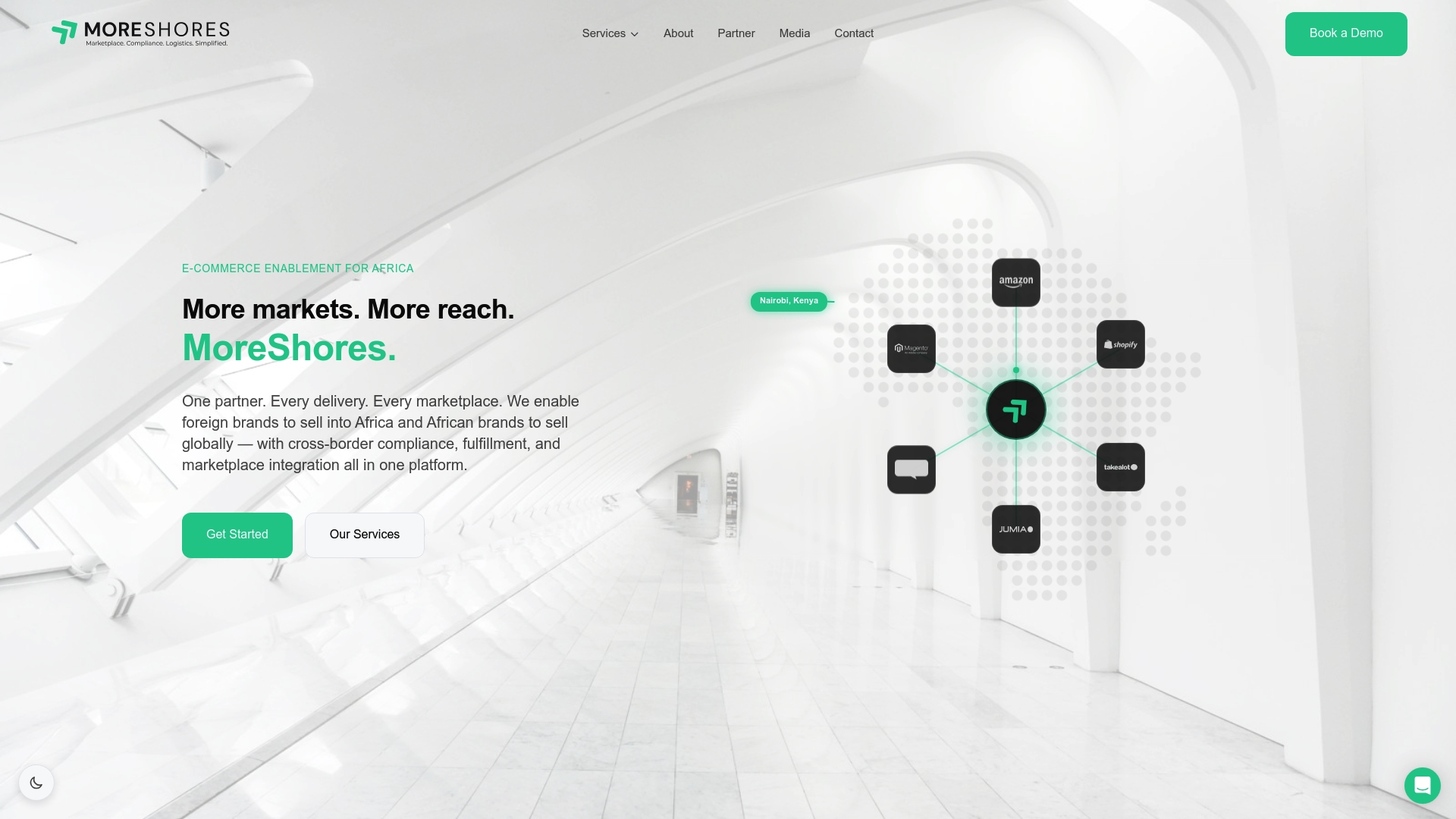
Our cross-border enablement services handle customs clearance, duties, VAT registration, and regulatory compliance so you can focus on selling rather than paperwork. We act as your Importer of Record, removing legal barriers that prevent many brands from entering new markets. Combined with marketplace integration across Jumia, Amazon, Takealot, and other leading platforms, we streamline your multichannel operations through unified inventory management and automated order processing. Whether you’re an African brand expanding globally or an international seller entering African markets, explore our partnership opportunities to accelerate your cross-border commerce success with proven infrastructure and local expertise.
What is an e-commerce marketplace?
What is an e-commerce marketplace?
E-commerce marketplaces are online platforms where multiple independent sellers list and sell products to buyers through a shared digital storefront. Unlike traditional retail websites operated by single brands, marketplaces aggregate offerings from numerous sellers, providing buyers with extensive product selection and competitive pricing. Marketplaces handle payment processing, provide seller tools for inventory management and order fulfillment, and often offer dispute resolution services that build buyer confidence.
How can African brands benefit from using e-commerce marketplaces?
Marketplaces provide African brands with immediate access to established customer bases across multiple countries without requiring massive marketing investments to build brand awareness independently. Platforms like Jumia and Amazon handle payment processing, including international transactions and currency conversion, removing technical barriers that challenge smaller sellers. Integrated logistics and fulfillment services reduce the operational complexity of managing cross-border shipping, customs clearance, and last-mile delivery that typically require significant infrastructure investment.
What are key challenges when selling cross-border on e-commerce marketplaces?
Customs regulations, import duties, and VAT requirements vary significantly across countries, creating compliance complexity that can result in delayed shipments, unexpected costs, and legal penalties if handled incorrectly. Logistics challenges including long shipping times, high international shipping costs, and lack of local fulfillment options increase delivery times and reduce customer satisfaction. Currency fluctuations, payment processing fees for international transactions, and marketplace commission structures can erode profit margins if not carefully calculated into pricing strategies.
Can MoreShores help with logistics and marketplace integration for African e-commerce sellers?
MoreShores provides end-to-end fulfillment solutions including warehousing, inventory management, and multi-carrier shipping networks that reduce delivery times and costs for African cross-border sellers. Our marketplace integration services connect your inventory across Jumia, Amazon, Takealot, and other platforms, automatically synchronizing stock levels and routing orders to appropriate fulfillment locations. We handle customs clearance, regulatory compliance, and act as Importer of Record, removing legal and logistical barriers that prevent many brands from scaling internationally. Explore our fulfillment and logistics services to streamline your cross-border operations.