
Entering the South African consumer market can feel overwhelming if you do not know where to start. The country is shaped by complex consumer segments, shifting economic conditions, and unique regulatory hurdles. It is easy to miss critical steps or waste resources without the right approach. The good news is that you can reduce your risk and make smarter decisions by following specific actions tailored to South Africa’s market realities. You will discover how to assess demand, choose the smartest entry mode, handle customs compliance, and build local partnerships—all backed by current research on consumer behavior, regulation, and retail trends. Get ready for actionable steps that will empower you to launch your brand successfully and avoid the costly pitfalls that trip up new entrants.
Table of Contents
- 1. Assess Market Demand And Consumer Trends
- 2. Choose The Right Entry Mode For Your Brand
- 3. Navigate Customs, Duties, And Regulatory Compliance
- 4. Set Up Local Warehousing And Distribution Channels
- 5. Optimize Marketplace Integration And Product Listings
- 6. Build Partnerships For Sustainable Market Growth
Quick Summary
| Takeaway | Explanation |
|---|---|
| 1. Understand South African Market Demand | Analyze consumer behavior and preferences before entering the market. Focus on income, digital adoption, and specific demand patterns across demographics. |
| 2. Select an Effective Market Entry Mode | Choose between direct distribution, local partnerships, or marketplace selling to optimize control and reduce risk based on your product type and goal. |
| 3. Ensure Compliance with Customs and Regulatory Standards | Correctly classify products and prepare documentation to avoid costly penalties and delays in clearing South African customs. |
| 4. Establish Local Warehousing for Efficiency | Setting up warehouses in Johannesburg or Cape Town enables faster delivery and better inventory management to meet customer demand. |
| 5. Optimize Your Product Listings for Marketplaces | Tailor listings with relevant keywords, high-quality images, and detailed descriptions to improve visibility and conversion rates on each platform. |
1. Assess Market Demand and Consumer Trends
Understanding what South African consumers actually want is the foundation of any successful market entry. Before you invest in inventory, logistics, or marketing, you need real data about demand patterns, purchasing power, and consumer behavior in your specific product categories.
South Africa’s consumer market is not monolithic. The country has a young population with a shrinking middle class and significant income inequality, meaning demand varies dramatically across different demographic and socio-economic segments. This complexity requires careful analysis rather than assumptions.
Why Consumer Segmentation Matters
Eighty20’s segmentation analysis reveals that South African consumers fall into distinct groups based on income, education, digital adoption, and purchasing behaviors. What appeals to urban professionals in Johannesburg differs completely from what resonates with consumers in smaller towns or rural areas.
You need to identify which segments match your product offering and have the disposable income to buy it. Here’s what to analyze:
- Income levels and disposable income by region and demographic group
- Digital adoption rates and online shopping preferences
- Category-specific demand for your product type
- Seasonal purchasing patterns and spending triggers
- Price sensitivity across different consumer segments
The South African consumer market shows modest growth projected through 2027, but this growth masks significant variations in spending power across different population segments.
The Bureau of Market Research Consumer Market Outlook shows that household debt and rising living costs constrain consumer spending despite wage increases. This means your target customers may have less purchasing power than you assume. However, specific retail sectors like textiles and household goods are positioned for recovery.
Pay attention to retail catalysts too. Events like Black Friday have become essential revenue drivers in South Africa, driving significant volume spikes that you need to anticipate in your inventory planning.
Practical Steps to Assess Demand
Start by researching your specific product category rather than treating the market as one entity. Look at current competitors, pricing points, and customer reviews to understand what’s working and what gaps exist.
Engage with local retailers and online marketplaces where your products would sell. They have real transaction data and can tell you which brands and price points are gaining traction. Check marketplace listings on platforms like Takealot and Jumia to see what’s already available and how products are performing.
Conduct basic surveys or interviews with potential customers in your target segments. Even a small group of conversations reveals purchasing motivations, pain points, and price expectations that generic market reports don’t capture.
Track local media consumption and digital platforms where your audience spends time. Social media, forums, and review sites show what consumers are talking about, what problems they face, and what solutions they’re seeking.
Pro tip: Start your assessment by focusing on one specific product category and one geographic region or consumer segment before scaling to the broader market, allowing you to validate demand with lower risk and gather actionable insights faster.
2. Choose the Right Entry Mode for Your Brand
Your entry mode is the structural approach you use to bring your brand into South Africa. This decision shapes everything from your operational complexity to your capital requirements, timeline, and risk exposure. Getting it right accelerates your success. Getting it wrong creates costly obstacles.
You have several distinct pathways available, each with different advantages and trade-offs. The right choice depends on your capital availability, risk tolerance, product category, and long-term vision for the South African market.
Understanding Your Entry Mode Options
Direct distribution is when you establish your own presence and handle sales, logistics, and customer relationships yourself. This gives you maximum control and direct customer relationships, but requires significant upfront investment and operational expertise. You’ll need warehousing, local staff, compliance knowledge, and marketing resources.
Partnership with local distributors means working with established players who already have market access, warehouse infrastructure, and customer relationships. You share revenue, but reduce your operational burden and capital investment. Your distributor handles logistics and fulfillment while you focus on product quality and brand positioning.
Marketplace selling is the fastest, lowest-cost entry point. You list your products on platforms like Takealot, Jumia, or Amazon South Africa and they handle customer transactions, payments, and fulfillment. You pay commissions, but minimal upfront investment is required.
Marketplace platforms offer speed to market and minimal risk, but you compete on price and visibility. Local partnerships balance control with operational efficiency. Direct distribution offers maximum control but demands the most resources.
Strategic joint ventures or government partnerships represent another option for certain product categories. These work best when your products align with South African development priorities or when you’re targeting public sector procurement opportunities where understanding local government procurement processes can provide strategic advantages.
Your entry mode is not permanent. Many successful brands start with marketplace sales to test demand, then transition to partnerships or direct distribution as they scale.
Consider a blended approach. Many international brands enter through marketplaces first, validate demand with minimal risk, then add direct marketplace accounts or partner channels as sales grow. This staged approach lets you learn before committing major capital.
Key Trade-offs to Evaluate
- Speed to market versus control of customer experience
- Capital investment versus revenue per sale
- Operational complexity versus direct market access
- Risk exposure versus growth potential
- Brand visibility versus commission costs
Your product category matters significantly. Consumables with high repeat purchase rates work well through partnerships and marketplaces. Premium or specialty items might demand direct distribution where you control the brand narrative. Fast-moving goods benefit from partnership networks that already have established supply chains.
Pro tip: Start with marketplace sales to validate demand and gather customer feedback, then use that data to negotiate better terms with distributors or justify the investment in your own cross-border operations infrastructure.
3. Navigate Customs, Duties, and Regulatory Compliance
Customs, duties, and regulatory compliance are the gatekeepers between your warehouse and South African customers. Mishandling this area costs you money through penalties, delays your shipments by weeks, or blocks your products entirely. Getting it right means your products clear customs smoothly and reach customers on schedule.
South Africa has a sophisticated customs system governed by the South African Revenue Service (SARS). Understanding tariff classifications, duty rates, VAT requirements, and prohibited goods is non-negotiable for any importer.
The Core Compliance Requirements
Every shipment into South Africa requires accurate classification using the Harmonized System (HS) tariff codes. These six to ten-digit codes determine your duty rate, VAT obligation, and whether your product faces any restrictions. Get the classification wrong and you pay incorrect duties or face clearance delays.
Tariff codes and duty rates are published by SARS, but they vary by product origin, composition, and intended use. A smartphone charger might be classified differently than a power adapter depending on specifications. Misclassification is expensive.
VAT adds another layer. South Africa applies 15% VAT on most imported goods, calculated on the landed cost (product price plus freight plus duties). You cannot pass through customs without determining your VAT liability upfront.
Certain product categories face additional restrictions. Textiles, electrical goods, and chemicals often require compliance certifications or standards approval. Some items are prohibited entirely. Check restrictions early before committing to inventory purchases.
Customs compliance is not just about following rules. It’s about protecting your cash flow and delivery timelines from costly delays and penalties.
What You Must Prepare
You need proper documentation for every shipment. This includes commercial invoices, packing lists, bills of lading, and product origin certificates. SARS conducts random audits and can request detailed documentation months after clearance.
Your documentation must match your actual shipment. Discrepancies between declared values, quantities, or descriptions trigger inspections that delay deliveries. Keep meticulous records of all transactions.
Consider whether you need an Importer of Record (IOR) designation. As a foreign company, SARS may require a local entity or agent to hold import responsibility. This person or company assumes legal liability for compliance and duty payment.
Key compliance checkpoints include:
- Correct HS tariff classification for your products
- Accurate commercial invoices with real transaction values
- Origin documentation proving where products are manufactured
- Compliance certifications for regulated categories
- VAT registration and payment setup
- Customs broker engagement for shipment clearance
The Practical Path Forward
You have two main options. Hire a customs broker with SARS experience to handle clearance. They know the system, have SARS relationships, and can navigate inspections efficiently. This costs money but reduces your risk of costly mistakes.
Alternatively, develop internal expertise. This requires training your team on customs compliance requirements and regulations or hiring someone with customs experience. This is more cost-effective long-term but demands upfront investment.
Most successful importers use a hybrid approach, combining broker expertise for complex shipments with internal knowledge for routine compliance tasks.
Pro tip: Classify and document your products correctly before your first shipment arrives in South Africa, not after, so you avoid delays while customs reviews your paperwork.
4. Set Up Local Warehousing and Distribution Channels
Local warehousing is not a luxury. It’s a competitive necessity in South Africa. Without it, you face port congestion delays, customs clearance bottlenecks, and slow delivery times that frustrate customers and damage your reputation.
Warehousing creates the physical infrastructure that transforms your business from importer to local operator. It’s where inventory sits ready to ship, where you manage fulfillment, and where you address customer returns and quality issues. Location and capability determine whether you succeed or struggle.
Why Location Matters Intensely
South Africa’s distribution hubs concentrate around Johannesburg and Cape Town. These cities have established warehouse networks, port access (Cape Town), air cargo facilities, and strong logistics infrastructure. Setting up outside these hubs means slower delivery times, higher transportation costs, and less reliable service.
Johannesburg dominates inland distribution. Most consumer goods flow through Johannesburg to reach the broader Southern African market. Cape Town serves Western Cape consumers and provides direct port access, reducing customs clearance times.
Choosing between these two depends on your target markets. If you’re focusing on Johannesburg and surrounding provinces, locate there. If you’re shipping to Cape Town or smaller coastal cities, Cape Town makes sense. Many brands use both locations for comprehensive coverage.
The South African distribution landscape shows that wholesalers, retail organizations, and distribution agents operate primarily from these economic hubs, making location selection critical for efficient market penetration.
Strategic warehousing reduces supply chain delays, lowers inventory holding costs, and enables you to respond faster to customer demand.
Warehouse Selection and Technology
You need more than just physical space. Modern warehousing in South Africa requires technology integration for inventory management, order tracking, and compliance documentation.
Look for warehouses offering these capabilities:
- Real-time inventory management systems
- Integration with e-commerce platforms and marketplaces
- Compliance documentation and VAT record-keeping
- Multi-courier fulfillment networks
- Temperature control for sensitive products
- Security and insurance coverage
Technology-enabled warehouses help you manage just-in-time inventory, reducing excess stock while ensuring products are available when customers order. This is critical given South Africa’s economic conditions where capital tied up in excess inventory hurts your cash flow.
Distribution Channel Strategy
Your warehouse feeds into distribution channels. These might include direct-to-consumer fulfillment, marketplace fulfillment (Takealot, Jumia, Amazon SA), wholesale relationships, or retail partnerships.
Each channel has different requirements. Marketplace fulfillment demands speed and accuracy. Wholesale relationships need bulk handling and reliable delivery windows. Retail partnerships may require point-of-sale support and merchandising materials.
Consider whether you’ll manage distribution yourself or partner with established logistics providers. Many international brands use fulfillment and logistics partners who operate multiple warehouses and courier networks, reducing your operational complexity.
Pro tip: Start with one warehouse location in Johannesburg or Cape Town based on your primary target market, then add a second location only after you’ve proven demand and optimized your operations, avoiding overcommitment to fixed costs.
5. Optimize Marketplace Integration and Product Listings
Your product listing is often the first impression South African customers have of your brand. A poorly optimized listing disappears in search results. A well-optimized one converts browsers into buyers and builds your sales momentum.
Marketplace algorithms rank products based on relevance, sales velocity, and customer satisfaction. You need to understand how each platform works and tailor your listings accordingly. One-size-fits-all listings waste your potential.
Understanding Marketplace Algorithm Basics
Takealot, Jumia, Amazon South Africa, and other platforms use algorithms to determine search visibility. These algorithms consider product titles, descriptions, keywords, images, pricing, and customer reviews. Optimize these elements and your visibility increases dramatically.
Keywords matter intensely. South African customers search using specific terms. If your product title and description don’t match those search terms, customers never find you. Research what your target customers actually type into search boxes.
Take textiles as an example. A customer might search “cotton bedding set king size” but your title says “luxury bedding collection.” That mismatch costs you sales. Reverse engineer customer language by studying competitor listings and marketplace search suggestions.
Images drive conversions. Customers buy based on what they see. High-quality product photography showing your item from multiple angles, in realistic settings, and clearly displaying dimensions or scale outperforms generic stock photos.
Strong product listings convert better because customers understand exactly what they’re buying before clicking purchase.
Crafting Optimized Listings
Your product title is your first ranking factor. Include your primary keyword, your brand name, and the most important product attribute. “Premium Egyptian Cotton Queen Bedsheet Set by [Brand]” outperforms “Bedsheet Set.”
Descriptions should answer customer questions before they ask them. Include dimensions, materials, care instructions, and usage scenarios. Detailed descriptions reduce returns and increase customer satisfaction, which signals the algorithm that your product deserves higher rankings.
Pricing strategy influences visibility. Platforms often favor competitively priced items, especially when you’re new. You don’t need the lowest price, but pricing significantly above competitors without clear differentiation hurts visibility.
Key listing elements to optimize:
- Product title with primary keyword and brand name
- High-quality images from multiple angles
- Detailed description answering common questions
- Accurate product specifications and dimensions
- Competitive pricing relative to comparable products
- Clear usage instructions or care guidelines
- Customer review management and responses
Platform-Specific Optimization
Each South African marketplace has slightly different requirements and algorithms. Takealot emphasizes speed and reliability. Jumia values promotional activity and pricing competitiveness. Amazon South Africa rewards detailed product information and customer reviews.
Understanding these nuances helps you tailor listings to each platform’s strengths. However, consistent product information across all platforms builds brand recognition and customer trust.
Consider using marketplace integration solutions that synchronize your product data across multiple platforms, ensuring consistency while saving time on manual updates.
Monitor performance metrics on each platform. Track which products generate the most views, which have the highest conversion rates, and which receive the most returns. Use this data to continuously refine your listings.
Pro tip: Launch with a single flagship product optimized perfectly on one marketplace, gather customer reviews and sales data, then replicate that success across additional platforms and products using the same optimization framework.
6. Build Partnerships for Sustainable Market Growth
You cannot build a sustainable business in South Africa alone. The market is too complex, the logistics too demanding, and the competitive landscape too intense. Partnerships transform your capabilities and accelerate your growth in ways that solo operations cannot achieve.
Strategic partnerships give you access to local expertise, established distribution networks, customer relationships, and operational infrastructure you would take years to build independently. They reduce your risk while expanding your reach.
Why Partnerships Matter in South Africa
South Africa’s business environment rewards collaboration. The government actively supports cross-sector partnerships to drive economic growth and innovation, recognizing that coordinated efforts leveraging each partner’s strengths achieve better outcomes than isolated efforts.
Local partners understand regulatory nuances, consumer preferences, and operational challenges that outsiders miss. They have relationships with suppliers, retailers, and logistics providers. They know which wholesalers will stock your products and which retail channels actually move inventory.
International partnerships matter too. Collaborating with global brands, logistics networks, or technology platforms brings capital, expertise, and market access. These partnerships help you navigate currency fluctuations, manage cross-border complexity, and scale operations.
Partnership types vary widely. You might partner with distributors who handle your entire supply chain. You might collaborate with retailers who stock your products. You might work with logistics providers who manage warehousing and fulfillment. You might even partner with complementary brands to co-market or bundle products.
Sustainable growth comes from partnerships where both parties benefit and can measure success together.
Identifying Partnership Opportunities
Start by mapping your value chain. Where do you need capabilities? Where are your weaknesses? Partnership opportunities exist wherever you lack internal capacity or expertise.
Look for partners with complementary strengths, not competitors. A textile exporter benefits from partnering with a logistics provider, not another textile company. A consumer goods brand partners with retailers or e-commerce platforms, not similar brands.
Evaluate potential partners carefully:
- Do they serve your target market segment?
- Do they have established customer relationships?
- Do their values and quality standards align with yours?
- Can they handle your volume without strain?
- Are they financially stable?
- Will they commit to supporting your growth?
Building and Maintaining Partnerships
Start partnerships with clear agreements. Define roles, responsibilities, revenue sharing, and performance metrics. Ambiguity creates conflict. Clarity creates alignment.
Communicate regularly. Monthly check-ins prevent small issues from becoming major problems. Share sales data, market feedback, and inventory information so partners can make informed decisions.
Invest in your partners’ success. Provide marketing support, training, or co-op advertising funds. Partners who feel supported perform better and stay longer. This is especially important when building relationships with e-commerce and fulfillment partners who directly impact your customer experience.
Measure results continuously. Track sales, customer satisfaction, and fulfillment quality. Celebrate wins together. Address underperformance quickly and collaboratively.
Know when to evolve partnerships. As your business grows, your partnership needs may change. A distributor who served you well at 1,000 units monthly might struggle at 10,000 units. Plan for these transitions proactively.
Pro tip: Start with one strategic partnership focused on a specific function like fulfillment or distribution, prove the model works, then expand to additional partnerships once you understand how to manage collaborative relationships effectively.
Below is a comprehensive table summarizing the key considerations, strategies, and action points discussed throughout the article.
Unlock Seamless Success Entering the South African Market
Navigating the complexities of South Africa’s market demands sharp expertise in customs compliance, warehousing, and marketplace integration. This article highlights critical challenges brands face such as tariff classifications, distribution channel optimization, and effective marketplace listings. MoreShores offers tailored solutions that address these exact pain points by acting as your trusted Importer of Record to manage duties and VAT, providing state-of-the-art warehousing and fulfillment via a multi-courier network, and streamlining product listings across Takealot, Jumia, Amazon SA, and more.
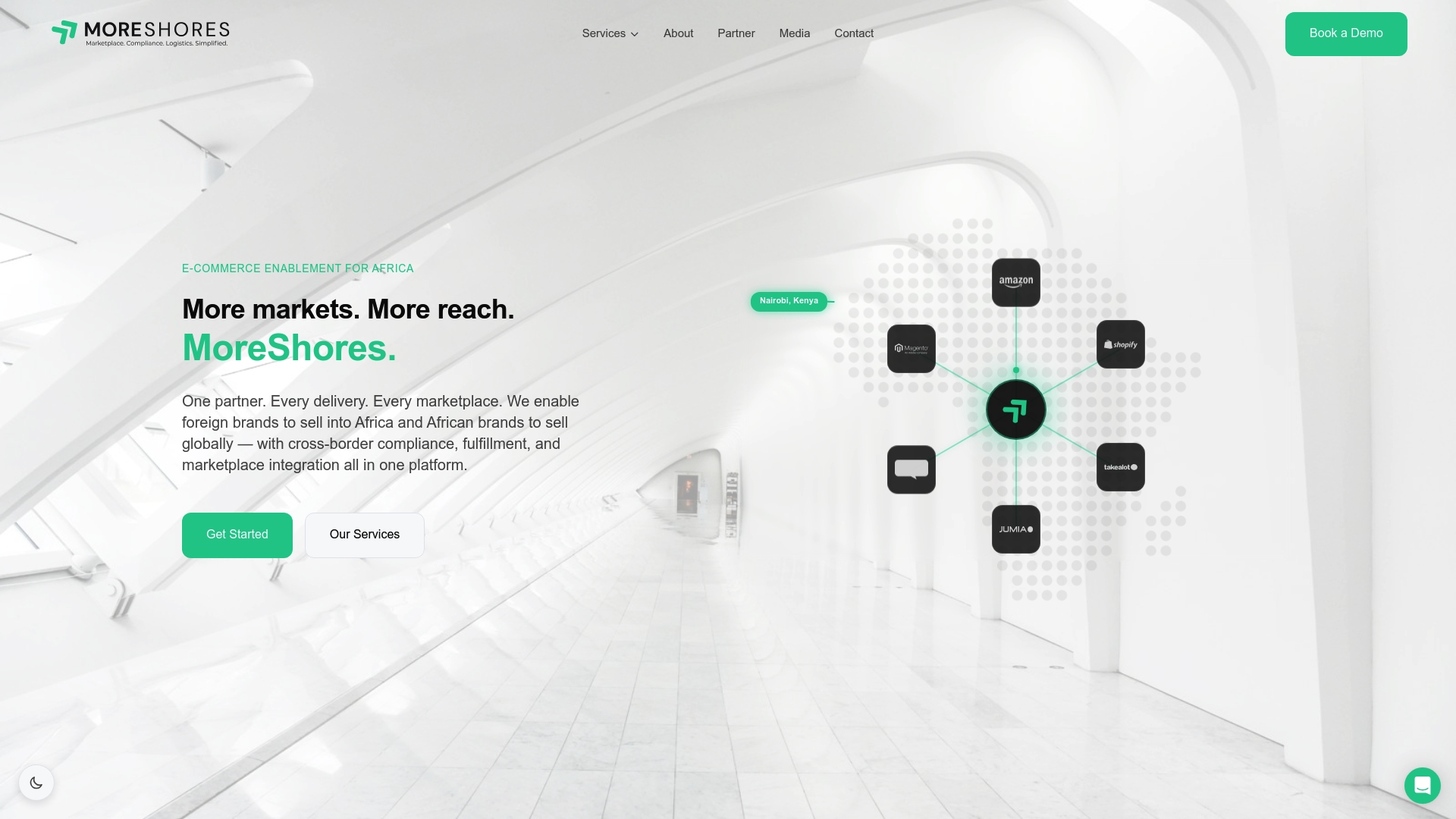
Take control of your market entry with MoreShores and transform uncertainty into opportunity. Visit MoreShores today to simplify your cross-border trade logistics and tap into South Africa’s thriving e-commerce environment. Let us help you reduce risk, cut costs, and scale faster with integrated solutions designed specifically for brands targeting African markets.
Frequently Asked Questions
What are the main consumer trends to consider for market entry into South Africa?
Understanding consumer trends in South Africa is critical for successful market entry. Analyze income levels, digital adoption, and seasonal spending patterns to identify what products resonate with different demographic segments. Focus on gathering data about purchasing behavior within specific regions to better tailor your offerings.
How can I effectively choose an entry mode for my brand in South Africa?
Selecting the right entry mode depends on your resources and goals. Consider options such as direct distribution, partnerships with local distributors, or marketplace selling. Evaluate the associated capital, control, and operational complexity for each to determine which aligns with your long-term objectives.
What customs and regulatory compliance steps are necessary for importing goods into South Africa?
To import goods into South Africa, ensure accurate tariff classification and compliance with VAT regulations. Correct documentation is essential for smooth customs clearance and avoiding penalties, so prepare commercial invoices, packing lists, and origin certificates ahead of time. Start classifying your products before placing your first order to avoid delays.
How should I set up local warehousing for my business in South Africa?
Establishing local warehousing is essential to manage logistics effectively. Choose a location near major distribution hubs, like Johannesburg or Cape Town, to minimize delivery times and costs. Implement technology solutions for inventory management to streamline operations and enhance customer satisfaction.
What strategies can I use to optimize my product listings on South African marketplaces?
To create effective product listings, focus on clear titles, high-quality images, and detailed descriptions that match customer search terms. Optimize your content for the specific algorithms of each marketplace to improve visibility and conversion rates. Regularly monitor performance metrics and adjust your listings based on customer feedback and competitive analysis.