Why Independent Warehousing Beats Marketplace DCs for Cross-Border Sellers
Marketplace fulfilment centres are convenient — until they're not. For brands selling across multiple channels in South Africa, independent warehousing unlocks savings, flexibility, and control that marketplace DCs simply can't offer.
The default advice for new marketplace sellers is simple: send everything to the marketplace's distribution centre and let them handle it. For single-channel sellers with a handful of fast-moving SKUs, that works. For everyone else — especially cross-border brands selling on multiple platforms — it's an expensive trap. Here's why.
The Marketplace DC Model: Convenient, But Costly
Both Takealot and Amazon SA offer fulfilment services where they store your inventory in their distribution centres, pick and pack orders, and handle delivery to the end customer. The appeal is obvious: you ship stock in, they handle everything else. But this convenience comes with structural costs and limitations that compound as your business grows.
Storage Fees Add Up Fast
Marketplace DCs charge daily or monthly storage fees based on the volume your inventory occupies. For fast-selling products, these fees are manageable — your stock turns over quickly enough that storage costs remain a small percentage of revenue. But for products with longer sales cycles, seasonal items, or slower-moving SKUs in a large catalogue, storage fees become a significant margin drag. Takealot and Amazon both penalise slow-moving inventory with escalating fees, and during peak seasons, storage rates can spike considerably.
You're Locked Into a Single Channel
Stock sitting in Takealot's fulfilment centre can only serve Takealot orders. Stock in Amazon's FBA warehouse can only serve Amazon orders. If you're selling on both marketplaces — which you should be — this means duplicating your inventory investment. Two separate stock pools, each sized for that platform's demand, tying up significantly more working capital than a single unified inventory would require.
It gets worse. If demand shifts — say Amazon SA starts outperforming Takealot on a particular SKU — you can't simply redirect inventory. You'd need to recall stock from one fulfilment centre and inbound it to another, a process that takes days to weeks and costs money in shipping, handling, and lost sales during the transition.
Inbound Compliance Is Strict and Unforgiving
Marketplace DCs have exacting inbound requirements: specific carton dimensions, barcode placement, labelling standards, and booking slot windows. Non-compliant shipments get rejected — meaning your stock sits on a truck or at a staging warehouse while you fix the issue, rebook a slot, and reship. Every rejection costs time and money, and delays your products reaching customers.
No B2B or Off-Platform Sales
What happens when a retailer wants to buy 500 units wholesale? Or a corporate client wants a bulk order? Stock locked in a marketplace DC can't serve these opportunities without a formal withdrawal process — which is slow, expensive, and sometimes not even available. You're leaving revenue on the table because your inventory is physically inaccessible for anything other than marketplace orders.
The Independent Warehousing Model: One Stock Pool, Every Channel
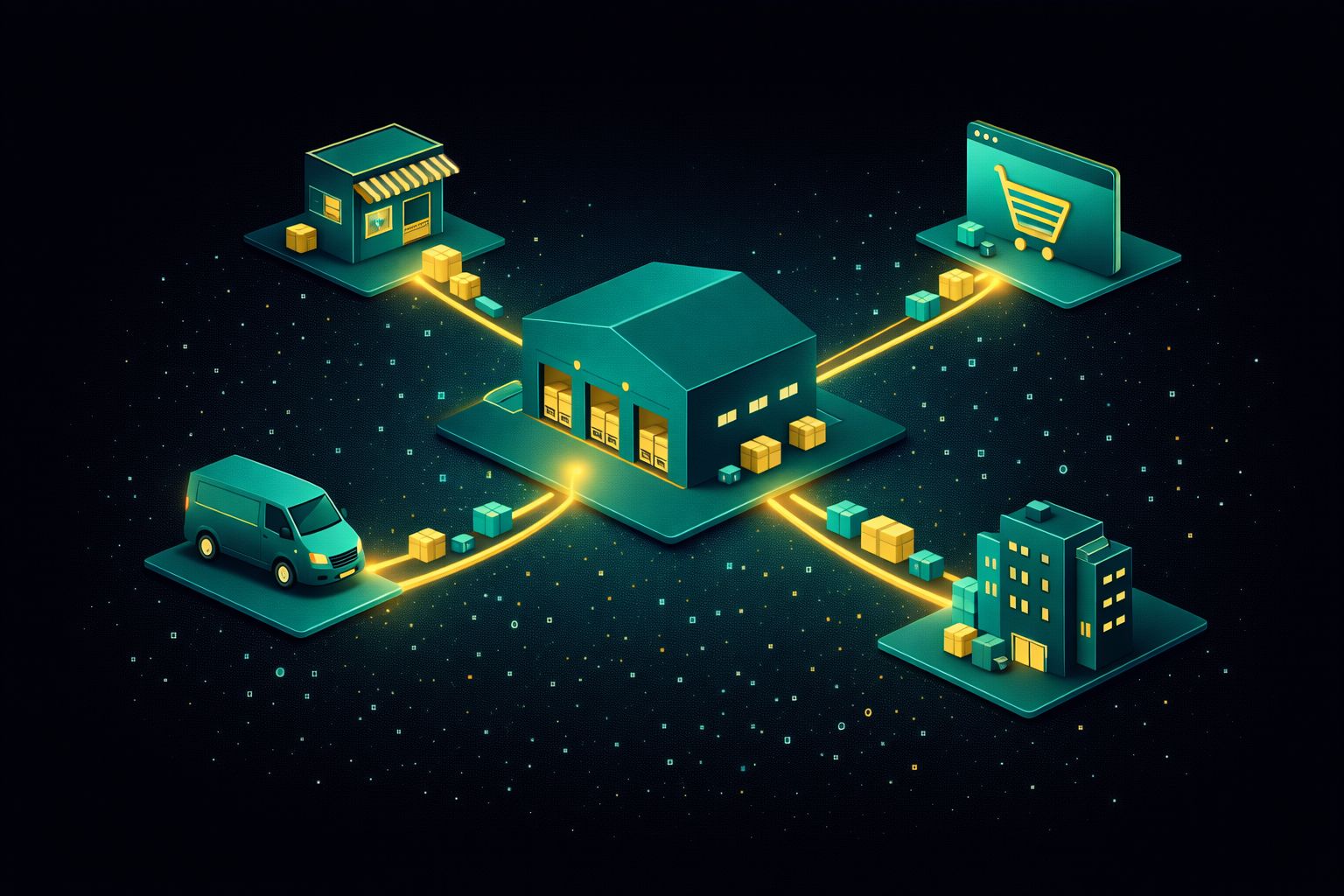
The alternative is holding your primary inventory in an independent fulfilment warehouse — operated by a partner like MoreShores — and distributing to marketplace DCs, B2B customers, and direct-to-consumer orders from a single stock pool. Here's why this model wins.
Unified Inventory, Lower Capital Requirements
Instead of splitting inventory across Takealot and Amazon DCs (and potentially other channels), you hold one stock pool in a single location. Demand from any channel draws from the same inventory. This means less total stock required, lower working capital tied up, and dramatically reduced risk of overstocking on one platform while going out-of-stock on another.
Consider a practical example: if you sell 100 units per month — 60 on Takealot and 40 on Amazon — the marketplace DC model requires you to stock each platform independently with safety buffers. You might hold 90 units at Takealot and 60 at Amazon, totalling 150 units. With unified inventory, you hold 120 units total (100 plus a single safety buffer), serving both channels from one pool. That's 30 fewer units of working capital sitting on shelves.
Multi-Channel Flexibility
From an independent warehouse, you can serve Takealot (via replenishment shipments to their DCs or direct fulfilment), Amazon SA (via FBA inbound or FBM direct shipping), your own Shopify or WooCommerce store, B2B wholesale orders, corporate and bulk purchases, and pop-up or retail partnerships — all from the same inventory. When a new sales channel emerges, you don't need to source and ship additional stock. You simply connect the channel to your existing fulfilment operation.
Smarter Marketplace Replenishment
Instead of shipping large quantities to marketplace DCs and hoping they sell before storage fees eat your margin, you use a lean replenishment model. Keep 2–3 weeks of fast-moving stock in marketplace DCs for delivery speed, and hold the bulk of your inventory in your independent warehouse where storage is significantly cheaper. Replenish marketplace DCs frequently in smaller batches based on actual sales velocity.
This approach reduces marketplace storage fees by 40–60% for most brands while maintaining the same delivery speed to customers on those platforms.
Lower Storage Costs
Independent warehouse storage is typically 30–50% cheaper per cubic metre than marketplace DC storage. The gap widens for slow-moving inventory, where marketplace DCs apply penalty rates that independent warehouses don't. For a cross-border brand with 100+ SKUs at varying velocities, the annual savings can be substantial — often tens of thousands of rands that drop straight to the bottom line.
Returns Come Back to You, Not a Black Hole
When a marketplace customer returns a product, it typically goes back to the marketplace DC. From there, getting it inspected, repackaged, and relisted is slow and often opaque. With an independent fulfilment partner, returns can be directed back to your warehouse, inspected immediately, and either relisted on any channel (not just the one it was returned from) or disposed of according to your instructions. You recover more value from returns and maintain full visibility over your inventory status.
The Numbers: A Side-by-Side Comparison
| Cost Factor | Marketplace DCs Only | Independent Warehouse + DC Replenishment |
|---|---|---|
| Monthly storage (100 SKUs) | R15,000–R25,000 (split across 2 platforms) | R8,000–R14,000 (bulk in warehouse, lean in DCs) |
| Working capital (inventory value) | R800,000 (duplicated across platforms) | R550,000 (unified pool with single buffer) |
| Channels served | 2 (Takealot + Amazon only) | Unlimited (marketplaces, B2B, DTC, retail) |
| Slow-mover penalty fees | R3,000–R8,000/month (escalating) | R0 (no penalty rates) |
| Stock rebalancing cost | R5,000–R10,000 per rebalance (recall + reship) | R0 (allocate from single pool) |
| Returns recovery rate | ~60% (marketplace DC process) | ~85% (direct inspection + multi-channel relist) |
| B2B order capability | Not possible without stock withdrawal | Immediate fulfilment from same stock |
The numbers above are representative of a mid-sized cross-border brand selling electronics and home goods across Takealot and Amazon SA. Your specific savings will depend on your SKU count, velocity distribution, and channel mix — but the structural advantage of independent warehousing holds across virtually every scenario.
When Marketplace DCs Still Make Sense
To be fair, there are scenarios where putting stock directly into marketplace DCs is the right call. If you sell fewer than 10 SKUs, all of which are high-velocity, the simplicity of FBA or Takealot fulfilment may outweigh the flexibility benefits of independent warehousing. If you're testing a market with a small initial shipment and want the simplest possible operational setup, going direct to a marketplace DC reduces the number of moving parts. And for your absolute fastest-selling products — the top 10–20% by velocity — keeping stock in marketplace DCs ensures the fastest possible delivery to customers.
The smart play is a hybrid model: fast movers in marketplace DCs for speed, everything else in an independent warehouse for cost efficiency and flexibility.
How MoreShores Makes This Work
MoreShores operates fulfilment warehousing in South Africa that's specifically designed for cross-border, multi-channel sellers. We receive your imported goods (cleared through customs under our IOR licence), store them in our facility, and distribute to marketplace DCs, B2B customers, or direct-to-consumer — all from a single inventory pool.
Our warehouse management system tracks inventory in real time across all channels, triggers replenishment alerts when marketplace DC stock runs low, and provides full visibility over your stock levels, movements, and ageing. Returns come back to our facility for inspection and relist, maximising recovery value.
At a 15% markup on fulfilment and warehousing, our costs are transparent and predictable. There are no penalty fees for slow-moving stock, no minimum storage commitments, and no channel lock-in. Your inventory works for your business — across every sales channel you want to pursue.
| R10M+ Stock Under Management | 1,500+ Orders/Month | Multi-Channel Fulfilment | 90% Client Retention |
|---|
Stop Paying More for Less Flexibility
If your marketplace storage fees are climbing, your inventory is siloed across platforms, or you're missing B2B opportunities because your stock is locked in a DC — it's time to rethink your fulfilment model.